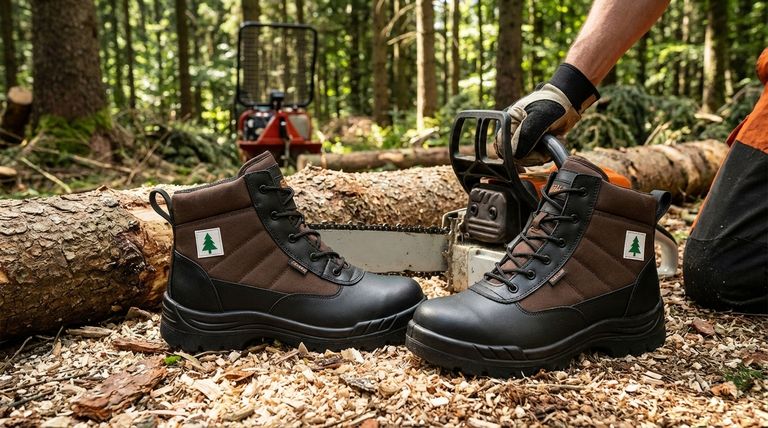
In short, a white label with a green fir tree symbol on safety footwear signifies it is certified for chainsaw protection. This specific marking indicates the boot is designed to protect forestry workers, arborists, and anyone else who operates hand-held chainsaws from the severe injuries these tools can inflict.
The green fir tree symbol is not a general safety feature. It represents a highly specialized level of protection, mandated by the CSA Z195 standard, designed to stop a moving chainsaw chain on contact and prevent life-altering injuries.
What is CSA Green Tree Chainsaw Protection?
This symbol is one of the most critical safety indicators for workers in specific high-risk professions. It goes far beyond standard steel-toe or puncture-resistant features.
The Unique Hazard of Chainsaws
Standard work boots, even high-quality leather or steel-toed ones, offer virtually no protection against a running chainsaw. The tool is designed to cut through tough materials quickly, and a glancing contact can cause a catastrophic injury in a fraction of a second.
How the Protection Works
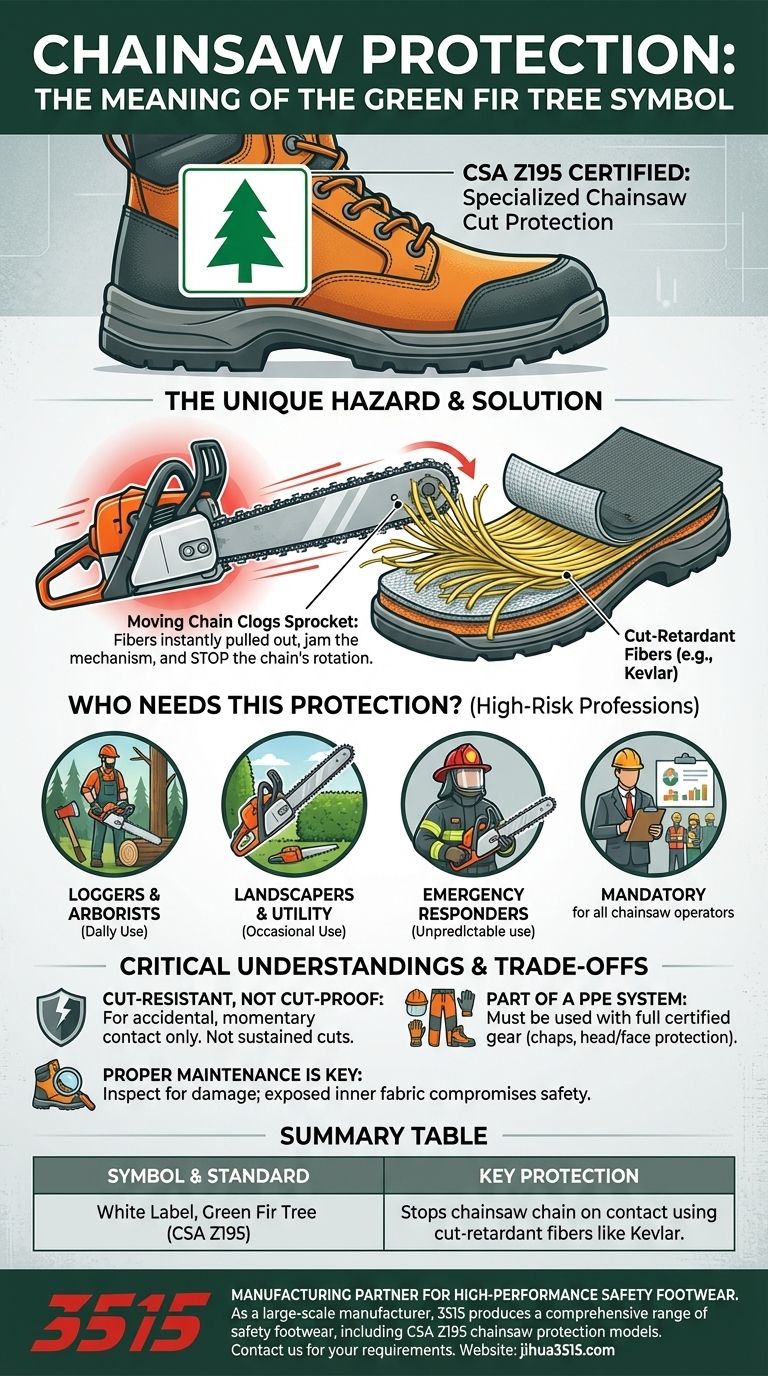
Chainsaw-protective boots are constructed with layers of specialized, cut-retardant fabric, often ballistic fibers like Kevlar. When a moving chainsaw chain makes contact with the boot, these fibers are instantly pulled out.
The goal is not to "block" the chain, but to pull these long, tough fibers into the chainsaw's drive sprocket. This clogs the mechanism, rapidly stopping the chain's rotation and dramatically reducing the severity of the potential injury.
The Governing Standard
The green fir tree symbol specifically denotes compliance with the CSA Z195 standard for protective footwear. This certification ensures the boot has been rigorously tested to meet the specific performance requirements for resisting a chainsaw cut.
Who Needs This Level of Protection?
While often associated with logging, the need for this protection extends to several professions where chainsaws are used, even occasionally.
Obvious Users: Loggers and Arborists
For professionals in forestry and tree care, this is mandatory personal protective equipment (PPE). The daily, close-proximity use of chainsaws makes this protection an absolute necessity.
Less Obvious Users: Landscapers and Utility Workers
Landscapers, groundskeepers, and utility line workers frequently use chainsaws for clearing brush, pruning trees, or responding to storm damage. The risk of accidental contact is just as high, making certified boots essential.
Emergency Responders
Firefighters and other emergency service personnel often need to cut through fallen trees and debris. Chainsaw-protective footwear is a critical component of their safety gear in these unpredictable situations.
Understanding the Trade-offs
It is crucial to have a realistic understanding of what this symbol means and its limitations.
"Cut-Resistant," Not "Cut-Proof"
These boots are designed to provide protection against accidental and momentary contact. They are not intended to withstand a deliberate or sustained cut from a high-powered chainsaw. Their purpose is to give the user a critical margin of safety to react and move away.
Protection is Part of a System
Chainsaw boots are just one part of a required PPE system. They must be used in conjunction with other certified equipment, such as safety chaps or pants, gloves, and a full head and face protection system. Relying on boots alone creates a false sense of security.
Proper Maintenance is Key
The protective capabilities of the boot can be compromised if the outer shell is damaged, exposing the inner protective fabric. Always inspect your boots for deep cuts or tears before use, as this can impact their life-saving function.
How to Apply This to Your Role
Choosing the right footwear comes down to a simple risk assessment. The presence of a chainsaw in your work environment is the only factor that matters.
- If your primary focus is daily chainsaw operation (e.g., logger, arborist): This certification is a non-negotiable, fundamental requirement for your job.
- If your primary focus is occasional chainsaw use (e.g., landscaper, municipal worker): The risk of a life-changing injury remains the same, making these certified boots a critical investment in your safety.
- If your primary focus is managing a team: You must mandate CSA Green Tree certified boots for any worker required to operate a chainsaw to ensure both their safety and your organization's compliance.
Ultimately, seeing the green fir tree symbol means the footwear is purpose-built to defend against one of the most dangerous tools in modern labor.
Summary Table:
| Symbol | Meaning | Standard | Key Protection |
|---|---|---|---|
| White Label, Green Fir Tree | Certified Chainsaw Protection | CSA Z195 | Stops chainsaw chain on contact using cut-retardant fibers like Kevlar. |
Ensure your team's safety with certified chainsaw-protective footwear from 3515.
As a large-scale manufacturer, 3515 produces a comprehensive range of safety footwear for distributors, brand owners, and bulk clients. Our production capabilities encompass all types of certified work boots, including CSA Z195 chainsaw protection models designed for the rigorous demands of forestry, arboriculture, and landscaping.
We provide the reliable, specialized PPE your workforce needs to mitigate severe risks. Contact us today to discuss your requirements and discover how we can be your trusted manufacturing partner for high-performance safety footwear.
Get a Quote & Discuss Your Needs
Visual Guide
Related Products
- Premium Lightweight Safety Shoes for Wholesale & Bulk Orders
- Safety Footwear Wholesale Manufacturer for Custom OEM/ODM Production
- Premium Wholesale Tactical Style Safety Shoes Boots with Quick Lacing
- Premium Wholesale Waterproof Safety Boots High Performance Protection for Industrial Markets
- Premium Grain Leather Safety Boots for Bulk Supply
People Also Ask
- What role does blockchain play in footwear supply chain transparency? Enhance Safety Shoe Traceability and Verification
- What workplace hazards indicate the need for safety shoes? Identify risks to protect your workforce.
- How is the absence of PPE (safety shoes & helmets) categorized in construction motion data labeling? Unlock Real-Time Safety Insights!
- What is a recommended alternative to using hairspray for slip resistance? Ditch Unreliable Hacks for Real Safety
- What role do specialized safety shoes play in preventing falls? Engineering Stability in Industrial Environments