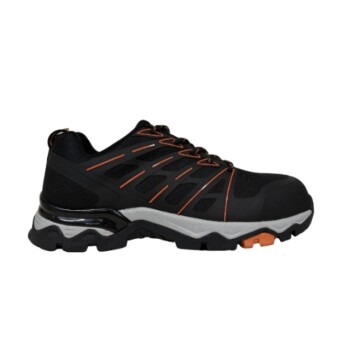
Professional-grade safety shoes act as a critical control measure in industrial environments by establishing physical barriers against trauma and stabilizing the worker against environmental hazards. They function through a dual mechanism: reinforced components like steel toes and puncture-resistant midsoles mitigate the severity of direct injuries, while specialized high-traction outsoles actively prevent the initial occurrence of slips and falls.
Core Takeaway Safety footwear is more than a uniform requirement; it is a calculated risk management tool designed to lower the frequency of workplace incidents. By combining impact resistance with advanced friction control, these shoes protect worker health while simultaneously shielding organizations from project delays and legal liabilities.
The Mechanics of Physical Protection
Shielding Against Impact and Compression
The primary function of professional safety shoes is to create a hardened shell around the foot. Integrated protective caps, often made of steel or composite materials, absorb the energy from heavy falling objects to prevent crushing injuries.
Preventing Penetration Injuries
Work environments like construction sites are often littered with sharp debris, such as nails or glass. Professional-grade footwear utilizes puncture-resistant midsoles to stop these sharp objects from piercing the sole and injuring the foot.
Mitigating Environmental Risks
Advanced Friction Control
Slips and falls are among the most common causes of industrial injury. Specialized outsoles are engineered to maximize the coefficient of friction between the shoe and the floor.
Stability on Hazardous Surfaces
This enhanced grip is essential for maintaining stability on wet, oily, or uneven terrain. By improving traction, these shoes significantly reduce the probability of a worker losing their balance, directly lowering accident frequency.
The Operational Impact of Safety Footwear
Reducing Project Downtime
Beyond individual health, safety shoes play a vital role in maintaining operational efficiency. By preventing injuries, they help avoid the work stoppages and project delays that inevitably follow a workplace accident.
Managing Legal and Financial Liability
Adhering to strict PPE (Personal Protective Equipment) standards is a safeguard against legal exposure. Properly equipping workers reduces the risk of liability claims associated with negligence or inadequate safety protocols.
Understanding the Limitations
PPE is the Last Line of Defense
It is crucial to remember that safety shoes mitigate damage after a hazard is encountered; they do not remove the hazard itself. They should be used in conjunction with broader safety protocols, not as a replacement for maintaining a clean and safe workspace.
Specificity is Required
Not all safety shoes offer the same protection. A shoe designed primarily for slip resistance may not offer adequate protection against heavy compression, and vice versa. Selecting the wrong type of protection for a specific environment creates a false sense of security.
Making the Right Choice for Your Goal
To maximize safety and efficiency, align your footwear selection with your specific environmental risks:
- If your primary focus is heavy construction or warehousing: Prioritize footwear with reinforced steel toes and puncture-resistant midsoles to defend against falling objects and sharp debris.
- If your primary focus is working on wet or oily floors: Select shoes with certified slip-resistant outsoles designed to maximize friction and prevent falls.
- If your primary focus is organizational risk management: Ensure all footwear meets professional-grade PPE standards to minimize legal liability and prevent costly project delays.
Invest in the specific protection required for your environment to turn safety footwear from a compliance checklist item into a genuine asset.
Summary Table:
| Feature | Primary Protective Function | Occupational Risk Mitigated |
|---|---|---|
| Reinforced Toe Caps | Absorbs energy from falling/crushing objects | Fractures and crushing injuries |
| Puncture-Resistant Midsole | Blocks sharp debris (nails, glass) from piercing | Foot penetration and infections |
| High-Traction Outsoles | Increases friction on wet/oily surfaces | Slips, trips, and falls |
| Certified PPE Standards | Ensures consistent protection levels | Legal liability and project downtime |
Partner with 3515 for Premium Safety Solutions
As a large-scale manufacturer serving global distributors and brand owners, 3515 offers comprehensive production capabilities to safeguard your workforce and your business. Our flagship Safety Shoes series is engineered to exceed international safety standards, providing the ultimate defense against industrial hazards.
Beyond safety, our extensive portfolio includes work and tactical boots, outdoor shoes, training shoes, sneakers, and Dress & Formal footwear to meet your diverse bulk procurement requirements. We bring decades of manufacturing expertise to ensure your brand delivers durability and reliability in every step.
Enhance your product line and protect your clients today. Contact us now to discuss your bulk manufacturing needs.
References
- Fadlilah Mursid, Susi Herawati. Risk Mitigation Analysis and Safety Equipment Against Work Accident Prevention. DOI: 10.35877/soshum1930
This article is also based on technical information from 3515 Knowledge Base .
Related Products
- Premium Safety Shoes with Rotating Buckle Safety Sneakers
- Premium Suede Sport Safety Shoes for Wholesale & Bulk Orders
- Premium KPU Athletic Safety Shoes for Wholesale
- Premium KPU Injection Athletic Style Safety Shoes
- Premium Wheat Nubuck Safety Shoes for Bulk Distribution
People Also Ask
- What happens during the cutting stage of safety shoes manufacturing? Precision, Process & Quality
- What are the technical advantages of integrating sensors into safety shoes? Achieve Superior Motion Capture Precision
- What are the main safety features of S1-S5 shoes? The 3 Essential Protections Explained
- How do the 3R principles influence green footwear design? Master Sustainable Safety Shoe Manufacturing
- Why should ergonomics and comfort be prioritized when selecting safety shoes? Boost Compliance & Worker Health