
At its core, safety shoe toe protection relies on a reinforced cap designed to withstand significant impact and compression. The primary materials used for these protective toe caps are steel, composite materials (like carbon fiber and Kevlar), and aluminum alloys.
While traditional steel offers immense strength, the choice of material is no longer straightforward. Modern composites and alloys now provide comparable safety ratings while offering critical advantages in weight, thermal insulation, and electrical non-conductivity, making the decision dependent on the specific hazards of your environment.
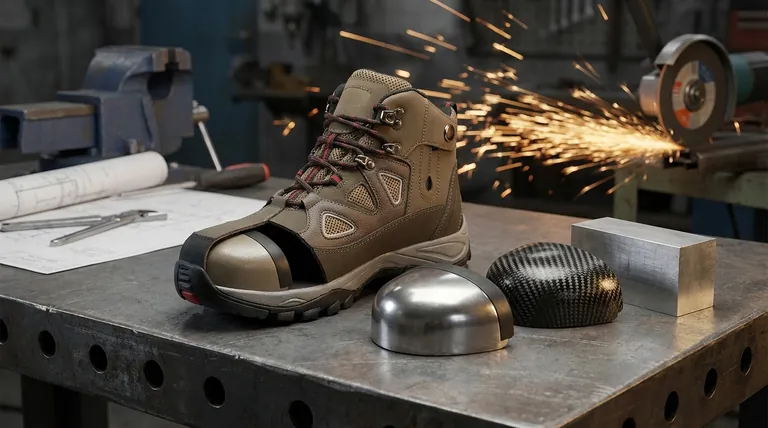
The Purpose of the Protective Toe Cap
A safety toe cap is the foundational element of protective footwear. It is an internal reinforcement in the toe area of the shoe, sitting underneath the upper material.
Protection Against Impact and Compression
The sole function of the toe cap is to shield the foot from two primary dangers: impact from falling objects and compression from rolling objects or crushing forces. All certified safety toes, regardless of material, must meet specific safety standards for the level of protection they provide.
A Breakdown of Key Toe Cap Materials
The material used for the toe cap directly influences the shoe's weight, comfort, and suitability for different work environments.
Steel Toes: The Traditional Standard
Steel is the classic material for safety toes and has long been the industry benchmark. It provides exceptional resistance to impact and compression. Due to its high density and strength, a steel toe cap can be made relatively thin while still offering maximum protection.
Composite Toes: The Modern, Non-Metal Alternative
Composite toes are crafted from non-metallic materials like Kevlar, carbon fiber, plastic, or fiberglass. Their primary advantage is being significantly lighter than steel, which reduces foot fatigue over a long workday.
Critically, composite materials are poor conductors of electricity and temperature. This makes them the ideal choice for electricians or those working in extreme hot or cold environments. They also will not set off metal detectors.
Aluminum Toes: The Lightweight Metal Option
Aluminum and other light metal alloys serve as a middle ground between steel and composite. They provide the protection of a metal toe cap but at a much lighter weight than steel. While lighter, they are typically just as strong as steel but may be slightly bulkier to achieve the same safety rating.
Understanding the Trade-offs
Choosing the right material is not about finding the "strongest" one, as all must meet the same safety standards. The decision rests on balancing key functional differences.
Protection vs. Weight
While all certified caps are equally protective, their weight is a major differentiator. Steel is the heaviest, which can contribute to fatigue. Aluminum and composite toes offer substantial weight savings, enhancing all-day comfort.
Thermal and Electrical Conductivity
This is a critical safety consideration. Steel readily conducts heat, cold, and electricity, making it unsuitable for certain jobs. Composite materials are non-conductive, providing an essential layer of protection against electrical hazards and offering better insulation in temperature extremes.
Profile and Fit
Because of its inherent strength, a steel toe cap can often have a lower profile, resulting in a less bulky shoe. Composites and aluminum may require slightly more material to meet the same standard, potentially creating a more bulbous toe box.
Making the Right Choice for Your Environment
Your specific work environment and daily tasks should dictate your choice of toe protection.
- If your primary focus is maximum impact resistance and cost-effectiveness: Steel toes remain an excellent and proven industry benchmark.
- If your primary focus is all-day comfort and reducing fatigue: Lightweight composite or aluminum toes will make a noticeable difference.
- If you work near live electrical hazards or in extreme temperatures: Non-conductive, non-thermal composite toes are the essential choice for your safety.
- If you frequently pass through metal detectors for security: Composite toes will prevent the daily inconvenience of removing your footwear.
By understanding these material differences, you can select safety footwear that provides not just compliance, but true functional protection for your role.
Summary Table:
| Material | Key Features | Best For |
|---|---|---|
| Steel Toes | Maximum impact resistance, cost-effective, low profile | General industrial work, maximum durability |
| Composite Toes | Lightweight, non-conductive (electrical safety), thermal insulation | Electricians, extreme temperatures, metal detector areas |
| Aluminum Toes | Lightweight metal option, strong protection, good balance | Workers seeking metal protection with reduced weight and fatigue |
Equip your workforce with the right protection from the start.
As a large-scale manufacturer, 3515 produces a comprehensive range of safety footwear for distributors, brand owners, and bulk clients. Our production capabilities encompass all types of safety shoes and boots with steel, composite, and aluminum toes, ensuring you get the perfect combination of safety, comfort, and value for your specific needs.
Contact our experts today for a consultation and to discuss your bulk order requirements.
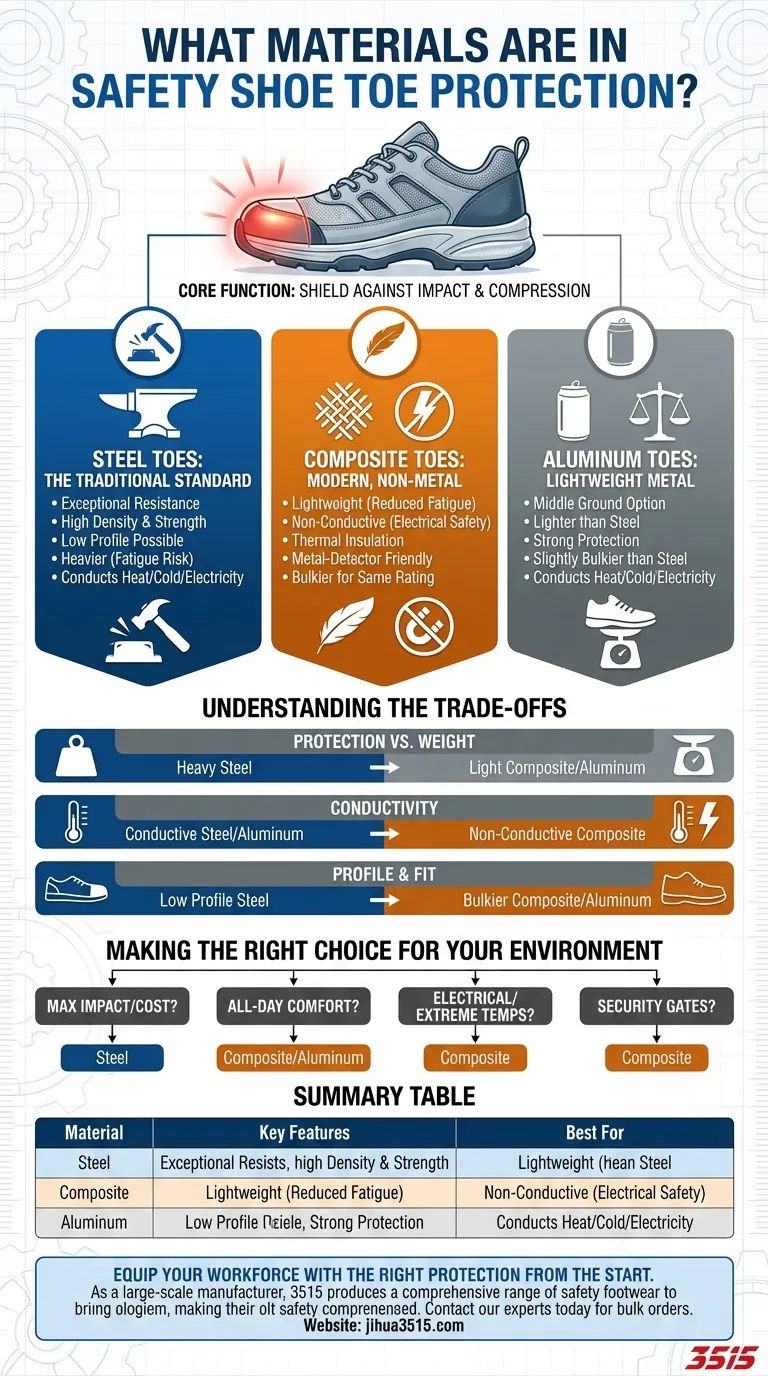
Visual Guide
Related Products
- Premium Suede Sport Safety Shoes for Wholesale & Bulk Orders
- Premium Lightweight Safety Shoes for Wholesale & Bulk Orders
- Wholesale Anti-Smash & Puncture-Proof Safety Shoes Custom Manufacturing for Brands
- Premium KPU Injection Athletic Style Safety Shoes
- Premium Safety Shoes with Rotating Buckle Safety Sneakers
People Also Ask
- What industries have specific OSHA footwear requirements? Ensure Compliance & Protect Your Workforce
- What are the primary functions of professional safety shoes? Maximize Safety in Water Supply Confined Spaces
- What role do specialized safety shoes play in preventing falls? Engineering Stability in Industrial Environments
- How Specialized Footwear Impacts Side-Cutting Performance and Injury Risk Assessment
- How do complex outsole tread designs in safety shoes work with coated floors? Master Slip Resistance Engineering



















