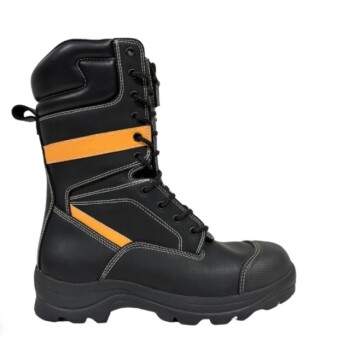
Direct integration of retro-reflective elements into footwear provides a permanent, fail-safe layer of passive protection. By embedding these materials during the manufacturing phase, safety shoes and tactical boots maintain high visibility in low-light conditions without the risk of component loss or user error.
Integrated retro-reflective materials transform footwear from simple protective gear into active safety equipment that functions reliably in high-intensity environments. This structural approach ensures constant visibility and eliminates the logistical risks associated with external or manual safety accessories.
The Engineering Behind Integrated Visibility
Permanent Passive Protection
Retro-reflective materials are woven or bonded directly into the shoe's structure during the assembly process. This provides a consistent passive safety feature that remains functional without the need for battery power or manual activation by the wearer.
Enhanced Material Retention
Unlike adhesive tapes or clip-on lights, integrated elements are physically part of the boot's anatomy. The bond created during manufacturing ensures that reflective surfaces cannot fall off or become detached during heavy physical activity or mechanical stress.
Structural Resilience
By incorporating these materials into the design phase, manufacturers can place them in areas of the boot that are less prone to extreme wear. This strategic positioning protects the reflective properties from being immediately compromised by friction or impact.
Operational Reliability in Professional Settings
Elimination of User Oversight
In fast-paced industrial or tactical environments, workers may forget to apply external reflective gear. Direct integration guarantees that the safety feature is present every time the footwear is donned, ensuring 100% compliance with visibility standards.
Optimized for Dynamic Movement
Tactical and safety boots are frequently subjected to harsh conditions like mud, water, and debris. Integrated materials are engineered to maintain their retro-reflective efficiency even when the wearer is in constant motion or transitioning through different terrains.
Reduction of Gear Complexity
Consolidating safety features into the footwear reduces the amount of equipment a professional must manage. This streamlines the "load-out" process and prevents external attachments from snagging on machinery or brush.
Understanding Technical Trade-offs
Surface Degradation and Abrasion
While integrated, the reflective coating is still subject to surface wear over long periods of heavy use. Unlike external gear, these elements cannot be easily replaced if the microscopic glass beads or prisms are scoured off by abrasive materials.
Fixed Visibility Profiles
Integrated elements are permanent, meaning the boot’s visibility profile is static. For tactical users, this may be a disadvantage in stealth operations where high-visibility features need to be temporarily obscured or removed.
Manufacturing Complexity
Integrating these materials requires specialized bonding techniques to ensure they do not compromise the waterproofing or breathability of the boot. This often results in a higher initial manufacturing cost compared to standard footwear.
Selecting Footwear Based on Your Operational Needs
When choosing footwear with integrated reflective elements, consider the specific demands of your environment:
- If your primary focus is industrial safety and compliance: Prioritize boots with integrated heel and side reflectors to ensure 360-degree visibility for nearby vehicle operators.
- If your primary focus is tactical or emergency response: Look for footwear that utilizes high-durability reflective zones that resist scuffing and maintain luminosity in wet conditions.
- If your primary focus is high-frequency nighttime transit: Select shoes with large-surface-area integration to maximize the "return light" seen by approaching headlights.
Choosing footwear with integrated retro-reflective elements provides a foundation of safety that remains consistent regardless of the environment or the user's workload.
Summary Table:
| Advantage | Key Benefit |
|---|---|
| Permanent Passive Protection | Consistent, always-on safety without manual activation. |
| Enhanced Material Retention | Reflective elements securely integrated, resisting detachment. |
| Structural Resilience | Strategic placement protects reflective properties from wear. |
| Elimination of User Oversight | Guarantees presence of safety feature, ensuring compliance. |
| Optimized for Dynamic Movement | Maintains reflective efficiency in harsh, active conditions. |
| Reduction of Gear Complexity | Streamlines equipment, prevents external attachments from snagging. |
As a large-scale manufacturer serving distributors and brand owners, 3515 offers comprehensive production capabilities for all footwear types, anchored by our flagship Safety Shoes series. Our extensive portfolio covers work and tactical boots, outdoor shoes, training shoes, and sneakers, as well as Dress & Formal shoes to meet diverse bulk requirements. Leverage our expertise to integrate advanced retro-reflective technology into your next footwear line, ensuring unparalleled safety and visibility for your customers. Elevate your product offerings with 3515's commitment to quality and innovation. Contact us today to discuss your project needs!
References
- Katarzyna Sicińska, Anna Zielińska. PEDESTRIANS’ SAFETY IN POLAND AND USE OF REFLECTIVE MATERIALS. DOI: 10.20858/tp.2022.17.1.11
This article is also based on technical information from 3515 Knowledge Base .
Related Products
- Premium Wholesale Tactical Style Safety Shoes Boots with Quick Lacing
- Wholesale Tactical Boots High-Traction & Reflective for Bulk & Brand Orders
- Durable Leather Tactical Boots Wholesale & Custom Manufacturing for Brands
- Wholesale Durable Mid-Cut Tactical Boots for Custom & Private Label Brands
- High-Traction Suede Tactical Boots Wholesale & Custom Manufacturing
People Also Ask
- How are gait analysis research findings applied to the functional design of safety shoes and tactical boots?
- Why is the synchronization of craftsmanship and UX development emphasized for bulk customization of safety shoes?
- How do quality certification standards for safety shoes reduce perceived risk? Buy Online with Technical Certainty
- How does anthropomorphic design influence material selection? Enhance Footwear Performance through Biological Alignment
- How can specialized footwear mitigate safety risks? High-Volume OEM/ODM Solutions since 1951