
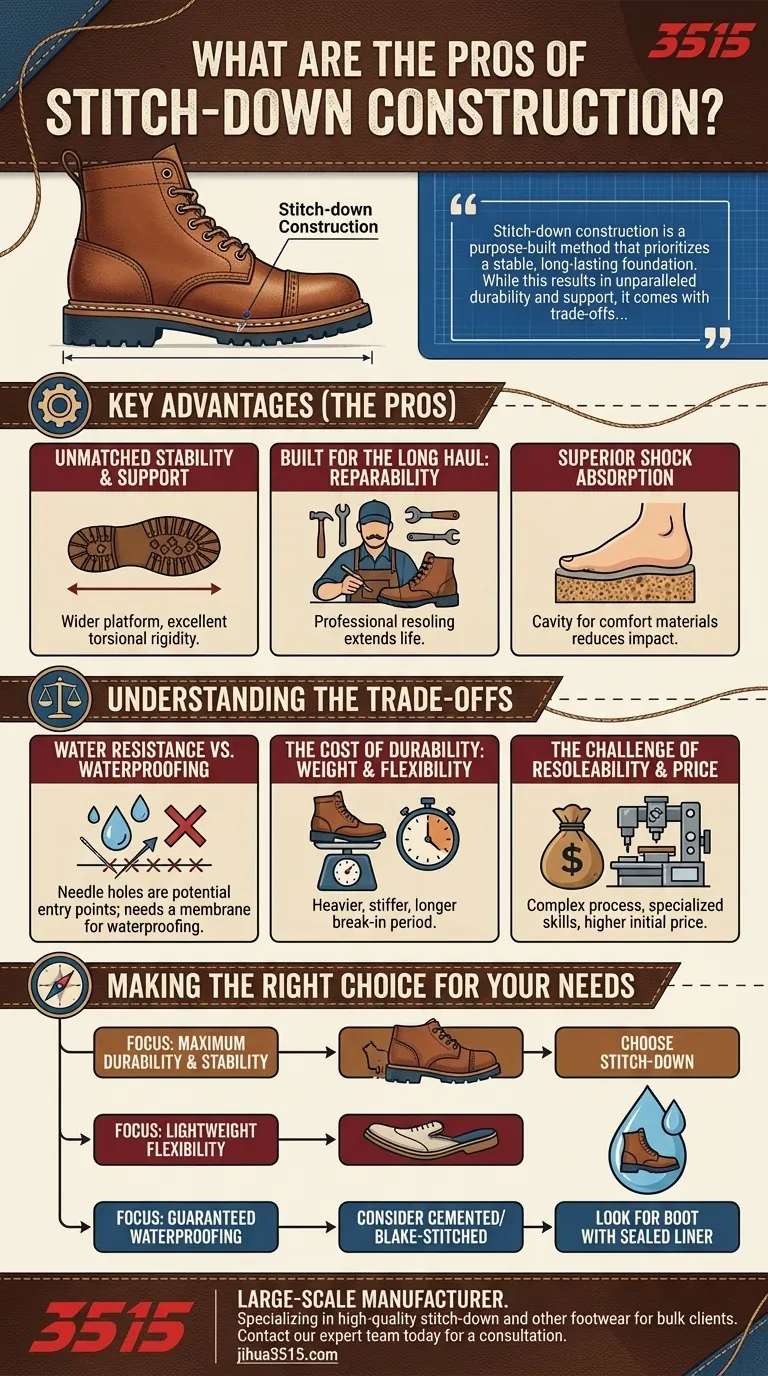
At its core, stitch-down construction offers a powerful combination of enhanced stability, long-term reparability, and effective shock absorption. This method, where the boot's upper is turned outward and stitched directly to the midsole, creates an exceptionally durable and supportive platform for your foot.
Stitch-down construction is a purpose-built method that prioritizes a stable, long-lasting foundation. While this results in unparalleled durability and support, it comes with trade-offs in weight, flexibility, and water resistance that you must consider.
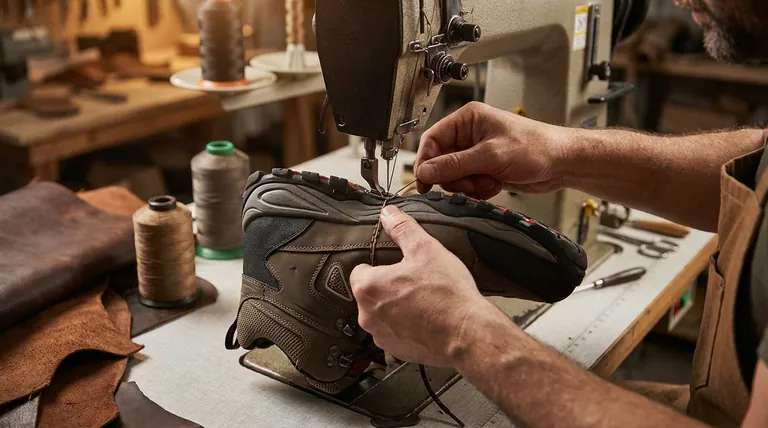
A Closer Look at the Key Advantages
Stitch-down construction is not just a single feature; it's a system where each benefit reinforces the others. Understanding how these elements work together is key to appreciating its value.
Unmatched Stability and Support
The most significant advantage is the wide, stable platform it creates. By flaring the leather upper outward and stitching it to the midsole, the footprint of the boot is physically widened.
This design provides exceptional torsional rigidity, reducing the chances of your ankle rolling on uneven terrain. It's why this construction is a hallmark of high-end hiking and work boots.
Built for the Long Haul: Reparability
The external stitching is not just for stability; it’s for longevity. A skilled cobbler can cut the stitches, remove the worn-out sole, and attach a new one by re-stitching it to the same upper.
This process can dramatically extend the life of the footwear far beyond that of a cemented or glued sole, making the initial investment worthwhile over many years of use.
Superior Shock Absorption
The construction method allows for a cavity between the insole and the midsole which can be filled with shock-absorbing materials like cork or foam.
This feature significantly reduces the impact on your feet and joints during long days of walking or standing, contributing to all-day comfort.
Understanding the Trade-offs
No construction method is perfect for every situation. Being a trusted advisor means acknowledging the inherent compromises of the stitch-down method.
Water Resistance vs. Waterproofing
The hundreds of needle holes created by the stitching are potential points for water to enter. While many stitch-down boots are highly water-resistant, they are not inherently waterproof without an additional internal membrane.
The Cost of Durability: Weight and Flexibility
The robust materials and overbuilt nature of stitch-down construction result in a heavier and stiffer boot, especially when new.
This means you should anticipate a longer break-in period compared to more flexible construction methods. The initial stiffness is the price of eventual custom-molded support.
The Challenge of Resoleability
While stitch-down boots are built to be resoled, the process is complex and requires specialized skills and machinery.
Finding a cobbler who can properly perform a stitch-down resole can be more difficult and costly than resoling a more common Goodyear-welted boot.
The Impact on Price
Stitch-down construction is a labor-intensive process that requires significant hands-on skill. This craftsmanship is directly reflected in a higher initial purchase price.
Making the Right Choice for Your Needs
Selecting the right footwear construction depends entirely on your intended use and priorities.
- If your primary focus is maximum durability and stability: Stitch-down is an elite choice for demanding work, hiking, or any activity requiring a rugged and supportive platform.
- If your primary focus is lightweight flexibility: You may be better served by a cemented or Blake-stitched shoe that offers more immediate comfort and less weight.
- If your primary focus is guaranteed waterproofing: Look for a boot with a sealed, waterproof inner lining, regardless of its primary construction method.
Ultimately, choosing stitch-down construction is an investment in a stable, repairable foundation designed to last for years.
Summary Table:
| Advantage | Key Benefit |
|---|---|
| Stability & Support | Creates a wide, stable platform with excellent torsional rigidity. |
| Reparability | Allows for professional resoling, dramatically extending the boot's lifespan. |
| Shock Absorption | Cavity for materials like cork provides superior comfort and reduces joint impact. |
Need a reliable source for durable work or hiking boots?
As a large-scale manufacturer, 3515 specializes in producing high-quality stitch-down and other constructed footwear for distributors, brand owners, and bulk clients. We offer the durability and support your customers demand. Let's discuss your specific needs.
Contact our expert team today for a consultation.
Visual Guide
Related Products
- Durable Leather Work Boots Wholesale Manufacturer & Custom Factory
- Durable Leather Work Boots for Wholesale & Custom Manufacturing
- Durable Leather Work Boots for Wholesale & Custom OEM Manufacturing
- Wholesale Durable Safety Boots | Custom Steel Toe & Puncture-Resistant Manufacturing
- Durable Steel Toe Safety Boots Wholesale & Custom Manufacturing
People Also Ask
- What are the common workplace hazards that can be mitigated with the right work boots? Protect Your Workforce
- How do subjective norms influence the marketing of work boots and tactical footwear? Leverage Social Identity for Sales
- What certification standard do all work boots meet? Your Guide to ASTM F2413 & Beyond
- What options are available for restoring worn-out work boots? Expert Strategies for Longevity
- What features should junk removal workers look for in work boots? A Guide to Safety & Comfort
















