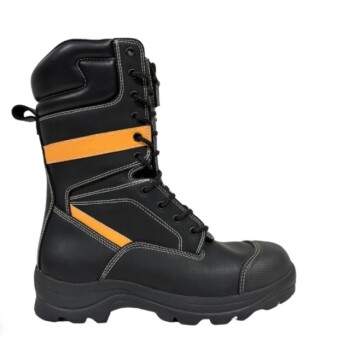
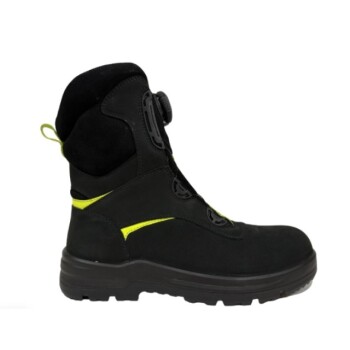
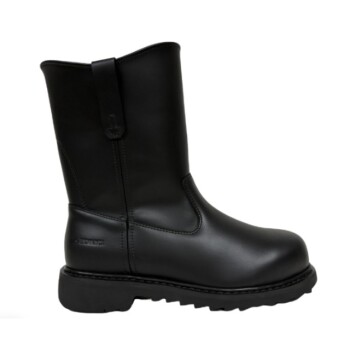
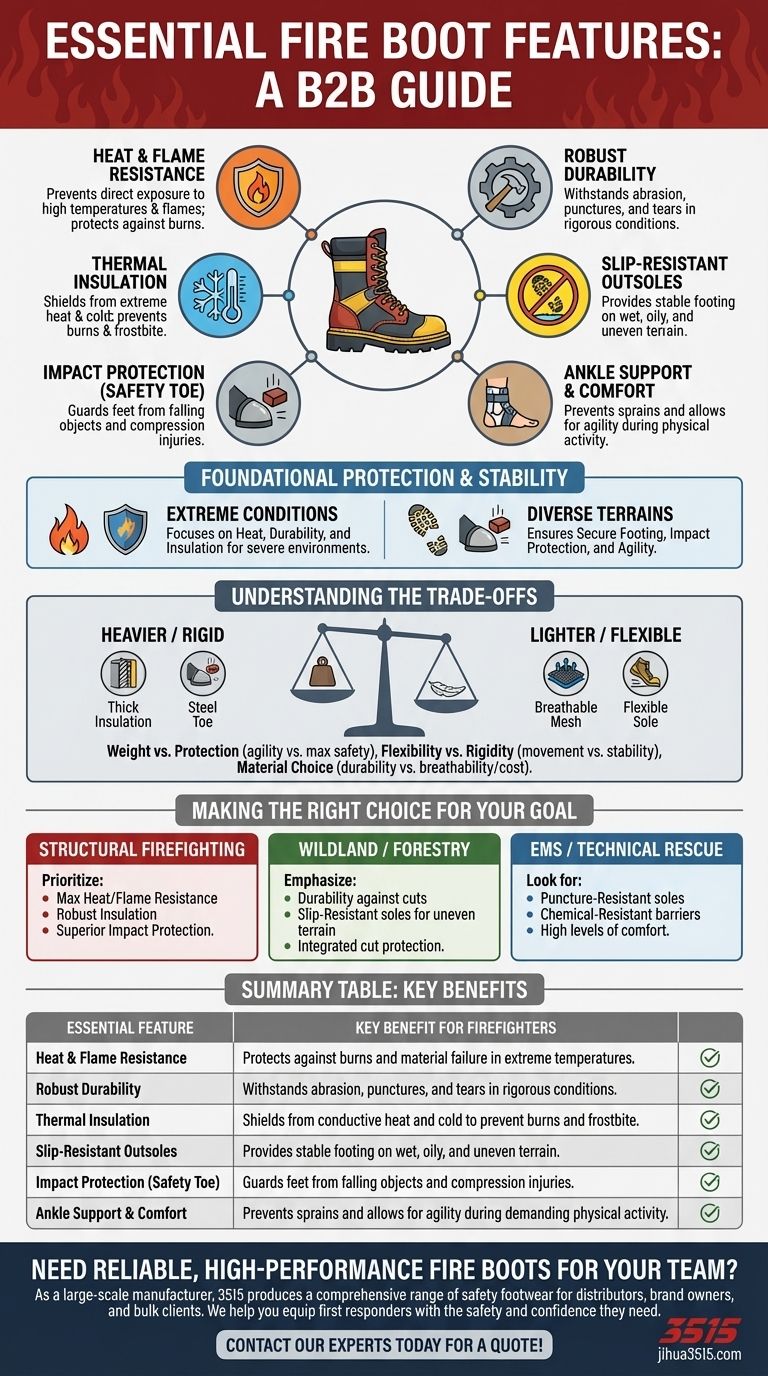
Every fire boot must provide a critical set of features to ensure the safety and effectiveness of firefighters. These essential elements include heat and flame resistance, robust durability against abrasion and punctures, effective insulation from extreme temperatures, slip-resistant outsoles for stable footing, comprehensive impact protection with safety toes, and anatomical comfort with ankle support for demanding physical activity.
Fire boots are highly specialized personal protective equipment. Their essential features are designed to create a multi-layered defense against the extreme and diverse hazards firefighters face, from intense heat and flames to treacherous terrain and impact risks, ensuring both protection and operational capability.
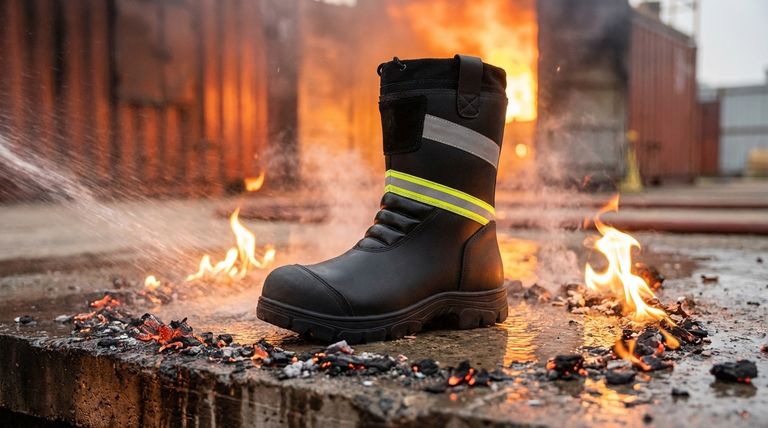
Foundational Protection Against Extreme Conditions
Firefighting environments are inherently dangerous, requiring boots that can withstand severe abuse.
Heat and Flame Resistance
Boots must prevent direct exposure to high temperatures and flames. This is paramount for protecting the wearer's feet from burns and ensuring the integrity of the boot material itself under intense heat.
Robust Durability
Fire boots require superior construction to resist abrasion, punctures, and tears. This ensures the boot maintains its protective qualities through rigorous use and challenging physical conditions.
Thermal Insulation
Effective insulation is crucial to protect feet from conductive heat transfer, cold, and other temperature extremes. This barrier prevents burns and frostbite while maintaining internal comfort.
Ensuring Stability and Safety on Diverse Terrains
Firefighters operate in unpredictable environments where secure footing and impact protection are vital.
Superior Slip Resistance
Outsoles must provide high traction to prevent slips and falls on wet, oily, uneven, or debris-strewn surfaces. Specialized tread patterns are often incorporated to maximize grip.
Impact-Resistant Protection
Safety toes, typically steel or composite, are essential to shield feet from falling objects and compression injuries. This protects against severe trauma in dynamic work zones.
Ankle Support and Flexibility
Adequate ankle support helps prevent sprains and strains, crucial when navigating uneven ground or carrying heavy equipment. Flexible construction also allows for necessary ease of movement and agility.
Understanding the Trade-offs
While all essential, the specific implementation of these features can involve design choices.
Weight vs. Protection
Boots with maximum protection (e.g., steel components, thick insulation) can be heavier, potentially affecting agility over long durations. Lighter designs might compromise on certain impact or puncture resistance levels.
Flexibility vs. Rigidity
Highly rigid boots offer superior ankle stability and puncture resistance but might limit natural foot movement. More flexible boots enhance comfort and dexterity but could offer less structural support.
Material Choice and Breathability
While materials must be flame-resistant and durable, incorporating breathable and moisture-wicking properties (like GORE-TEX or specialized climate control systems) can improve comfort, but may add complexity or cost.
Making the Right Choice for Your Goal
Selecting a fire boot means prioritizing features based on the specific demands of the role.
- If your primary focus is structural firefighting: Prioritize maximum heat/flame resistance, robust insulation, and superior impact protection.
- If your primary focus is wildland or forestry firefighting: Emphasize durability against cuts, slip-resistant soles for uneven terrain, and integrated cut protection.
- If your primary focus is EMS or technical rescue: Look for puncture-resistant soles, chemical-resistant barriers, and high levels of comfort for extended wear.
The right fire boot is a synthesis of critical protective features, each designed to empower and safeguard the firefighter in the line of duty.
Summary Table:
| Essential Feature | Key Benefit for Firefighters |
|---|---|
| Heat & Flame Resistance | Protects against burns and material failure in extreme temperatures. |
| Robust Durability | Withstands abrasion, punctures, and tears in rigorous conditions. |
| Thermal Insulation | Shields from conductive heat and cold to prevent burns and frostbite. |
| Slip-Resistant Outsoles | Provides stable footing on wet, oily, and uneven terrain. |
| Impact Protection (Safety Toe) | Guards feet from falling objects and compression injuries. |
| Ankle Support & Comfort | Prevents sprains and allows for agility during demanding physical activity. |
Need Reliable, High-Performance Fire Boots for Your Team?
As a large-scale manufacturer, 3515 produces a comprehensive range of safety footwear for distributors, brand owners, and bulk clients. Our production capabilities encompass all types of professional fire boots, ensuring they meet the essential features of heat resistance, durability, and superior protection.
We help you equip first responders with the safety and confidence they need. Contact our experts today to discuss your specific requirements and get a quote!
Visual Guide
Related Products
- High Performance Fire-Retardant Waterproof Safety Boots
- Premium Flame-Retardant Waterproof Safety Boots and Shoes
- Durable Military Combat Boots with Water Drainage for Wholesale & OEM
- Wholesale Waterproof Tactical Boots Custom Suede & High-Traction Soles
- Premium Waterproof High-Cut Industrial Safety Boots for Wholesale and Bulk Orders
People Also Ask
- Why are waterproof safety boots recommended for certain work environments? Essential Protection for Wet & Hazardous Jobs
- What roles do 3D vision systems and industrial robots play in the manufacturing of fire safety boots? Smart Automation
- What is the advantage of one-piece construction in waterproof boots? Unbeatable Seamless Protection
- What should you look for to ensure boots are fully waterproof? The Essential 2-Part System
- What is the difference between waterproof, water-resistant, and water-repellent boots? Choose the Right Protection for Your Feet