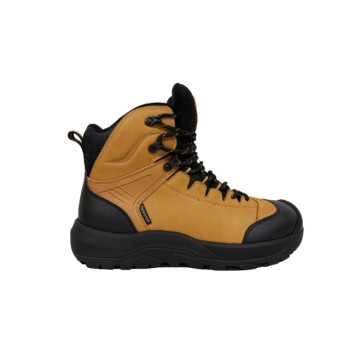
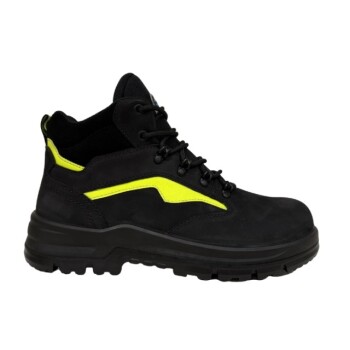
When it comes to all-day comfort, modern welted work boots integrate several key features designed to reduce fatigue and support your feet. These typically include shock-absorbing midsoles, supportive insoles with dedicated arch support, lightweight construction materials, and moisture-managing linings to keep your feet dry.
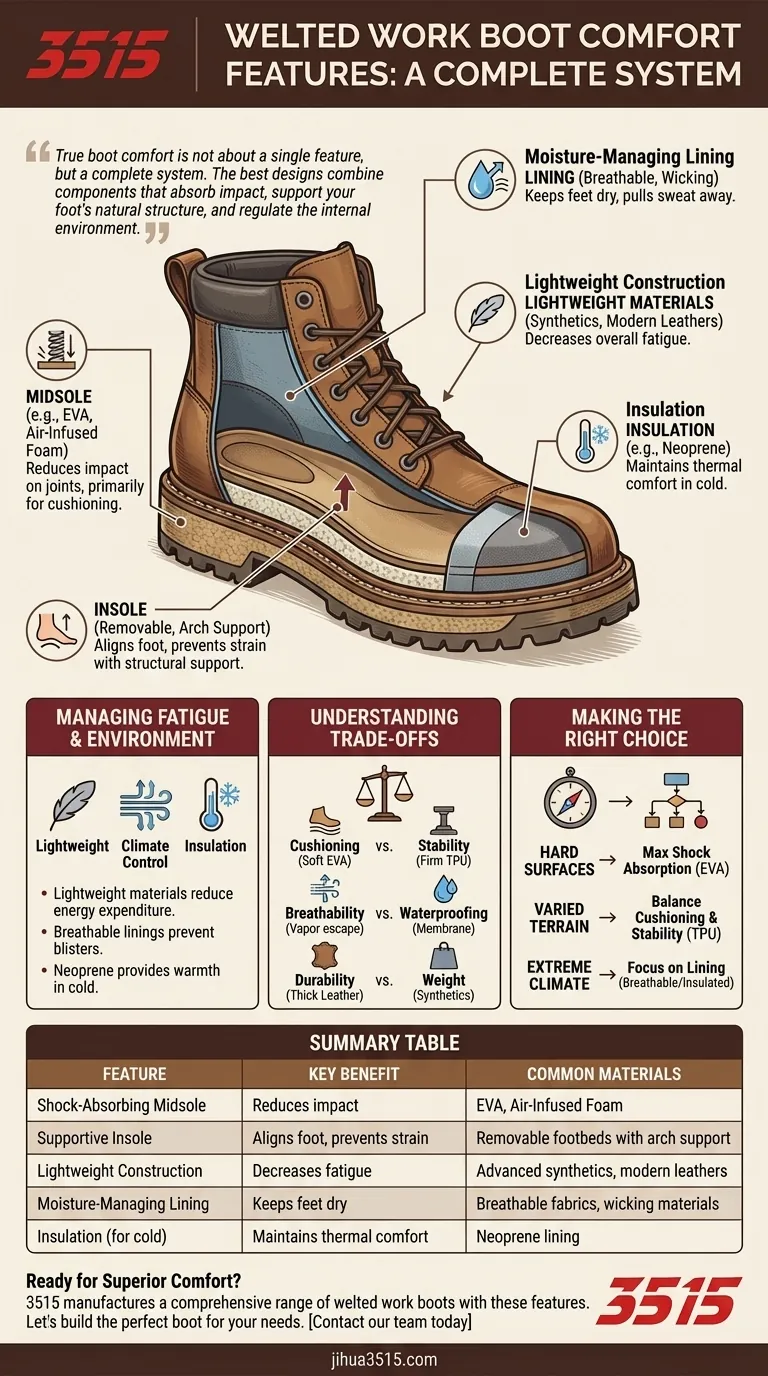
True boot comfort is not about a single feature, but a complete system. The best designs combine components that absorb impact, support your foot's natural structure, and regulate the internal environment of the boot.
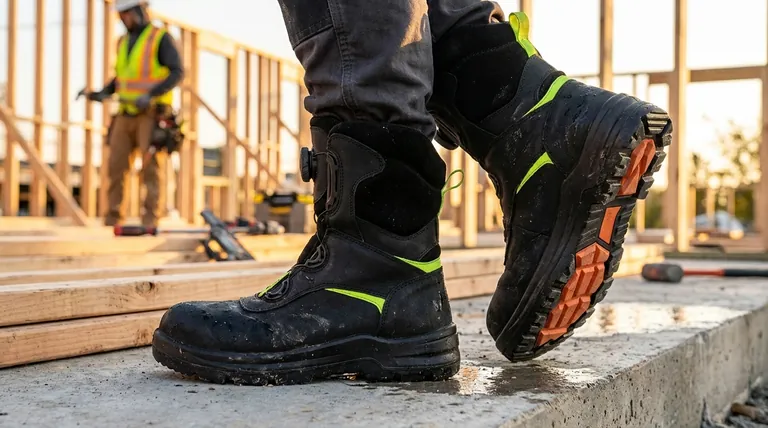
The Foundation of Comfort: Midsoles and Insoles
Shock Absorption: The Midsole's Role
The midsole is the primary engine for cushioning in a work boot.
Materials like air-infused foam or EVA (ethylene vinyl acetate) are used to absorb the shock of each step, especially on hard surfaces like concrete. This directly reduces stress on your joints.
Structural Support: The Importance of the Insole
The insole, or footbed, makes direct contact with your foot.
High-quality boots often feature removable, cushioned insoles with dedicated arch support. This helps align your foot properly, preventing strain and discomfort over long hours.
Managing Fatigue and Environment
Reducing Weight, Reducing Strain
The overall weight of a boot has a significant impact on end-of-day fatigue.
Manufacturers now use lightweight materials like advanced synthetic fabrics and modern leathers to reduce the energy you expend with every step.
Climate Control for Your Feet
Comfort is heavily dependent on managing moisture and temperature.
Breathable linings and moisture-wicking materials pull sweat away from the skin, keeping your feet dry and preventing blisters or discomfort.
Insulation for Extreme Conditions
For work in cold climates, thermal comfort is crucial.
Features like a neoprene lining provide insulation to keep your feet warm, allowing you to focus on the job without distraction from the cold.
Understanding the Trade-offs
Cushioning vs. Stability
Extremely soft cushioning can sometimes reduce stability on uneven ground.
Many boots balance soft EVA for comfort with firmer TPU (thermoplastic polyurethane) in key areas of the outsole to provide durability and a stable platform.
Breathability vs. Waterproofing
A fully waterproof boot membrane is excellent for keeping water out, but it can limit the boot's ability to let sweat vapor escape.
This creates a necessary trade-off between staying dry from external elements and staying dry from internal moisture.
Durability vs. Weight
Traditional, thick leather is famously durable but also heavy.
Modern synthetic materials can offer excellent comfort and low weight but may not hold up to the same level of abuse as their heavier counterparts in certain harsh environments.
Making the Right Choice for Your Goal
Understanding these components allows you to select a boot that is truly fit for your specific needs.
- If your primary focus is working on hard, flat surfaces: Prioritize boots with maximum shock absorption from air-infused or thick EVA midsoles.
- If your primary focus is working on varied or uneven terrain: Look for a balance of cushioning and stability, often found in boots with TPU-reinforced outsoles like Vibram.
- If your primary focus is working in extreme heat or cold: Pay close attention to the lining materials, choosing either highly breathable fabrics or dedicated insulation.
By looking beyond a single feature and understanding how these components work as a system, you can choose a work boot that actively supports your performance and well-being.
Summary Table:
| Feature | Key Benefit | Common Materials/Examples |
|---|---|---|
| Shock-Absorbing Midsole | Reduces impact on joints | EVA, Air-Infused Foam |
| Supportive Insole | Aligns foot, prevents strain | Removable footbeds with arch support |
| Lightweight Construction | Decreases fatigue | Advanced synthetics, modern leathers |
| Moisture-Managing Lining | Keeps feet dry, prevents blisters | Breathable fabrics, moisture-wicking materials |
| Insulation (for cold) | Maintains thermal comfort | Neoprene lining |
Ready to experience superior comfort?
As a large-scale manufacturer, 3515 produces a comprehensive range of welted work boots designed with these exact comfort features in mind. We combine shock-absorbing midsoles, supportive insoles, and climate-control linings to create a complete system for all-day wear. Our production capabilities ensure durability and performance for distributors, brand owners, and bulk clients.
Let's build the perfect boot for your needs. Contact our team today to discuss your requirements!
Visual Guide
Related Products
- Durable Goodyear Welt Leather Work Boots for Wholesale & Private Label
- Wholesale Durable Leather Work Boots | 8-Inch Goodyear Welt Manufacturer
- Wholesale Leather Work Boots with Customizable Wedge Sole for Brands
- Durable Leather Moc Toe Work Boots for Wholesale & Custom Manufacturing
- Durable Moc Toe Wedge Sole Work Boots for Wholesale and Private Label
People Also Ask
- What is the difference between full-grain and top-grain leather? Premium Material Guide for Boot Manufacturers
- What are the advantages of leather as an upper material for work boots? Unmatched Durability & Custom Comfort
- Why is it important to waterproof leather work boots? Protect Your Investment and Performance
- How should new leather work boots be broken in? A Guide to Comfort and Durability
- What are the advantages of leather uppers in work boots? Unmatched Durability & Protection