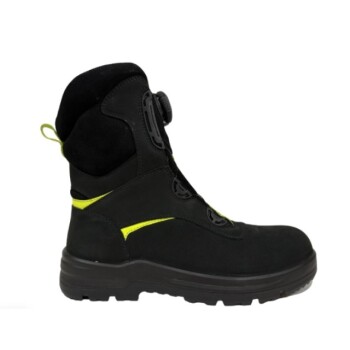
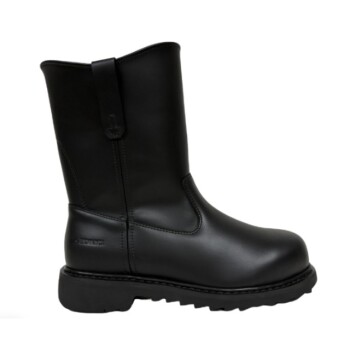
Designing high-friction anti-slip outsoles requires a synergistic approach that integrates structural geometry with material science to ensure safety in hazardous environments. The key considerations involve optimizing drainage channels to rapidly displace fluids, employing microscopic grip patterns to maximize the effective contact area, and utilizing high-grip rubber compounds to generate necessary friction on surfaces ranging from aircraft cabins to oily construction sites.
True anti-slip performance is rarely the result of a single feature; it is achieved when drainage geometry effectively clears liquid barriers, allowing high-friction compounds to engage directly with the ground for maximum stability.
Managing Fluid Dynamics
To prevent slipping, the outsole must first eliminate the lubrication layer between the boot and the floor.
Optimizing Drainage Channels
The primary defense against hydroplaning is the structure of the tread itself. Designers must engineer channels that actively channel fluids—water, oil, or chemicals—away from the pressure points of the foot.
Clearing the Contact Patch
If liquid remains trapped under the sole, friction is lost regardless of the rubber quality. Wide and strategically angled grooves ensure that liquid is ejected quickly, allowing the solid material of the sole to touch the solid material of the ground.
Maximizing Surface Contact
Once the fluid is displaced, the focus shifts to how the sole interacts physically with the floor.
Microscopic Grip Patterns
Beyond the visible tread, microscopic textures are essential. These minute patterns increase the effective contact area between the sole and the ground.
Creating Mechanical Interlock
On a microscopic level, these patterns allow the outsole to "key" into the imperfections of the flooring. This interaction is critical for maintaining traction on smooth, polished, or slick surfaces often found in aircraft or industrial facilities.
Material Selection and Environment
The geometry of the sole must be paired with the correct chemical composition to function correctly.
High-Grip Rubber Compounds
The rubber formulation is the engine of friction. High-grip compounds are softer and more pliable, allowing them to mold slightly to the ground surface to generate adhesion.
Tailoring for Specific Environments
A sole designed for an oily machine shop requires a different compound than one for a rocky construction site. The rubber must resist chemical degradation from the specific contaminants it encounters while maintaining its frictional properties.
Understanding the Trade-offs
While high friction is the goal, maximizing it often introduces specific compromises that must be managed.
Durability vs. Adhesion
High-grip rubber compounds are typically softer, which helps them adhere to surfaces. However, softer materials tend to wear down faster on abrasive surfaces like concrete or asphalt compared to harder, less grippy compounds.
Clogging Risks
Deep drainage channels are excellent for fluids but can trap solid debris, mud, or gravel. If the tread becomes clogged, the anti-slip geometry is effectively nullified until it is cleaned.
Selecting the Right Outsole for Your Environment
To choose the correct protective footwear, you must match the design features to your specific operational hazards.
- If your primary focus is fluid-heavy environments (oil, water, chemicals): Prioritize outsoles with wide, aggressive drainage channels to prevent hydroplaning and ensure fluid displacement.
- If your primary focus is smooth, slick surfaces (aircraft cabins, polished floors): Look for outsoles featuring microscopic grip patterns and soft rubber compounds to maximize surface contact area.
By aligning the tread geometry and rubber compound with your specific environmental risks, you ensure the highest level of stability and safety.
Summary Table:
| Design Element | Primary Function | Key Feature |
|---|---|---|
| Drainage Channels | Fluid Displacement | Prevents hydroplaning by ejecting water, oils, and chemicals. |
| Micro-Grip Patterns | Surface Contact | Maximizes effective contact area on smooth or polished floors. |
| Rubber Compound | Adhesion & Friction | High-grip, soft formulations for mechanical interlocking. |
| Tread Geometry | Stability | Strategically angled grooves for multi-directional traction. |
Partner with 3515 for Professional-Grade Safety Footwear
As a large-scale manufacturer serving distributors and brand owners, 3515 offers comprehensive production capabilities for all footwear types, anchored by our flagship Safety Shoes series. Our extensive portfolio covers work and tactical boots, outdoor shoes, training shoes, and sneakers, as well as Dress & Formal shoes to meet diverse bulk requirements.
We provide our partners with:
- Advanced Anti-Slip Technology: Outsoles engineered for high-risk industrial and tactical environments.
- Bulk Manufacturing Excellence: Scalable production to meet the demands of global distributors.
- Customized Solutions: Tailoring rubber compounds and tread designs to your specific market needs.
Ready to elevate your product line with industry-leading safety performance? Contact us today to discuss your bulk manufacturing needs.
References
- Ronghan Wang. How to Design Comfortable Shoes in Specific Use of Scene. DOI: 10.54097/zjsr8m86
This article is also based on technical information from 3515 Knowledge Base .
Related Products
- Factory-Direct Wholesale Canvas Boots with High-Traction Rubber Soles
- Wholesale Waterproof Tactical Boots Custom Suede & High-Traction Soles
- Heavy-Duty Waterproof Nubuck Safety Boots Safety Shoes for Bulk Supply
- High-Traction Suede Tactical Boots Wholesale & Custom Manufacturing
- Durable Leather Moc Toe Work Boots for Wholesale & Custom Manufacturing
People Also Ask
- What types of jobs are canvas work boots suitable for? Ideal for Light-Duty, High-Mobility Roles
- What are the functional advantages of choosing rubber soles over leather soles for work boots? Superior Safety & Durability
- What are the advantages of rubber soles for work boots? Unbeatable Grip & Durability
- Why are slip-resistant soles important in work boots? Prevent Slips & Boost Safety
- What are the benefits and limitations of using canvas as a primary material for footwear? Key B2B Manufacturing Insights