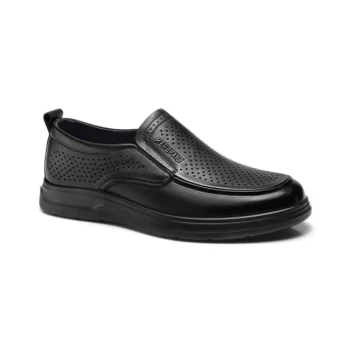
For a truly non-slip shoe, the sole must be made of rubber. Specifically, a soft and flexible rubber compound like EVA (ethylene-vinyl acetate) is superior. Unlike harder materials such as leather, soft rubber provides the necessary pliability and high friction to maintain a secure grip on slick surfaces.
The effectiveness of a non-slip shoe is determined not just by the material, but by the critical combination of a soft rubber compound and a sole designed with specific patterns to channel liquids away.
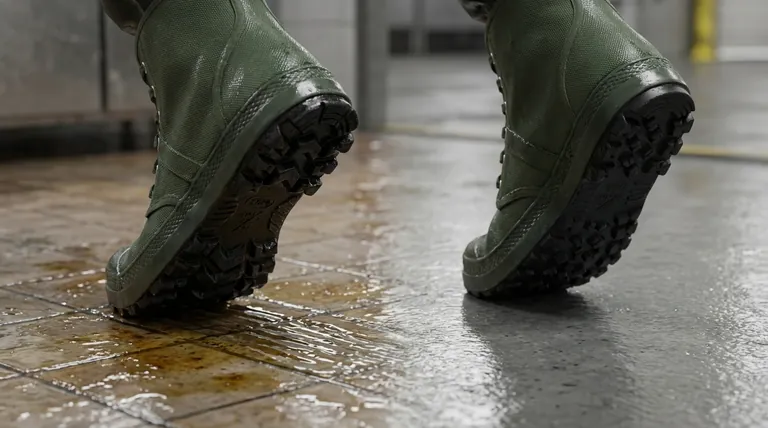
Why Material is Only Half the Story
Choosing a non-slip shoe requires looking beyond a simple material label. The properties of that material are what truly determine its performance.
The Critical Role of Rubber
Rubber is the industry standard for slip-resistant footwear for a reason. Its inherent high coefficient of friction creates a strong bond with walking surfaces. This stands in stark contrast to materials like leather, which are smooth, wear down quickly, and offer minimal grip, especially in wet conditions.
Softness Equals Grip
The most effective non-slip soles are made from a soft rubber compound. A softer material can better conform to the microscopic imperfections of a floor surface. This increases the total surface area in contact with the ground, maximizing friction and preventing slips. A rigid, hard sole simply can't achieve this level of grip.
The EVA Rubber Advantage
Many high-performance non-slip shoes use EVA rubber. This is a foam-like rubber composite that is lightweight, remarkably flexible, and excellent at absorbing shock. These properties make it comfortable for long periods of standing while providing the softness needed for superior traction.
The Unsung Hero: Sole Design
The most advanced rubber compound will fail if the sole isn't engineered correctly. The physical shape and pattern of the sole are just as important as the material itself.
The Importance of Tread Patterns
The grooves on a non-slip sole are not for decoration. These intricate patterns are designed as channels. When you step on a wet or oily surface, these channels funnel the liquid out and away from the bottom of your shoe. This prevents a layer of liquid from getting trapped, which would cause hydroplaning and a dangerous slip.
The Function of Rounded Edges
Effective non-slip soles often feature slightly rounded or curved edges. This design element aids the tread pattern in pushing liquids out from underneath the shoe. It ensures that the flat, high-friction part of the sole makes solid contact with the floor itself, not with the slippery substance on top of it.
Understanding the Trade-offs
No single shoe is perfect for every situation. Understanding the inherent compromises in sole design will help you make a more informed decision.
Durability vs. Grip
There is a direct trade-off between the softness of the rubber and its durability. Extremely soft rubber provides the best possible grip, but it will wear down more quickly than a harder compound. For environments with extreme slip hazards, prioritizing grip over longevity is a critical safety decision.
Not All Rubber is Created Equal
Seeing "rubber sole" on a product description is not enough. A hard, vulcanized rubber designed for hiking boots has very different properties than the soft EVA rubber needed for a slippery kitchen floor. Always look for terms like "soft," "slip-resistant," or specifications about the tread design.
How to Choose the Right Non-Slip Shoe
Your choice should be guided by your specific environment and safety needs.
- If your primary focus is maximum safety in wet or oily environments: Prioritize shoes with soft EVA rubber soles that feature both intricate tread patterns and rounded edges.
- If your primary focus is all-day wear with moderate slip risk: A slightly firmer rubber composite can provide a good balance between reliable grip and longer-lasting durability.
- If your primary focus is style in mostly dry conditions: Materials like leather are an option, but you must recognize they offer no meaningful slip protection.
Ultimately, selecting the right non-slip shoe means evaluating the sole's material and its physical design in tandem.
Summary Table:
| Key Factor | Why It Matters for Non-Slip Soles |
|---|---|
| Material | Soft rubber (e.g., EVA) provides high friction and flexibility, unlike hard materials like leather. |
| Softness | Softer rubber conforms to floor imperfections, increasing surface contact and grip. |
| Tread Pattern | Grooves channel water and oil away from the sole to prevent hydroplaning. |
| Edge Design | Rounded edges help push liquids away, ensuring solid contact with the floor. |
| Durability Trade-off | Softer rubber offers superior grip but may wear down faster than harder compounds. |
Need reliable non-slip footwear for your team or brand?
As a large-scale manufacturer, 3515 produces a comprehensive range of safety footwear for distributors, brand owners, and bulk clients. Our production capabilities encompass all types of non-slip shoes and boots, engineered with the optimal combination of soft rubber compounds and advanced tread patterns for maximum safety and durability.
Contact us today to discuss your specific needs and learn how we can provide high-quality, effective non-slip footwear for your customers.
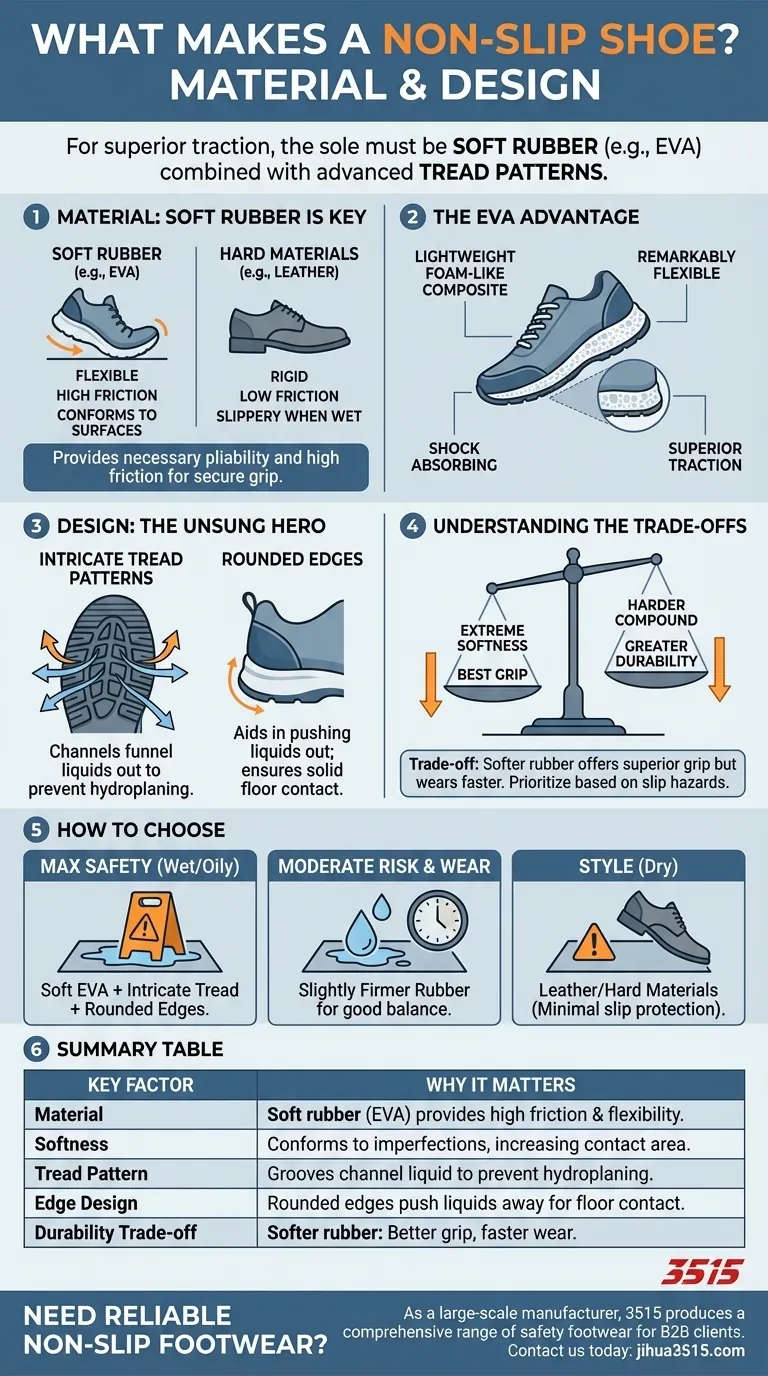
Visual Guide
Related Products
- Advanced KPU Athletic Safety Shoe with Steel Toe Cap Anti-Slip Rotary Lacing System
- Premium Suede Sport Safety Shoes for Wholesale & Bulk Orders
- Durable High-Traction Canvas Sneakers Wholesale & Custom Manufacturing
- Durable Goodyear Welt Leather Work Boots for Wholesale & Private Label
- Heavy-Duty Waterproof Nubuck Safety Boots Safety Shoes for Bulk Supply
People Also Ask
- What are the key differences between steel toe and composite toe caps? Choose the Right Safety for Your Job
- What impact do steel toe caps have on toe skin health? Prevent Friction and Pressure in Your Safety Shoes
- What are the primary protective functions of safety shoes with steel toes in the automotive repair industry?
- What type of safety shoe is recommended for workers exposed to heavy machinery? Steel Toe Boots for Ultimate Protection
- How does defining specific friction interface models in FEA assist in predicting safety shoe toe cap failure modes?