
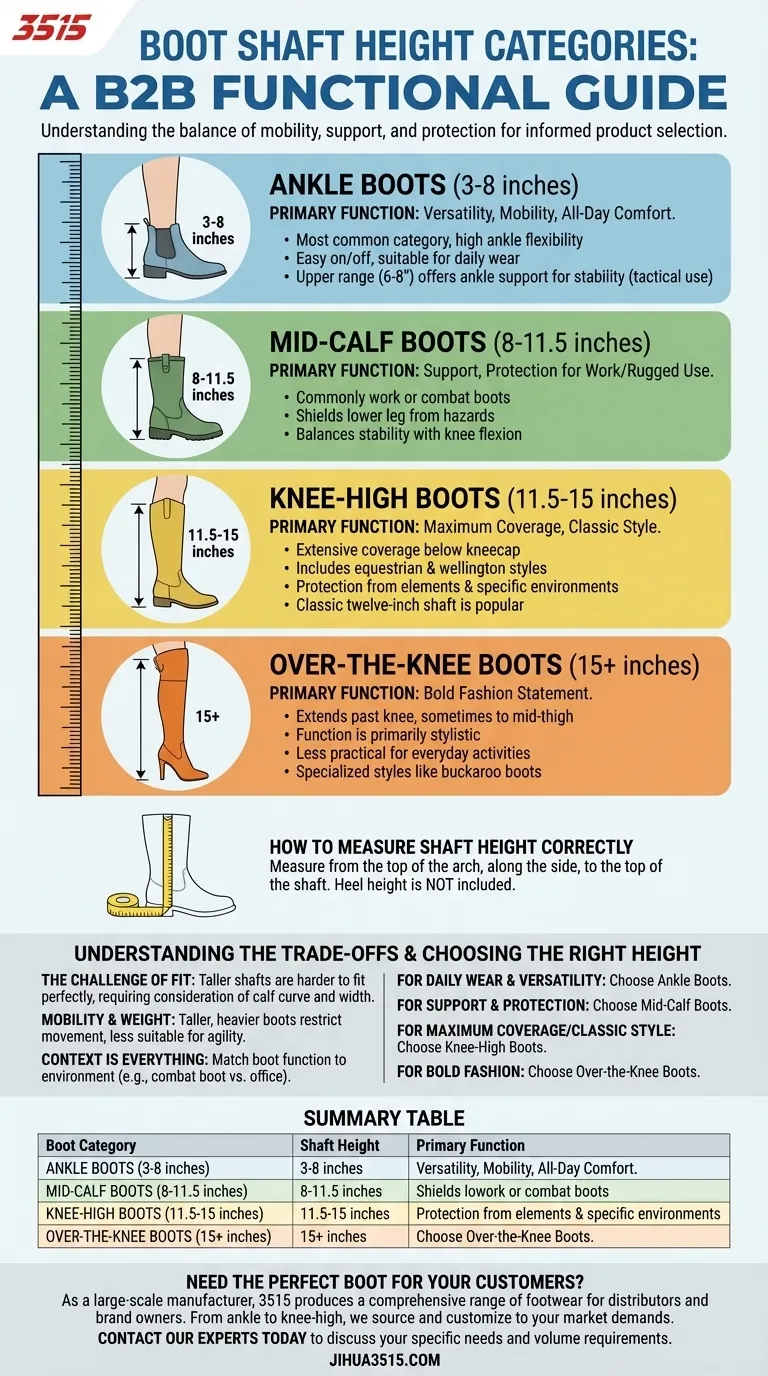
Boot shaft height is categorized into four primary groups based on their measurement from the arch. These categories are Ankle Boots (3 to 8 inches), Mid-Calf Boots (8 to 11.5 inches), Knee-High Boots (11.5 to 15 inches), and Over-the-Knee Boots (15 inches and taller). Each category serves a distinct functional and stylistic purpose.
The core principle to understand is that boot shaft height is a deliberate design choice that dictates the boot's function. The right height provides the ideal balance of mobility, support, protection, and style for its intended purpose.
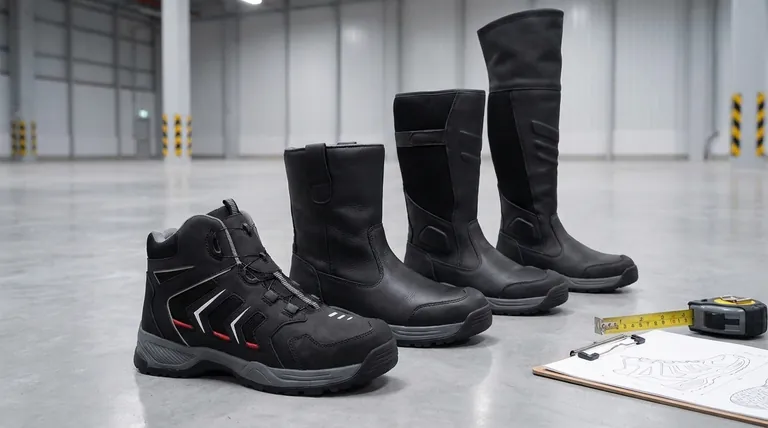
A Functional Guide to Boot Categories
Understanding the "why" behind each height category allows you to select a boot that doesn't just fit your leg, but also fits your life. A boot's shaft is its most defining functional feature.
How to Measure Shaft Height Correctly
Before comparing styles, know how the measurement is taken. Shaft height is measured from the top of the boot's arch, along the side, up to the very top of the boot shaft. The heel height is not included in this measurement.
Ankle Boots (3-8 inches): Versatility and Mobility
This is the most common and versatile category. The lower shaft height offers maximum ankle flexibility, making these boots easy to put on and comfortable for all-day wear.
Many military and tactical boots fall into the upper end of this range (6-8 inches), as this height provides crucial ankle support for stability during rigorous activity without being overly restrictive.
Mid-Calf Boots (8-11.5 inches): The Protective Sweet Spot
Often called work boots or combat boots, this height offers a significant increase in protection and support over ankle boots. They shield the lower leg from debris, brush, or workplace hazards.
This category strikes a balance, providing more stability and coverage than an ankle boot while still allowing for more knee flexion than a knee-high model.
Knee-High Boots (11.5-15 inches): Maximum Coverage and Style
This category is defined by its extensive coverage, ending just below the kneecap. It includes classic styles like equestrian riding boots and Wellington rain boots.
The "classic twelve-inch shaft" is a highly popular height within this category, known for creating a traditional, balanced silhouette. The primary function is protection from the elements or specific work environments.
Over-the-Knee Boots (15+ inches): The Fashion Statement
As the name implies, these boots extend past the knee and can sometimes reach the mid-thigh. Their function is almost entirely stylistic.
While they offer the most coverage, their extreme height can make them less practical for everyday activities. Taller, more specialized versions like "buckaroo-style" cowboy boots fall into this category.
Understanding the Trade-offs: Height vs. Practicality
Choosing a boot height is a matter of balancing competing factors. What you gain in one area, you often sacrifice in another. Being aware of these trade-offs is key to making an informed decision.
The Challenge of Fit
The taller the boot shaft, the more difficult it is to achieve a perfect fit. A knee-high boot must fit not only your foot and ankle but also the unique curve and width of your calf.
Mobility and Weight
There is a direct relationship between shaft height and mobility. Taller, heavier boots can restrict ankle and knee movement, making them less suitable for activities that require agility or extensive walking.
Context is Everything
A 10-inch combat boot that provides excellent support on a trail will feel cumbersome and hot in an office environment. Likewise, a stylish ankle boot offers no protection in wet or muddy conditions.
Choosing the Right Shaft Height for Your Needs
To select the correct boot, start by defining its primary purpose. Your goal will immediately narrow the field and point you toward the ideal shaft height.
- If your primary focus is daily wear and versatility: Choose ankle boots (3-8") for their unmatched comfort, mobility, and ease of styling.
- If your primary focus is support and protection for work or rugged activity: Look to mid-calf boots (8-11.5") for a robust balance of stability and leg coverage.
- If your primary focus is maximum protection from weather or a classic silhouette: Knee-high boots (11.5-15") offer the most coverage for practical or equestrian purposes.
- If your primary focus is making a bold fashion statement: Over-the-knee boots (15"+) provide a dramatic look, though with less everyday practicality.
By aligning the boot's inherent function with your specific goal, you can make a confident and effective choice.
Summary Table:
| Boot Category | Shaft Height (from arch) | Primary Function |
|---|---|---|
| Ankle Boots | 3 - 8 inches | Versatility, mobility, all-day comfort |
| Mid-Calf Boots | 8 - 11.5 inches | Support, protection for work/rugged use |
| Knee-High Boots | 11.5 - 15 inches | Maximum coverage, classic style |
| Over-the-Knee Boots | 15+ inches | Bold fashion statement |
Need the Perfect Boot for Your Customers?
As a large-scale manufacturer, 3515 produces a comprehensive range of footwear for distributors, brand owners, and bulk clients. Our production capabilities encompass all types of shoes and boots, from versatile ankle boots to protective mid-calf work boots and classic knee-high styles.
We can help you source or customize the ideal boot with the precise shaft height, materials, and features your market demands.
Contact our experts today to discuss your specific needs and volume requirements.
Visual Guide
Related Products
- Wholesale Durable Safety Boots | Custom Steel Toe & Puncture-Resistant Manufacturing
- Premium Wholesale Tactical Style Safety Shoes Boots with Quick Lacing
- Durable Goodyear Welt Leather Work Boots for Wholesale & Private Label
- Durable Leather Work Boots for Wholesale & Custom Manufacturing
- Premium Wholesale Waterproof Safety Boots High Performance Protection for Industrial Markets
People Also Ask
- What are the key features of safety boots? Essential Protection for Hazardous Workplaces
- What makes durable safety boots? The Ultimate Guide to Long-Lasting Work Footwear
- How should safety boots be cleaned to avoid damage? A Gentle Guide to Preserve Your Boots
- Why is proper storage important for safety boots? Preserve Protection and Extend Lifespan
- What materials are commonly used for outsoles in safety boots? A Guide to Durability, Grip, and Comfort



















