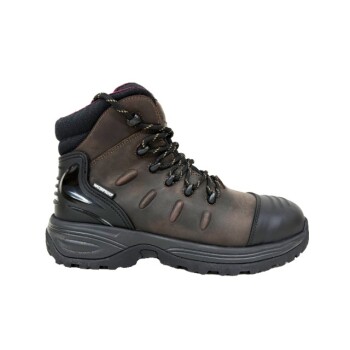
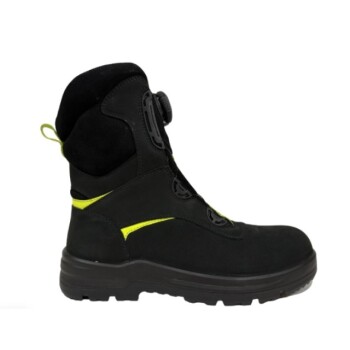
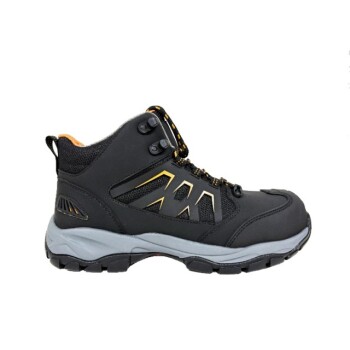
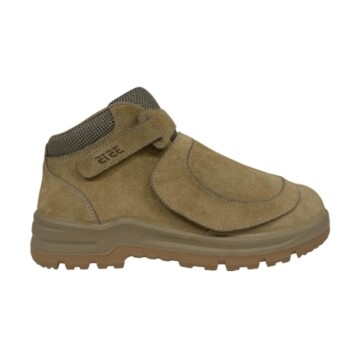
Reliance on ordinary rubber boots or cloth shoes constitutes a critical safety lapse because these materials lack the structural integrity required to withstand the high-risk environment of forest clearing. While they may cover the foot, they fail to provide puncture resistance or impact protection, leaving workers vulnerable to debilitating injuries from machetes, sharp branches, and hidden stones.
Core Takeaway The distinction between ordinary footwear and professional safety boots is not merely about durability, but about the presence of a robust physical barrier. Using inadequate footwear during manual slashing gambling with permanent disability, as standard rubber and cloth offer virtually no defense against high-velocity cutting tools or sharp terrain hazards.
The Mechanics of Vulnerability
Lack of Puncture Resistance
Ordinary rubber boots and cloth shoes are designed for water resistance or comfort, not defense. Their soles and uppers are soft and pliable.
In a forest environment, this means sharp branches, thorns, or jagged stones can easily penetrate the material. Professional safety boots utilize reinforced materials specifically engineered to stop these penetrations before they reach the skin.
Absence of Impact Protection
Forest clearing often involves falling debris or the accidental dropping of heavy objects.
Cloth shoes and standard rubber boots provide zero absorption against these forces. Without the impact protection found in industrial-grade footwear, the bones of the foot are fully exposed to crushing injuries.
Operational Hazards in Forest Clearing
The Machete Factor
Manual slashing involves the rhythmic swinging of sharp, heavy blades, often in close proximity to the legs and feet.
This is the most severe risk: a misdirected machete swing will slice through an ordinary rubber boot or cloth shoe instantly. Professional safety boots or tactical boots act as a shield, deflecting the blade and preventing deep lacerations or severed tendons.
Complex Terrain Traps
Forest floors are rarely level or clean; they are complex environments filled with tripping hazards and hidden spikes.
Ordinary footwear lacks the stability and protection needed for this terrain. The reference highlights that without industrial-grade features, workers face a high susceptibility to injuries that can lead to potential disability, effectively ending a career.
Understanding the Trade-offs
The Illusion of Protection
A common pitfall is assuming that because rubber boots are waterproof and cover the calf, they offer safety.
This is a dangerous misconception. Waterproofing is not armor. While rubber boots act as a barrier against mud, they offer a "false security" regarding physical trauma. They may keep feet dry, but they will not keep them whole in the event of an accident with a cutting tool.
Mobility vs. Security
Cloth shoes are often chosen for their light weight and agility.
However, in a slashing environment, this agility comes at the cost of total exposure. The trade-off is unacceptable: gaining a marginal increase in comfort requires sacrificing the essential physical barrier that stands between a worker and a life-altering injury.
Making the Right Choice for Your Safety
To ensure physical integrity during forest operations, you must match your protective equipment to the severity of the hazard.
- If your primary focus is general site inspection: Ordinary boots may suffice for keeping feet dry and clean on cleared, flat ground.
- If your primary focus is manual slashing or clearing: You must utilize professional safety boots to establish a puncture-resistant barrier against blades and debris.
Invest in the gear that respects the danger of the job; in forest clearing, your boots are your primary shield against disability.
Summary Table:
| Feature | Ordinary Rubber/Cloth Shoes | Professional Safety Boots |
|---|---|---|
| Puncture Resistance | None; easily pierced by thorns/stones | High; reinforced soles and uppers |
| Impact Protection | Zero; soft materials offer no defense | Industrial-grade toe and foot guards |
| Machete/Blade Safety | Slice instantly; high risk of laceration | Protective barrier deflects sharp blades |
| Terrain Stability | Low; prone to slips and ankle injuries | High; engineered for complex forest floors |
| Primary Function | Keeping feet dry or comfortable | Ensuring physical integrity and safety |
Secure Your Team's Safety with 3515
Don't let inadequate footwear lead to preventable disabilities. As a large-scale manufacturer serving distributors and brand owners, 3515 offers comprehensive production capabilities for all footwear types, anchored by our flagship Safety Shoes series. Our extensive portfolio covers work and tactical boots, outdoor shoes, training shoes, and sneakers, as well as Dress & Formal shoes to meet diverse bulk requirements.
Whether you are supplying forest clearing crews or tactical units, our professional-grade boots provide the essential physical barrier needed for hazardous environments. Contact us today to discuss your bulk manufacturing needs and ensure your customers receive the highest standard of protection.
References
- Tomi Kaakkurivaara, Nopparat Kaakkurivaara. Risk Factors and Occupational Safety Failures in Forest Work in the Southeast Asian Region. DOI: 10.3390/f13122034
This article is also based on technical information from 3515 Knowledge Base .
Related Products
- Premium Grain Leather Safety Boots for Bulk Supply
- Puncture-Resistant Velcro Safety Boots for Wholesale & Custom Manufacturing
- Heavy-Duty Waterproof Nubuck Safety Boots Safety Shoes for Bulk Supply
- Premium Oil Wax Leather Safety Boots for Bulk Purchase
- Wholesale Durable Safety Boots | Custom Steel Toe & Puncture-Resistant Manufacturing
People Also Ask
- What materials are commonly used for outsoles in safety boots? A Guide to Durability, Grip, and Comfort
- What are the consequences of not wearing safety boots? Protect Your Finances and Career
- What are the key features of safety boots? Essential Protection for Hazardous Workplaces
- What primary protective functions do professional safety boots provide in urban solid waste recovery and waste picking processes? Discover Dual-Layer Protection.
- How should safety boots be cleaned to avoid damage? A Gentle Guide to Preserve Your Boots