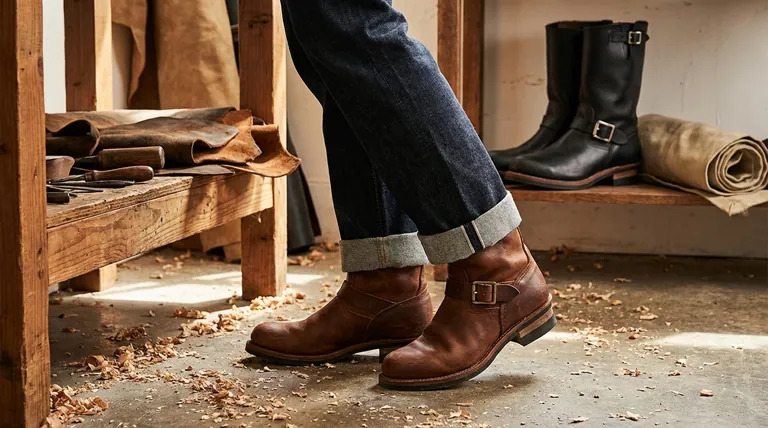
The single most important rule for wearing engineer boots is managing the interaction between your pants and the boot's tall, wide shaft. For a classic look, your pants should be wide enough to fit cleanly over the top of the boot. Avoid tucking your pants in, as this can disrupt the boot's rugged and clean silhouette.
The core challenge of styling engineer boots lies in their laceless, "stovepipe" shaft. The right approach creates a clean, unbroken line from your leg to your foot, while the wrong one leads to awkward bunching and clashes in proportion.
Understanding the Engineer Boot's Design
The distinct style of an engineer boot is dictated by its core features, which evolved from pure function. Understanding them is key to wearing the boot correctly.
The Stovepipe Shaft
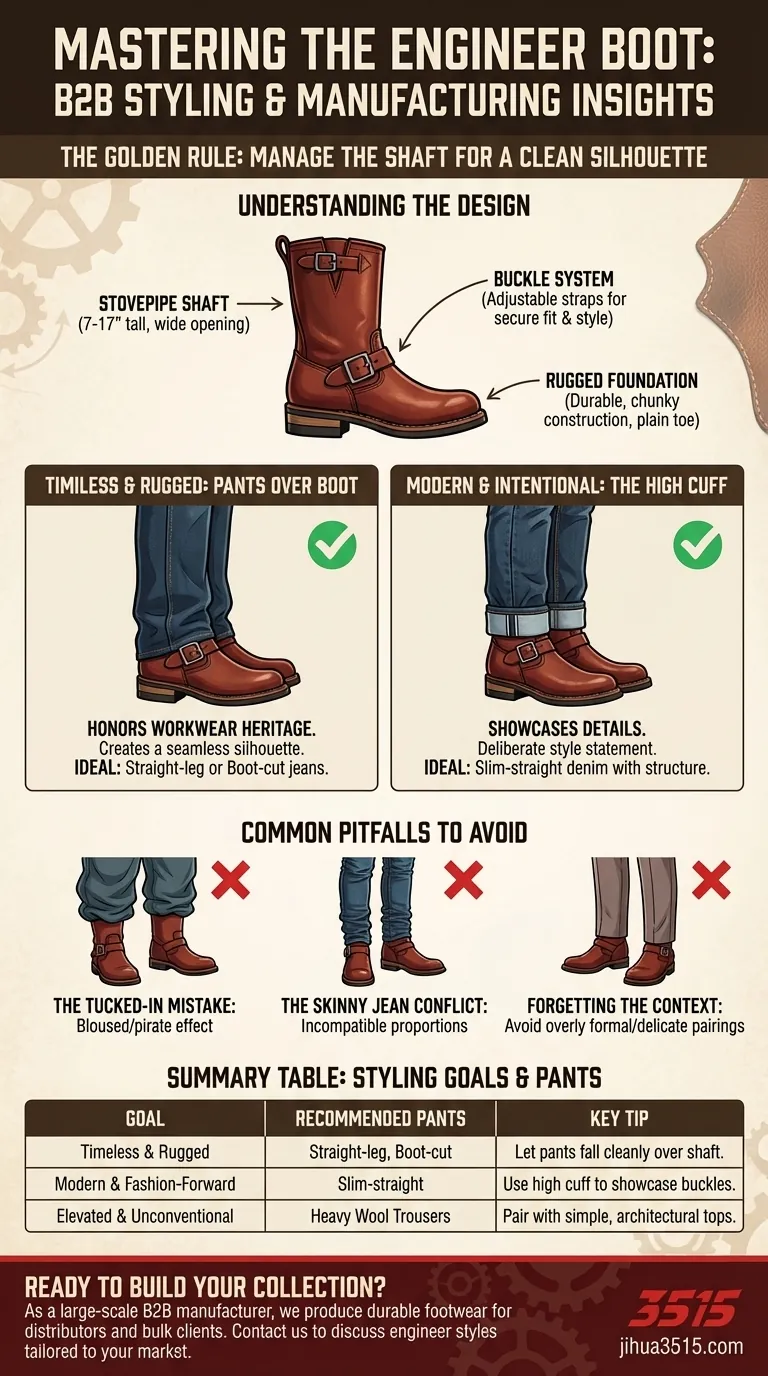
Engineer boots feature a tall, laceless shaft, typically ranging from 7 to 17 inches. This design provides protection but also creates a wide opening at the top.
The Buckle System
Instead of laces, these boots use adjustable leather straps with metal buckles at the ankle and near the top of the shaft. These are functional elements designed for a secure fit that also serve as the boot's primary visual signature.
The Rugged Foundation
Originally built for tough working conditions, these boots have a durable, often chunky construction with a plain toe. This gives them a visual weight and a grounded, utilitarian aesthetic.
The Cardinal Rule: Pants Over the Boot
For a timeless and authentic look, the easiest and most effective method is to wear your pants over the boot shaft.
Why This Works
This approach honors the boot's workwear heritage. It creates a seamless silhouette, allowing the bottom of the boot and its distinctive plain toe to show without an abrupt break at the ankle. It's an understated and confident way to wear them.
Choosing the Right Pants
The key is a sufficient leg opening. Straight-leg or boot-cut jeans are ideal choices. The goal is for the hem to fall naturally over the shaft without bunching or stretching.
When to Break the Rule: The High Cuff
While tucking pants in is a common mistake, a deliberate cuff can create a more modern, style-conscious look.
A More Intentional Approach
Instead of tucking, you can cuff your pants to sit just above the boot's opening. This intentionally showcases the top of the boot and its buckle detail, which can be a strong style statement.
How to Execute the Cuff
This works best with slim-straight denim that has enough structure to hold a clean cuff. A single, wide cuff or a couple of tight, smaller rolls can work, but the hem should rest cleanly above the boot, not get stuffed inside it.
Common Pitfalls to Avoid
The unique shape of engineer boots creates specific styling challenges. Being aware of them is critical to achieving the right look.
The Tucked-In Mistake
Simply stuffing your pants into the boots rarely works. The wide shaft causes the fabric to billow out over the top, creating a "bloused" or "pirate" effect that looks sloppy and disrupts the boot's clean lines.
The Skinny Jean Conflict
Skinny jeans are the natural enemy of the engineer boot. Their leg opening is too narrow to fit over the shaft, and their tight fit through the leg means tucking them in creates uncomfortable, unsightly bunching. The proportions are fundamentally incompatible.
Forgetting the Context
These are rugged, historically significant boots. Pairing them with overly formal or delicate clothing can create a jarring disconnect. They thrive when paired with equally durable fabrics like denim, canvas, or heavy wool.
Making the Right Choice for Your Goal
Your approach should depend on the specific look you want to achieve.
- If your primary focus is a timeless, rugged style: Wear straight-leg denim or work pants that fall cleanly over the boot shaft.
- If your primary focus is a contemporary, fashion-forward look: Use a precise, high cuff with slim-straight jeans to intentionally showcase the boot's buckles and silhouette.
- If your primary focus is an elevated, unconventional aesthetic: Pair them with heavier wool trousers and a simple top like a black turtleneck for a daring, architectural look.
Ultimately, wearing engineer boots well is about respecting their bold design and ensuring your clothing complements, rather than fights, their powerful silhouette.
Summary Table:
| Styling Goal | Recommended Pants | Key Styling Tip |
|---|---|---|
| Timeless & Rugged | Straight-leg or boot-cut jeans | Let the pants fall cleanly over the boot shaft. |
| Modern & Fashion-Forward | Slim-straight jeans | Use a high cuff to showcase the boot's buckles. |
| Elevated & Unconventional | Heavier wool trousers | Pair with simple tops for an architectural look. |
Ready to build your perfect boot collection? As a large-scale manufacturer, 3515 produces a comprehensive range of durable footwear for distributors, brand owners, and bulk clients. Our production capabilities encompass all types of rugged boots, including engineer styles, ensuring you get high-quality products tailored to your market's needs. Contact us today to discuss your requirements and discover how we can be your trusted manufacturing partner.
Visual Guide
Related Products
- Premium Waterproof High-Cut Industrial Safety Boots for Wholesale and Bulk Orders
- Durable Leather Work Boots Wholesale Manufacturer & Custom Factory
- Durable Leather Work Boots for Wholesale & Custom OEM Manufacturing
- Durable Leather Work Boots for Wholesale & Custom Manufacturing
- Durable Leather Moc Toe Work Boots for Wholesale & Custom Manufacturing
People Also Ask
- Why are oil-resistant and anti-slip properties critical for industrial safety boots? Expert Outsole Engineering Guide
- What are the primary protective functions of industrial safety boots in oil palm plantations? Master Rough Terrain Safety
- What protective functions do industrial-grade safety boots provide in construction and mining? Maximize Worker Safety
- What are the protective functions of industrial safety boots in sugar factory clarification stations? Thermal & Slip Experts
- Why is professional industrial-grade safety footwear a suitable carrier for diabetic rehabilitation insoles?