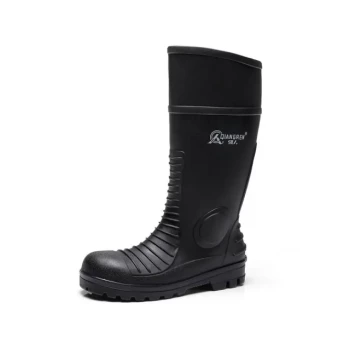
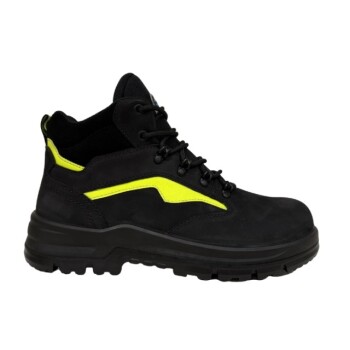
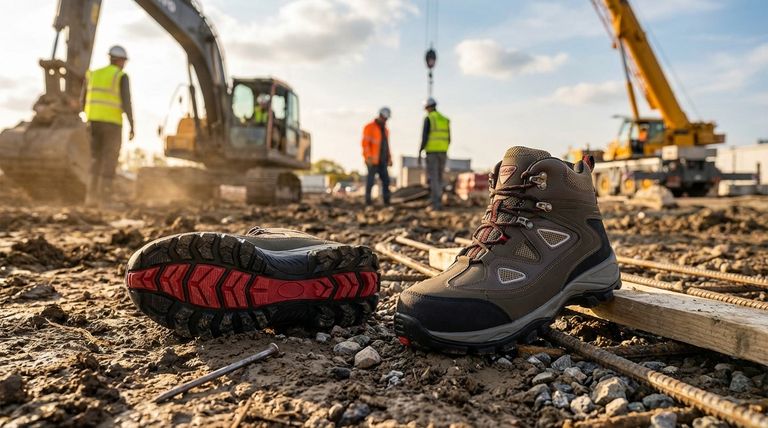
For the construction industry, the most recommended work boot features are a reinforced safety toe (steel or composite), a puncture and slip-resistant sole, substantial ankle support, and waterproofing. These core elements are not optional; they are the baseline for ensuring your safety and endurance on a hazardous and demanding job site.
A construction work boot is a critical piece of personal protective equipment (PPE). The right choice is not about a single feature, but about a system of protection that shields you from specific, common site hazards while providing the comfort needed to prevent fatigue over long, strenuous workdays.
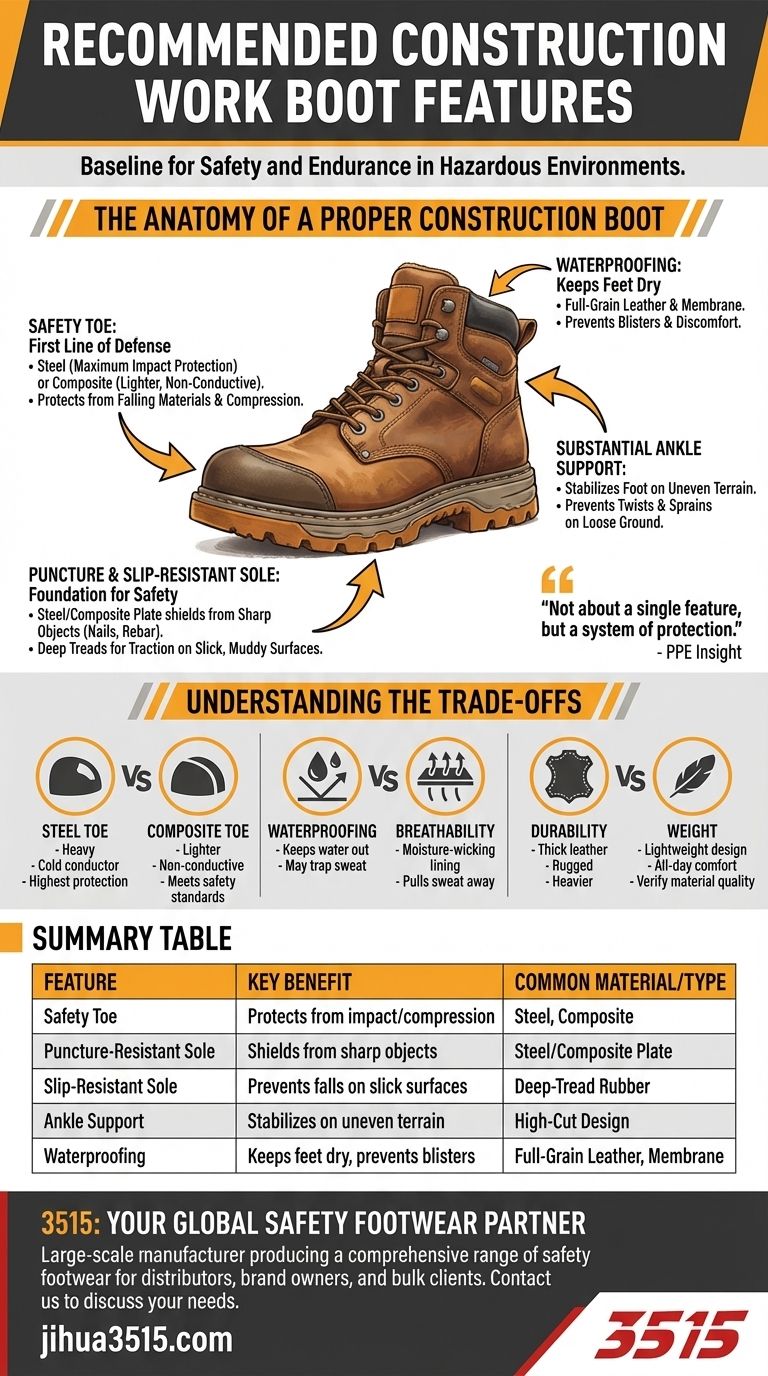
The Anatomy of a Proper Construction Boot
To make an informed decision, you must understand the "why" behind each essential feature. Every component is designed to mitigate a specific risk common to construction environments.
Non-Negotiable Toe Protection
Your feet are constantly exposed to impact and compression hazards from falling materials, heavy machinery, and dropped tools.
A safety toe is your first line of defense. These are typically made of steel for maximum protection or a composite material, which is lighter and doesn't conduct electricity or cold.
The Sole: Your Foundation for Safety
The sole of your boot interacts directly with the worksite and must protect you from multiple threats.
A puncture-resistant sole, often featuring a steel or composite plate, shields the bottom of your foot from sharp objects like nails, screws, and rebar.
Simultaneously, a slip-resistant outsole with deep treads provides critical traction on slick, muddy, or uneven surfaces, preventing one of the most common causes of worksite injuries.
Ankle Support for Unstable Ground
Construction sites are rarely flat. You will be walking on loose dirt, gravel, rebar mats, and unfinished surfaces.
A boot with a higher ankle cut provides crucial support, stabilizing your foot and helping to prevent painful twists, sprains, and falls on this unpredictable terrain.
Weather and Water Resistance
Working conditions are not always dry and sunny. Exposure to rain, mud, and standing water is a daily reality for many.
Waterproof or water-resistant materials, like full-grain leather with a waterproof membrane, are essential for keeping your feet dry. This not only enhances comfort but also prevents blisters and other foot health issues.
Understanding the Trade-offs
Choosing the perfect boot involves balancing competing features. Understanding these trade-offs is key to selecting the right tool for your specific job.
Steel Toe vs. Composite Toe
Steel toes generally offer the highest level of impact and compression resistance, making them a traditional standard. However, they are heavier and conduct temperature, which can be uncomfortable in extreme cold.
Composite toes are significantly lighter, do not conduct electricity, and don't get as cold. While they meet the same safety standards, some tradesmen prefer the proven history of steel for the absolute heaviest work.
Waterproofing vs. Breathability
A fully waterproof boot is excellent at keeping water out, but it can sometimes trap sweat inside, leading to discomfort.
Look for boots that pair a waterproof membrane with a moisture-wicking lining. This combination helps pull sweat away from your foot, improving breathability without sacrificing protection from the elements.
Durability vs. Weight
The most durable boots are often made of thick, high-quality leather and have rugged soles, but this can add weight.
A heavier boot can increase fatigue over a 12-hour shift. A lightweight design can improve all-day comfort, but you must ensure it doesn't come at the cost of essential protection or material quality.
Making the Right Choice for Your Role
Your specific tasks and work environment should guide your final decision. Use these guidelines to prioritize features.
- If your primary focus is maximum protection on a heavy-duty site: Prioritize a steel toe, puncture-proof sole, and consider additional features like metatarsal guards.
- If your primary focus is mobility and working in varied weather: A waterproof boot with a lighter composite toe and a flexible sole will provide the best balance.
- If your primary focus is all-day comfort for long hours on concrete: Emphasize superior cushioning, arch support, and a lightweight design without compromising on the non-negotiable safety toe.
Investing in the right work boot is a direct investment in your daily safety and long-term well-being.
Summary Table:
| Feature | Key Benefit | Common Material/Type |
|---|---|---|
| Safety Toe | Protects from impact/compression | Steel, Composite |
| Puncture-Resistant Sole | Shields from sharp objects | Steel/Composite Plate |
| Slip-Resistant Sole | Prevents falls on slick surfaces | Deep-Tread Rubber |
| Ankle Support | Stabilizes on uneven terrain | High-Cut Design |
| Waterproofing | Keeps feet dry, prevents blisters | Full-Grain Leather, Membrane |
As a large-scale manufacturer, 3515 produces a comprehensive range of safety footwear for distributors, brand owners, and bulk clients. Our production capabilities encompass all types of safety shoes and boots, including those with the essential features outlined above. We can help you source or create the perfect work boots to keep your workforce safe, comfortable, and productive.
Contact us today to discuss your specific needs and get a quote.
Visual Guide
Related Products
- Durable Leather Work Boots for Wholesale & Custom Manufacturing
- Durable Leather Work Boots for Wholesale & Custom OEM Manufacturing
- Durable Leather Work Boots Wholesale Manufacturer & Custom Factory
- Durable Leather Moc Toe Work Boots for Wholesale & Custom Manufacturing
- Wholesale Durable 6-Inch Work Boots | Custom & Private Label Manufacturer
People Also Ask
- What is the difference between full-grain and top-grain leather? Premium Material Guide for Boot Manufacturers
- What are the common workplace hazards that can be mitigated with the right work boots? Protect Your Workforce
- What are the common foot issues workers face due to uncomfortable work boots? Prevent Pain & Deformities
- What are the advantages of leather versus synthetic work boots? A Guide to Choosing the Right Material
- What are the key components of modern work boots? Engineered for Ultimate Durability and Comfort