Properly storing your work boots is a critical maintenance step that protects your investment and ensures their longevity. The correct method involves keeping them clean, dry, and supported in a climate-controlled, well-ventilated area away from direct heat or sunlight.
The core principle of work boot storage isn't about hiding them away; it's about actively preserving their materials and structural integrity. By controlling moisture, maintaining shape, and avoiding temperature extremes, you prevent premature aging and ensure your boots remain safe and comfortable.
The Three Pillars of Proper Boot Storage
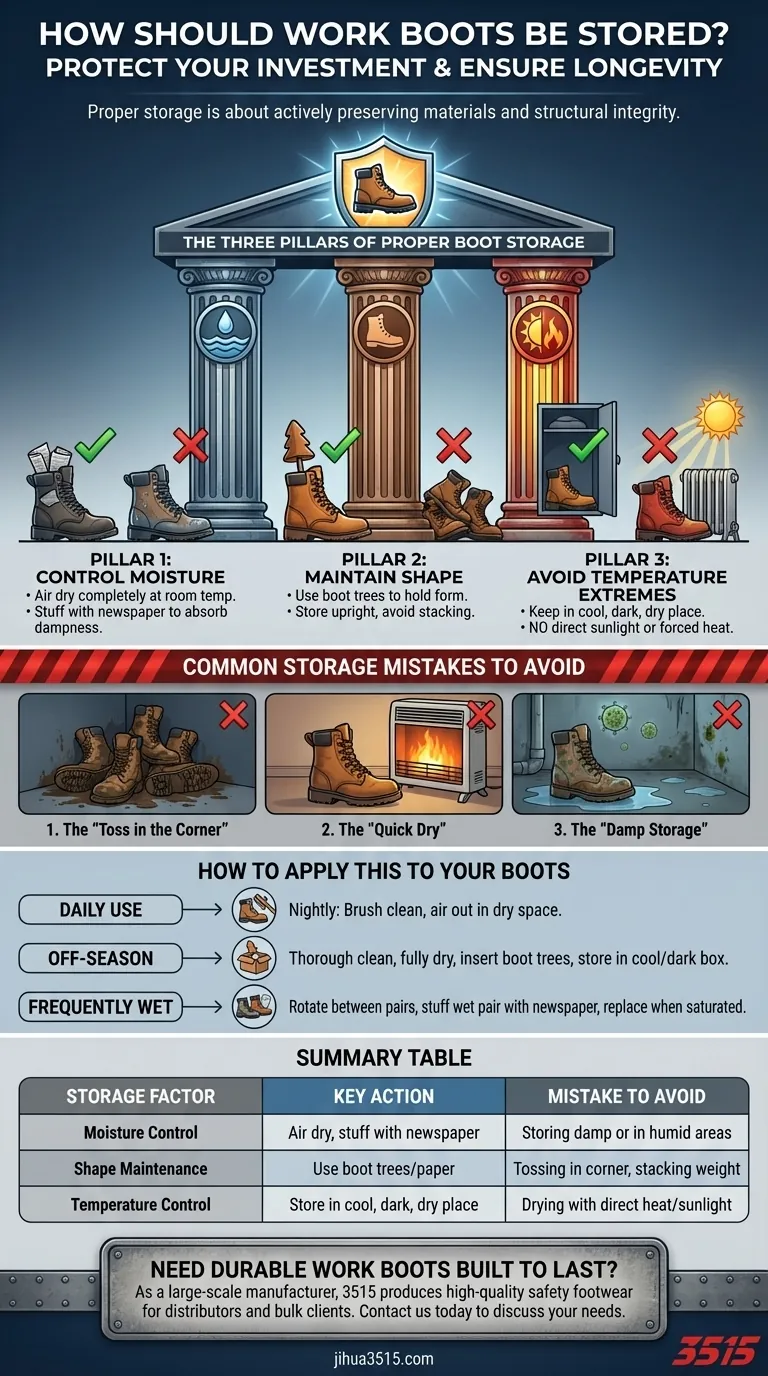
To extend the life of your boots, you must manage the three primary factors that cause material degradation: moisture, physical stress, and temperature.
Pillar 1: Control Moisture and Humidity
Moisture is the primary enemy of any work boot. It accelerates the breakdown of leather and synthetic materials, promotes mold and mildew, and can cause adhesives to fail.
Before storing, always clean off any mud or debris. Then, allow the boots to air dry completely at room temperature.
Stuffing boots with newspaper is an effective way to draw out excess moisture overnight while also helping them maintain their shape.
Pillar 2: Maintain Structural Shape
Work boots lose their supportive shape when compressed or allowed to collapse under their own weight. This leads to uncomfortable creases and premature wear.
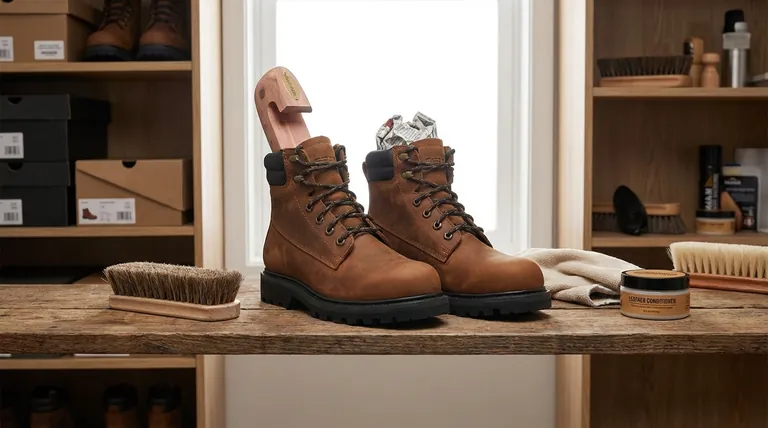
Boot trees are the ideal tool for this. They maintain the boot's original form, prevent the leather or fabric from collapsing, and can even help smooth out creases formed during wear.
If you don't have boot trees, stuffing them tightly with newspaper is a good alternative. Always store them upright and never stack heavy objects on top of them.
Pillar 3: Avoid Temperature Extremes
Extreme temperatures can irrevocably damage your boots. Both direct heat and sunlight cause significant problems.
Direct sunlight will fade and dry out leather, causing it to become brittle and crack over time.
Forced heat from a radiator, vent, or fire is even worse. It can shrink materials, crack leather, and melt the glues and cements used in the boot's construction, leading to delamination.
Common Storage Mistakes to Avoid
Your storage habits directly impact how long your boots will last. Avoiding these common pitfalls is as important as following the correct procedures.
The "Toss in the Corner" Mistake
Simply throwing your boots in a pile or a poorly ventilated closet traps moisture from your feet and the environment. This creates a perfect breeding ground for mold and bacteria and causes the boots to lose their shape.
The "Quick Dry" Mistake
Never use a direct heat source to dry your boots faster. Placing them near a heater, in front of a fire, or even in direct, intense sunlight will cook the materials, leading to brittleness and permanent damage. Patience and room-temperature air are essential.
The "Damp Storage" Mistake
Storing boots in a damp basement, garage, or shed is a recipe for disaster. Constant humidity will encourage mildew and cause the boots to disintegrate far more quickly than their natural aging process.
How to Apply This to Your Boots
Your storage strategy should adapt to how you use your boots.
- If you wear your boots daily: Focus on a consistent nightly routine of brushing them clean and letting them air out in a dry, open space.
- If you are storing boots for the off-season: Perform a thorough cleaning, ensure they are completely dry, insert boot trees, and place them in a box or dust bag in a cool, dark, and dry closet.
- If your boots frequently get wet: The priority is moisture absorption. Rotate between two pairs if possible, and always stuff the wet pair with newspaper, replacing it once it becomes saturated.
Treating storage as the final, crucial step of your workday ensures your boots are always ready to protect you on the next one.
Summary Table:
| Storage Factor | Key Action | Mistake to Avoid |
|---|---|---|
| Moisture Control | Air dry completely; stuff with newspaper | Storing damp or in humid areas |
| Shape Maintenance | Use boot trees or stuff with paper | Tossing in a corner or stacking weight on top |
| Temperature Control | Store in a cool, dark, dry place | Drying with direct heat or in sunlight |
Need durable work boots built to last? As a large-scale manufacturer, 3515 produces a comprehensive range of high-quality safety footwear for distributors, brand owners, and bulk clients. Our expertise ensures every pair is crafted for longevity and performance. Contact us today to discuss your footwear needs and discover how we can support your business with reliable, durable boots.
Visual Guide
Related Products
- Durable Leather Work Boots for Wholesale & Custom Manufacturing
- Durable Leather Work Boots for Wholesale & Custom OEM Manufacturing
- Durable Leather Work Boots Wholesale Manufacturer & Custom Factory
- Durable Leather Moc Toe Work Boots for Wholesale & Custom Manufacturing
- Wholesale Leather Work Boots with Customizable Wedge Sole for Brands
People Also Ask
- What is the difference between full-grain and top-grain leather? Premium Material Guide for Boot Manufacturers
- What are the common workplace hazards that can be mitigated with the right work boots? Protect Your Workforce
- What are the common foot issues workers face due to uncomfortable work boots? Prevent Pain & Deformities
- What are the advantages of leather versus synthetic work boots? A Guide to Choosing the Right Material
- What are the key components of modern work boots? Engineered for Ultimate Durability and Comfort