
The best farming and gardening boots are a synthesis of three core elements: absolute waterproofing, unwavering structural support, and all-day comfort. These qualities are typically achieved through high-quality materials like handcrafted rubber and flexible neoprene. They are designed not merely as footwear, but as essential tools that enhance safety and reduce fatigue during demanding outdoor work.
A quality boot is not just about keeping your feet dry; it's a piece of essential equipment designed to prevent injury, reduce fatigue, and increase your efficiency on any terrain. Choosing the right features means investing in your own safety and productivity.
The Foundation: Material and Construction
The core of a great boot lies in the materials and how they are assembled. This foundation dictates its durability, protective capabilities, and lifespan.
Absolute Waterproofing
This is the non-negotiable starting point. Quality boots are made from 100% waterproof materials like handcrafted rubber or neoprene to keep your feet dry in mud, puddles, and morning dew.
This barrier prevents discomfort and health issues that arise from prolonged exposure to moisture.
Structural Integrity (The Shank)
Many high-quality boots feature a shank, a rigid piece of material (often steel or fiberglass) built into the sole between the insole and outsole.
This component provides crucial arch support, distributes your weight evenly, and reduces the strain on your feet when digging or standing on a ladder. It is a hallmark of a durable work boot.
Durability Under Stress
A reliable boot is built to withstand constant use. This means robust construction, often with reinforced areas, that can handle scraping, flexing, and exposure to the elements without cracking or failing.
The Engine: Comfort and Fit
While durability keeps the boot working, comfort is what keeps you working. A poor fit can cause fatigue and blisters, undermining the boot's entire purpose.
All-Day Cushioning
Look for boots with excellent shock absorption, often provided by materials like 5mm neoprene. This flexible, insulating material cushions every step, reducing the impact on your joints and feet.
Critical Ankle and Arch Support
Uneven terrain is a given in farming and gardening. Proper ankle support helps prevent twists and sprains, while strong arch support, aided by the shank, prevents foot fatigue over long hours.
Proper Sizing for Tasks
A good fit should be snug but not tight. It's critical to consider space for thicker socks in colder weather without causing the boot to become too loose or slip during warmer months.
The Interface: Traction and Usability
How a boot interacts with the ground and how easily you can use it day-to-day are final, critical considerations.
Unyielding Grip (The Outsole)
The outsole is your connection to the ground. A deep, aggressive tread pattern provides superior traction and grip in mud, on wet grass, and across uneven surfaces.
For farm environments, an oil-resistant outsole is an important safety feature to prevent slips on machinery or in workshops.
Ease of Cleaning
Boots should be easy to clean. Smooth rubber or neoprene surfaces can be hosed off quickly, preventing you from tracking mud and debris indoors and saving you time.
Climate-Appropriate Linings
The boot's interior lining manages moisture and temperature. Moisture-wicking linings pull sweat away from your skin, while insulated linings (like wool or neoprene) provide warmth for cold climates.
Understanding the Trade-offs
No single boot is perfect for every task in every season. Understanding the compromises is key to making an intelligent choice.
Insulation vs. Breathability
A heavily insulated neoprene boot is ideal for cold, wet weather but will be excessively hot and sweaty during a warm summer. A boot with a moisture-wicking jersey liner is better for three-season use.
Flexibility vs. Protection
A lighter, more flexible boot is comfortable for simple gardening but may not offer the rigid ankle support or toe protection needed for heavy-duty farm work or operating machinery.
Cost vs. Longevity
Investing in a boot from a reputable brand often means a higher upfront cost. However, their superior materials and construction result in a much longer lifespan, offering better value and more reliable performance over time.
Making the Right Choice for Your Work
Select your boots based on the primary demands of your environment and tasks.
- If your primary focus is light gardening and yard work: Prioritize flexibility, a comfortable cushioned insole, and a design that is easy to clean.
- If your primary focus is heavy-duty farming or landscaping: You need maximum durability, robust ankle support, and a reinforced shank for stability and protection.
- If your primary focus is all-weather performance: Look for boots with 5mm neoprene for its excellent waterproofing and insulation, combined with a moisture-wicking liner.
Investing in the right boot is an investment in your ability to work safely and comfortably, season after season.
Summary Table:
| Key Feature | Why It Matters |
|---|---|
| Absolute Waterproofing | Keeps feet dry in mud and water, preventing discomfort and health issues. |
| Structural Integrity (Shank) | Provides arch support, distributes weight, and reduces strain on uneven terrain. |
| All-Day Cushioning (e.g., 5mm Neoprene) | Absorbs shock, reduces joint impact, and enhances comfort for long hours. |
| Unyielding Grip & Oil-Resistant Outsole | Ensures traction in mud and safety on slippery surfaces like workshops. |
| Climate-Appropriate Linings | Manages temperature with insulation for cold or moisture-wicking for warmth. |
Ready to equip yourself with boots that combine durability, comfort, and safety?
As a large-scale manufacturer, 3515 produces a comprehensive range of high-performance farming and gardening footwear for distributors, brand owners, and bulk clients. Our boots are engineered with handcrafted rubber, flexible neoprene, and reinforced shanks to meet the demands of any terrain or season. Let us help you enhance productivity and reduce fatigue with footwear built to last.
Contact us today to discuss your bulk order needs and discover the 3515 difference!
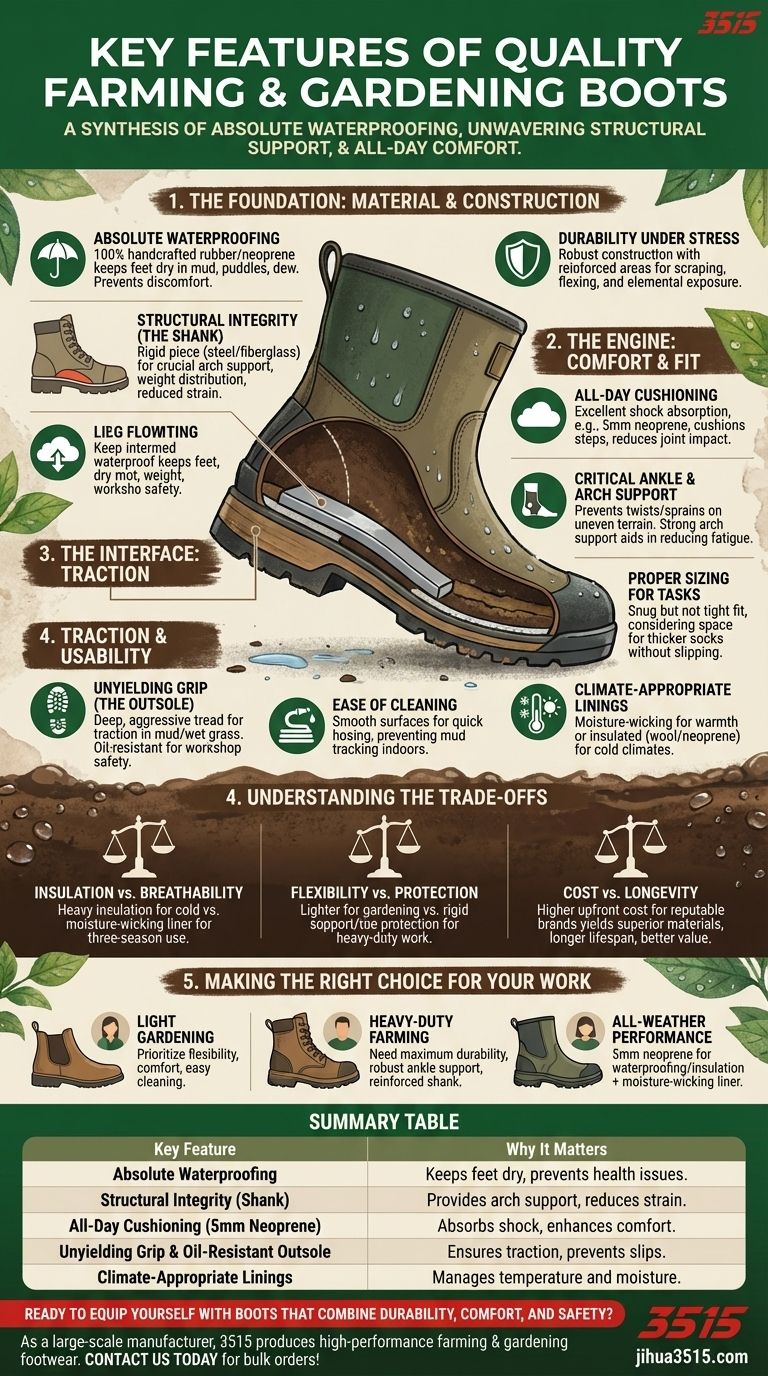
Visual Guide
Related Products
- Factory Direct Wholesale Rain Boots Durable Waterproof & Fully Customizable
- Durable Goodyear Welt Leather Work Boots for Wholesale & Private Label
- Wholesale Customizable Safety Boots Durable & Protective Footwear Manufacturing
- Premium Oil Wax Leather Safety Boots for Bulk Purchase
- Heavy-Duty Waterproof Nubuck Safety Boots Safety Shoes for Bulk Supply
People Also Ask
- What are the characteristics of rain boots? A Guide to Waterproof Footwear for Every Need
- What factors should be considered when choosing rain boots? Find the Perfect Boot for Your Needs
- What are the main differences between rain boots and snow boots? Choose the Right Boot for Your Climate
- How should one decide between PVC and rubber for rain boots? A Guide to Choosing the Right Material
- Why are rain boots more flexible and comfortable than snow boots? The Key Differences Explained
















