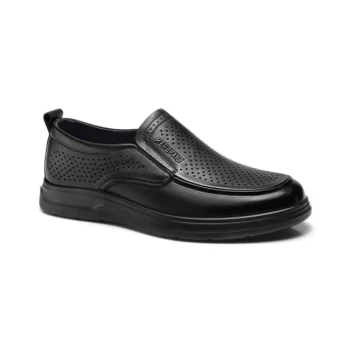
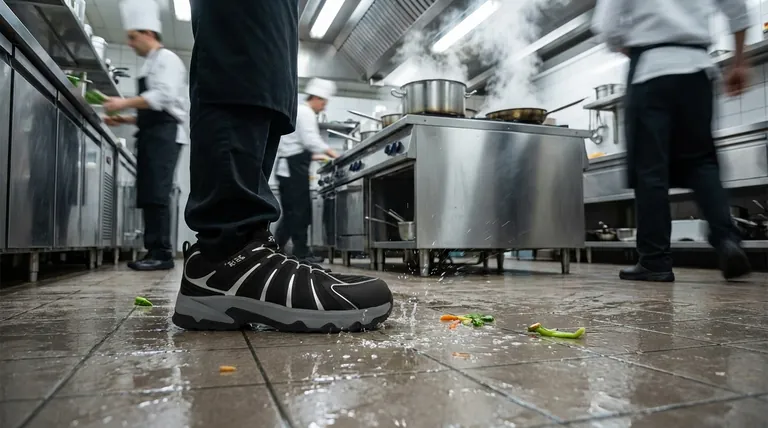
Non-slip shoes are a specialized category of footwear engineered to provide superior traction on hazardous surfaces. For restaurant workers, they are a non-negotiable piece of personal protective equipment, as slips, trips, and falls are the single leading cause of injury in the food service industry, which is defined by its constantly wet and greasy floor conditions.
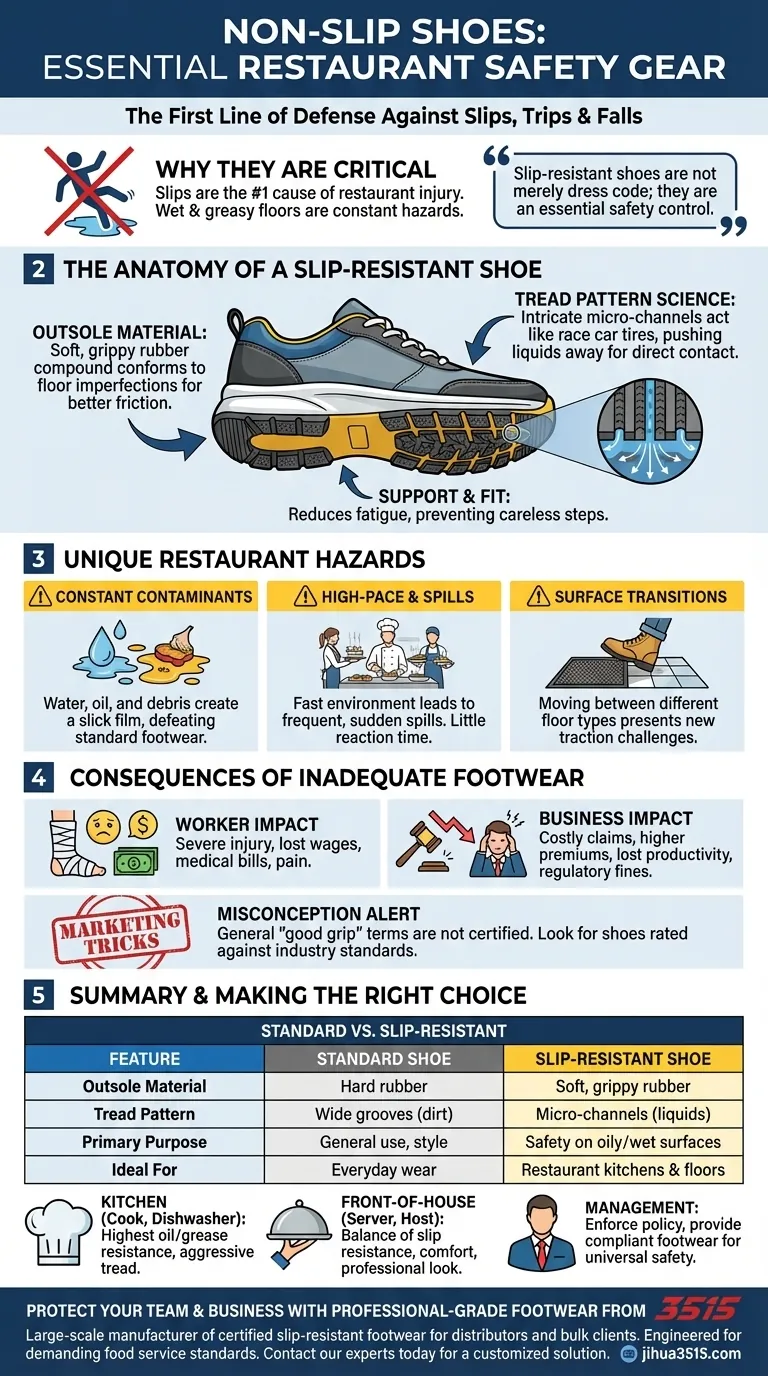
The chaotic and contaminant-rich floor of a restaurant is an ever-present occupational hazard. Slip-resistant shoes are not merely a dress code item; they are an essential safety control designed to mitigate the most common and preventable cause of injury to restaurant staff.
The Anatomy of a Slip-Resistant Shoe
To understand their importance, you must first understand how these shoes are fundamentally different from standard footwear. Their effectiveness comes from a combination of material science and engineering design focused entirely on grip.
The Outsole Material
The outsole, or the bottom part of the shoe that contacts the floor, is made from a much softer rubber compound than typical sneakers or dress shoes. This softness allows the material to conform to microscopic imperfections in the floor, creating significantly more surface area and friction.
The Science of the Tread Pattern
The tread pattern on slip-resistant shoes is the most critical feature. Unlike the wide, deep grooves on a hiking boot meant for dirt, these shoes have an intricate pattern of very small, open-ended channels. This design works like the tires on a race car in the rain; it is engineered to push liquids out from under the shoe, allowing the soft rubber to make direct contact with the floor.
Beyond the Sole: Support and Fit
Proper slip-resistant footwear also provides crucial support for long shifts spent standing and walking. A secure, comfortable fit reduces fatigue, which in turn reduces the likelihood of careless steps that can lead to accidents.
Why the Restaurant Environment is Uniquely Hazardous
A restaurant floor is a dynamic and unpredictable environment where the risk of slipping is exceptionally high. Several factors converge to create this constant hazard.
The Constant Presence of Contaminants
Commercial kitchens and dining areas are in a perpetual battle with contaminants. Spills involving water, grease, cooking oil, and food debris create a slick, low-friction film on the floor that can defeat standard footwear instantly.
High-Pace and Unpredictable Spills
The fast pace of restaurant work means spills are frequent and often happen when staff are moving quickly and carrying items. There is little time to spot and react to a sudden, unseen patch of water or grease.
The Transition Between Surfaces
Workers constantly move between different floor types. A cook may step from a greasy kitchen mat onto a recently mopped tile floor, or a server may walk from a carpeted dining room into a wet dishwashing area. Each transition presents a new traction challenge that slip-resistant shoes are built to handle.
The Consequences of Inadequate Footwear
Choosing to wear standard shoes in a restaurant setting is not a matter of preference; it is an acceptance of unnecessary risk with serious consequences for both employees and the business.
The Cost of Injury to the Worker
A slip-and-fall accident can lead to severe injuries, from sprains and fractures to head trauma. The result for the worker is often lost wages, significant medical bills, and potentially long-term pain and disability.
The Impact on the Business
For the restaurant, a single incident can trigger costly workers' compensation claims, increased insurance premiums, and lost productivity from an understaffed team. It can also damage morale and, in serious cases, lead to regulatory fines or litigation.
The "Non-Slip" Misconception
Many consumer shoes are marketed with terms like "good grip" or "traction." However, these are not the same as shoes officially rated as slip-resistant for occupational use. True slip-resistant shoes are tested against industry standards for performance on oily and wet surfaces.
Making the Right Choice for Your Role
Selecting the proper footwear is a critical decision based on your specific duties within the restaurant.
- If your primary focus is working in the kitchen (cook, dishwasher): Prioritize shoes with the highest oil and grease resistance ratings and an aggressive tread pattern designed to channel away thicker liquids.
- If your primary focus is front-of-house (server, host): Seek a balance of certified slip resistance for wet tile floors, all-day comfort for standing, and a professional appearance that meets dress code standards.
- If your primary focus is management or ownership: Implement and enforce a clear policy requiring certified slip-resistant footwear and consider providing them to staff to ensure universal safety and compliance.
Investing in proper slip-resistant footwear is a direct investment in the safety and stability of yourself and your entire team.
Summary Table:
| Feature | Standard Shoe | Slip-Resistant Shoe |
|---|---|---|
| Outsole Material | Hard rubber | Soft, grippy rubber compound |
| Tread Pattern | Wide grooves for dirt | Micro-channels to disperse liquids |
| Primary Purpose | General use, style | Safety on oily/wet surfaces |
| Ideal For | Everyday wear | Restaurant kitchens & floors |
Protect your team and your business with professional-grade footwear from 3515.
As a large-scale manufacturer, we produce a comprehensive range of certified slip-resistant shoes and boots for distributors, brand owners, and bulk clients. Our footwear is engineered with the precise materials and tread patterns needed to meet the demanding safety standards of the food service industry.
Let us help you equip your staff with reliable, comfortable, and compliant safety footwear. Contact our experts today for a customized solution.
Visual Guide
Related Products
- Advanced KPU Athletic Safety Shoe with Steel Toe Cap Anti-Slip Rotary Lacing System
- Premium Suede Sport Safety Shoes for Wholesale & Bulk Orders
- Durable High-Traction Canvas Sneakers Wholesale & Custom Manufacturing
- Heavy-Duty Waterproof Nubuck Safety Boots Safety Shoes for Bulk Supply
- Durable Goodyear Welt Leather Work Boots for Wholesale & Private Label
People Also Ask
- What are the key differences between steel toe and composite toe caps? Choose the Right Safety for Your Job
- What impact do steel toe caps have on toe skin health? Prevent Friction and Pressure in Your Safety Shoes
- What are the primary protective functions of safety shoes with steel toes in the automotive repair industry?
- What type of safety shoe is recommended for workers exposed to heavy machinery? Steel Toe Boots for Ultimate Protection
- How does defining specific friction interface models in FEA assist in predicting safety shoe toe cap failure modes?