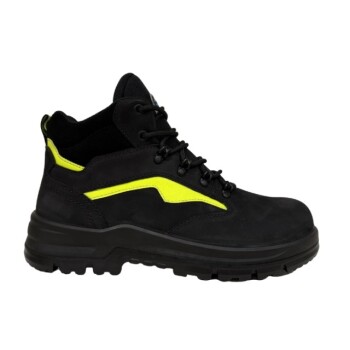
Slip-resistant outsoles function as a critical external support structure. They primarily work by significantly increasing the effective surface area of the foot that remains in contact with the ground. This expansion allows for better distribution of weight-bearing pressure, stabilizing the user as they transition between different phases of movement and providing essential balance in hazardous environments.
By acting as an extension of the foot’s natural base, slip-resistant outsoles do more than just grip; they mechanially alter how weight is distributed across the foot. This structural support is the foundation of fall prevention and safe movement on unstable surfaces.
The Mechanics of Stability and Support
Increasing Effective Surface Area
The primary physical function of a slip-resistant outsole is to maximize the foot-to-floor contact patch. By broadening the area that touches the ground, the shoe provides a more stable platform for the wearer.
This increased surface area reduces the instability inherent in standard footwear. It ensures that the foot remains planted firmly, even when the center of gravity shifts during work tasks.
Distributing Weight-Bearing Pressure
Slip-resistant outsoles are engineered to manage the heavy loads placed on feet during professional work. They help distribute weight-bearing pressure evenly across the entire structure of the foot.
By preventing pressure hotspots, the outsole reduces the physical strain required to maintain balance. This allows the skeletal structure of the foot to remain aligned, reducing the likelihood of slips caused by sudden weight shifts.
Assisting Movement Transitions
Safety risks are highest when a worker is in motion, such as transitioning from standing to walking or turning. These outsoles provide the physical support needed to transition safely between phases of movement.
The structure of the sole mitigates the "slip" moment that often occurs during push-off or heel-strike. This guidance ensures consistent traction throughout the entire gait cycle.
Material Science and Traction Features
The Role of Soft Rubber Compounds
To achieve the necessary friction, slip-resistant outsoles are typically constructed from soft rubber materials. Unlike harder compounds, soft rubber creates a stronger bond with the walking surface.
This material compliance allows the outsole to grip microscopic imperfections in the floor. This "stickiness" is essential for generating friction on smooth, slick surfaces.
Engineering Treads for Contaminants
Physical support is compromised if a layer of fluid sits between the shoe and the floor. Outsoles utilize specific grooves and tread patterns to combat this.
These channels direct fluids—such as oil, water, food, or ice—away from the main contact points. By clearing these contaminants, the treads ensure the rubber maintains direct contact with the floor, significantly reducing the risk of hydroplaning.
Understanding the Trade-offs
Soft Rubber Durability
The soft rubber required for superior grip is inherently less durable than harder outsole materials. While it provides excellent safety on slick surfaces, it may wear down faster if used frequently on rough, abrasive concrete or asphalt.
Specialized vs. Universal Grip
Not all tread patterns work equally well for all contaminants. A tread designed with wide channels for food waste might not offer the same surface area contact needed for oily, smooth tile. Users must match the specific groove design to their primary environmental hazard.
Making the Right Choice for Your Environment
Selecting the correct footwear requires analyzing your specific safety hazards and physical needs.
- If your primary focus is Fluid Management: Prioritize outsoles with deep grooves and treads designed to channel water, oil, or food waste away from the foot.
- If your primary focus is Physical Stability: Look for a wider outsole design that maximizes effective surface area to assist with balance and weight distribution.
- If your primary focus is Holistic Safety: Ensure the slip-resistant properties are paired with necessary add-ons like steel toes or electrical hazard (EH) protection for comprehensive defense.
Ultimately, a slip-resistant outsole is a sophisticated tool that converts the physics of friction and weight distribution into reliable, daily safety.
Summary Table:
| Feature | Physical Support Mechanism | Safety Benefit |
|---|---|---|
| Increased Surface Area | Maximizes foot-to-floor contact patch | Enhances balance and foundation stability |
| Weight Distribution | Spreads pressure evenly across the foot | Reduces skeletal strain and fatigue |
| Soft Rubber Compound | Increases friction on microscopic levels | Superior grip on slick, smooth surfaces |
| Tread Channels | Redirects fluids (oil/water) away from sole | Prevents hydroplaning and sudden slips |
| Movement Transition | Supports push-off and heel-strike phases | Ensures consistent traction during gait cycles |
Partner with 3515 for High-Performance Professional Footwear
As a large-scale manufacturer serving distributors and brand owners, 3515 offers comprehensive production capabilities for all footwear types, anchored by our flagship Safety Shoes series. Our extensive portfolio covers work and tactical boots, outdoor shoes, training shoes, and sneakers, as well as Dress & Formal shoes to meet diverse bulk requirements.
We provide the technical expertise needed to balance superior slip resistance with long-term durability. Whether you are expanding your brand's safety line or sourcing for large-scale distribution, our team delivers reliable, engineered solutions that protect your end-users.
Ready to elevate your product line? Contact us today to discuss your bulk manufacturing needs and technical specifications.
References
- Charul Dandale, Pratik Phansopkar. Effect of Physiotherapeutic Rehabilitation on a Patient With an Iliac Fracture and Superior and Inferior Pubic Rami Fracture With Foot Drop: A Case Report. DOI: 10.7759/cureus.33709
This article is also based on technical information from 3515 Knowledge Base .
Related Products
- Wholesale Durable 6-Inch Work Boots | Custom & Private Label Manufacturer
- Durable Leather Moc Toe Work Boots for Wholesale & Custom Manufacturing
- Durable Goodyear Welt Leather Work Boots for Wholesale & Private Label
- Premium Suede Sport Safety Shoes for Wholesale & Bulk Orders
- Durable High-Traction Canvas Sneakers Wholesale & Custom Manufacturing
People Also Ask
- What are the pros and cons of steel toe work boots? A Guide to Maximum Protection vs. Comfort
- What is the history of steel toe work boots? From German Invention to Modern Safety Standard
- What are the different types of steel toe work boots? Choose the Right Boot for Your Job
- How much weight can steel toe work boots withstand? Unpacking the 3,372 lb. Safety Standard
- Is there any truth to the myth about steel toe boots causing toe injuries upon impact? Debunking Common Safety Concerns