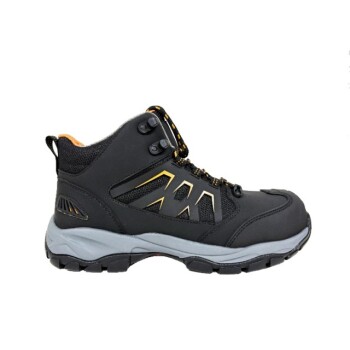
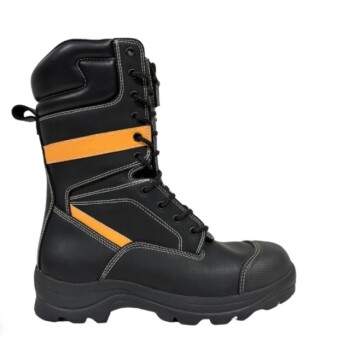
Beyond the standard safety classes, the EN ISO 20345 norm defines several crucial additional protections to address specific workplace hazards. These include HRO for heat-resistant outsoles, CI for cold insulation, HI for heat insulation, CR for cut resistance, and SRC for the highest level of slip resistance. There are also specific codes for electrical properties, such as C for conductive and ESD for electrostatic dissipative footwear.
The primary safety categories like S1 or S3 provide a crucial foundation, but it's these specialized, additional codes that allow you to precisely match your footwear to the unique environmental risks of your job, turning a standard boot into a specialized tool.

First, Understanding the Foundational Safety Classes
Before decoding the add-ons, it's essential to understand the base layer of protection that the main "S" classifications provide. These categories build upon each other to create a clear hierarchy of safety features.
The "S" Classifications Explained
The EN ISO 20345 standard starts with basic requirements and adds protections with each level.
- S1: Provides a protective toecap, antistatic properties, oil resistance, and energy absorption in the heel.
- S1P: Includes all S1 features plus midsole protection against penetration.
- S2: Has all S1 features plus a water-resistant upper.
- S3: Combines all S2 features with midsole penetration resistance, essentially an S1P with a water-resistant upper.
- S4 & S5: These are typically rubber or polymer boots offering full waterproof protection, with S5 adding midsole penetration resistance.
Decoding the Additional Protections
While the "S" classes cover common industrial risks, many jobs involve specific hazards that require targeted solutions. This is where the additional codes become critical.
Protection Against Temperature Extremes
- HRO (Heat Resistant Outsole): The outsole can withstand contact with a surface at 300°C for one minute without melting or cracking. This is vital for asphalt workers, welders, and foundry employees.
- HI (Heat Insulation): The footwear's interior temperature will not rise by more than 22°C when the exterior is exposed to a 150°C sand bath for 30 minutes. This protects against ambient heat.
- CI (Cold Insulation): When exposed to an external temperature of -17°C for 30 minutes, the temperature inside the footwear will not drop by more than 10°C. This is essential for those working in cold storage or extreme winter conditions.
Protection Against Electrical Hazards
- C (Conductive): This footwear has extremely low electrical resistance (below 100 kΩ), designed to prevent the buildup of static charge where a spark could ignite flammable materials or vapors.
- ESD (Electrostatic Dissipative): This footwear prevents a buildup of static electricity by safely discharging it to the ground. It's crucial for workers handling sensitive electronic components that could be damaged by a static shock.
Protection Against Physical Hazards
- CR (Cut Resistance): The upper material of the footwear provides a higher level of protection against cuts, a key feature for those working with sharp materials like glass or sheet metal.
Understanding Slip Resistance Ratings
Slip resistance is one of the most important and frequently misunderstood ratings. It is tested under specific laboratory conditions.
- SRA: Tested for slip resistance on a ceramic tile floor wetted with a dilute soap solution.
- SRB: Tested for slip resistance on a smooth steel floor wetted with glycerol.
- SRC: This is the highest rating. The footwear has passed both the SRA and SRB tests, indicating comprehensive slip resistance across different common surfaces and contaminants.
The Inherent Trade-offs of Specialization
Adding specialized protections invariably involves design trade-offs. It's important to select for the hazards you face without taking on features that could be a hindrance.
Comfort and Weight
Features like heavy insulation (CI/HI) or penetration-resistant midsoles naturally add weight and bulk. A highly specialized boot may be less comfortable for all-day wear if those specific protections are not required.
Breathability and Environment
A fully waterproof S3 boot is excellent for wet conditions but will be less breathable than an S1P boot in a hot, dry environment. Choosing the right base class for your typical climate is as important as the additional codes.
Cost and Complexity
Footwear that carries multiple additional certifications often costs more due to the specialized materials and testing required. Over-specifying your boots can lead to unnecessary expense.
Making the Right Choice for Your Goal
Selecting the correct safety footwear means analyzing your environment and matching the boot's codes to your specific daily risks.
- If your primary focus is working on hot surfaces like asphalt: Look for the HRO rating as a non-negotiable feature.
- If your primary focus is working in freezers or extreme cold: The CI marking is the most critical feature to protect against cold transfer.
- If your primary focus is preventing damage to sensitive electronics: You must select footwear specifically rated as ESD.
- If your primary focus is all-around slip prevention in varied environments: The SRC rating provides the highest level of confidence across multiple surfaces.
Ultimately, understanding these codes empowers you to choose safety footwear that performs as a precisely engineered tool for your specific task.
Summary Table:
| Code | Protection Type | Key Feature | Ideal For |
|---|---|---|---|
| HRO | Heat Resistant Outsole | Withstands 300°C for 1 min | Welders, Foundry Workers |
| CI | Cold Insulation | Limits temperature drop to -17°C | Cold Storage, Winter Work |
| ESD | Electrostatic Dissipative | Safely discharges static | Electronics Manufacturing |
| SRC | Slip Resistance (Highest) | Passes both SRA & SRB tests | Oily, Wet, or Slippery Floors |
| CR | Cut Resistance | Reinforced upper material | Glass, Metal, Sharp Objects |
Need Safety Footwear Tailored to Your Specific Hazards?
As a large-scale manufacturer, 3515 produces a comprehensive range of EN ISO 20345 certified footwear for distributors, brand owners, and bulk clients. Our production capabilities encompass all types of safety shoes and boots, from heat-resistant HRO soles for industrial settings to insulated CI boots for cold environments. We can help you precisely match your footwear to the unique risks of your job site.
Contact our experts today to discuss your requirements and get a quote for reliable, certified safety footwear.
Visual Guide

Related Products
- Customizable Anti-Smash Safety Boots for Wholesale & Private Label Manufacturing
- Premium Wholesale Tactical Style Safety Shoes Boots with Quick Lacing
- Premium Grain Leather Safety Boots for Bulk Supply
- Premium Wholesale Waterproof Safety Boots High Performance Protection for Industrial Markets
- Wholesale Leather Safety Boots with Customizable Protective Toe
People Also Ask
- What are the requirements of BS EN345 safety regulations for security guard safety boots? | EN ISO 20345 Guide
- What are the key performance benchmarks set by the EN ISO 20345 standard for safety boots? A Guide to Selecting the Right Protection
- How is compliance with the EN ISO 20345 standard certified? The Path to Independent Verification
- Why are industrial safety boots with steel toes necessary for machine operators? Essential Foot Protection for Safety
- What common features do safety toe work boots share regardless of style? Essential Protection Explained