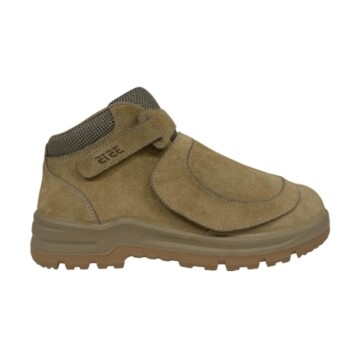
Energy-absorbing heels and cushioning midsoles primarily mitigate fatigue by dispersing the vertical pressure generated during prolonged standing or frequent walking. Rather than allowing the hard surfaces of an industrial environment to transmit shock directly into the skeletal structure, these components dampen the mechanical impact, protecting the foot from the rigidity typical of standard protective footwear.
The core function of these features is to reduce mechanical stress on the foot structure, directly preventing ailments like plantar fasciitis and soreness to enhance a worker's sustained capacity for labor.
The Mechanics of Fatigue Reduction
Dispersing Vertical Pressure
In industrial settings, workers are often subjected to long hours of standing or walking on concrete. This creates intense vertical pressure that travels up the leg. Cushioning midsoles act as a buffer, spreading this pressure across a wider surface area of the foot rather than concentrating it on the heel or ball of the foot.
Reducing Mechanical Impact
Rigid protective footwear often lacks shock attenuation, meaning the ground exerts a harsh force back against the foot with every step. Energy-absorbing heels intercept this force. By compressing upon impact, they lower the magnitude of the shock that the body must absorb naturally.
Health and Productivity Implications
Preventing Common Injuries
The reduction of impact is not merely about comfort; it is a preventative health measure. By minimizing the stress on the fascia—the connective tissue in the foot—these design features help prevent plantar fasciitis. This condition is a frequent cause of downtime and chronic pain in the workforce.
Enhancing Sustained Work Capacity
Fatigue is a cumulative process. By reducing immediate foot soreness, these components delay the onset of physical exhaustion. This allows personnel to maintain a higher level of focus and efficiency throughout a shift, directly improving their sustained work capacity.
Understanding the Trade-offs
Material Compression Over Time
While cushioning provides immediate relief, the materials used to absorb energy are subject to compression sets. Unlike rigid soles, which maintain their shape indefinitely, energy-absorbing midsoles will eventually lose their rebound properties and require replacement to maintain effectiveness.
Stability vs. Softness
There is often an inverse relationship between softness and stability. Extremely soft, high-cushion midsoles effectively mitigate impact but may offer less structural support on uneven terrain compared to firmer, more rigid options.
Making the Right Choice for Your Environment
To select the appropriate footwear, you must match the specific fatigue mitigation needs to the worker's daily activity profile:
- If your primary focus is stationary work: Prioritize cushioning midsoles that maximize pressure dispersion to prevent soreness from standing in one place.
- If your primary focus is active mobility: Prioritize energy-absorbing heels to manage the repetitive mechanical impact caused by frequent walking on hard surfaces.
Invest in footwear that actively manages impact, and you invest directly in the longevity and output of your workforce.
Summary Table:
| Feature | Primary Mechanism | Key Benefit | Ideal For |
|---|---|---|---|
| Energy-Absorbing Heels | Dampens mechanical impact/shock | Protects skeletal structure & joints | Active mobility & frequent walking |
| Cushioning Midsoles | Disperses vertical pressure | Prevents localized soreness & fascia stress | Prolonged standing & stationary work |
| Combined System | Integrated shock attenuation | Delays physical exhaustion | High-intensity industrial environments |
Maximize Workforce Endurance with 3515 Footwear Solutions
As a leading large-scale manufacturer serving global distributors and brand owners, 3515 specializes in high-performance safety footwear designed to eliminate fatigue. Our flagship Safety Shoes series integrates advanced energy-absorbing technology and precision-engineered cushioning to protect your workers from chronic pain and productivity loss.
Beyond safety boots, our extensive portfolio includes tactical boots, outdoor shoes, training sneakers, and professional dress shoes—all crafted to meet rigorous bulk requirements with uncompromised quality.
Ready to upgrade your inventory with superior impact management? Contact us today to discuss your wholesale needs and discover how our manufacturing capabilities can drive your brand's success.
References
- Shruti A. Dumbhare, Parag Sancheti. Prevalence of foot problems associated with wearing safety footwear in factory employees. DOI: 10.18203/2394-6040.ijcmph20222013
This article is also based on technical information from 3515 Knowledge Base .
Related Products
- Wholesale Breathable Training Shoes Custom Athletic Footwear Manufacturer
- Wholesale Breathable & Cushioned Training Shoes Custom Factory Production
- Wholesale Breathable Athletic Sneakers - Custom Lightweight Cushioned Footwear Manufacturer
- Lightweight Breathable Sneakers with Wet-Traction Grip for Wholesale & Private Label
- Premium Wholesale Waterproof Safety Boots High Performance Protection for Industrial Markets
People Also Ask
- Why are professional-grade training shoes essential for physical therapy? Ensure Patient Safety and Gait Stability
- Why are the slip-resistance and stability performance of training shoes critical in gait analysis? Ensure Data Accuracy
- What is the primary role of specialized training or orthopedic shoes? Enhance Safety in Elderly Balance Training
- Why is sole stiffness testing using a force gauge necessary? Build Superior Training Shoes with Precision
- Why is specialized athletic footwear necessary for ankle rehab? Unlock Safety and Stability in Recovery