
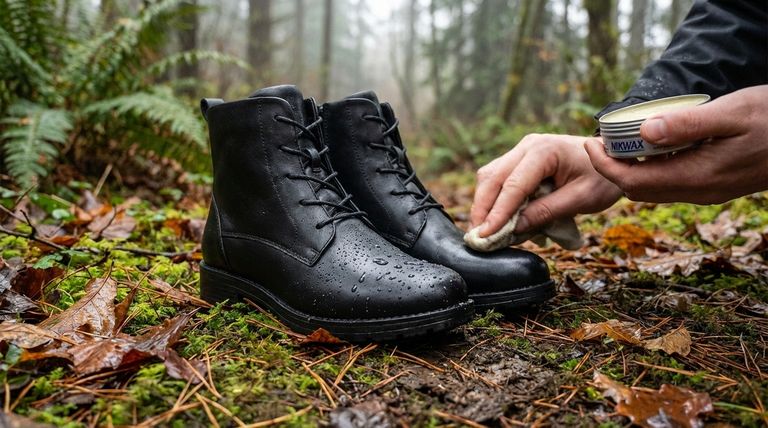
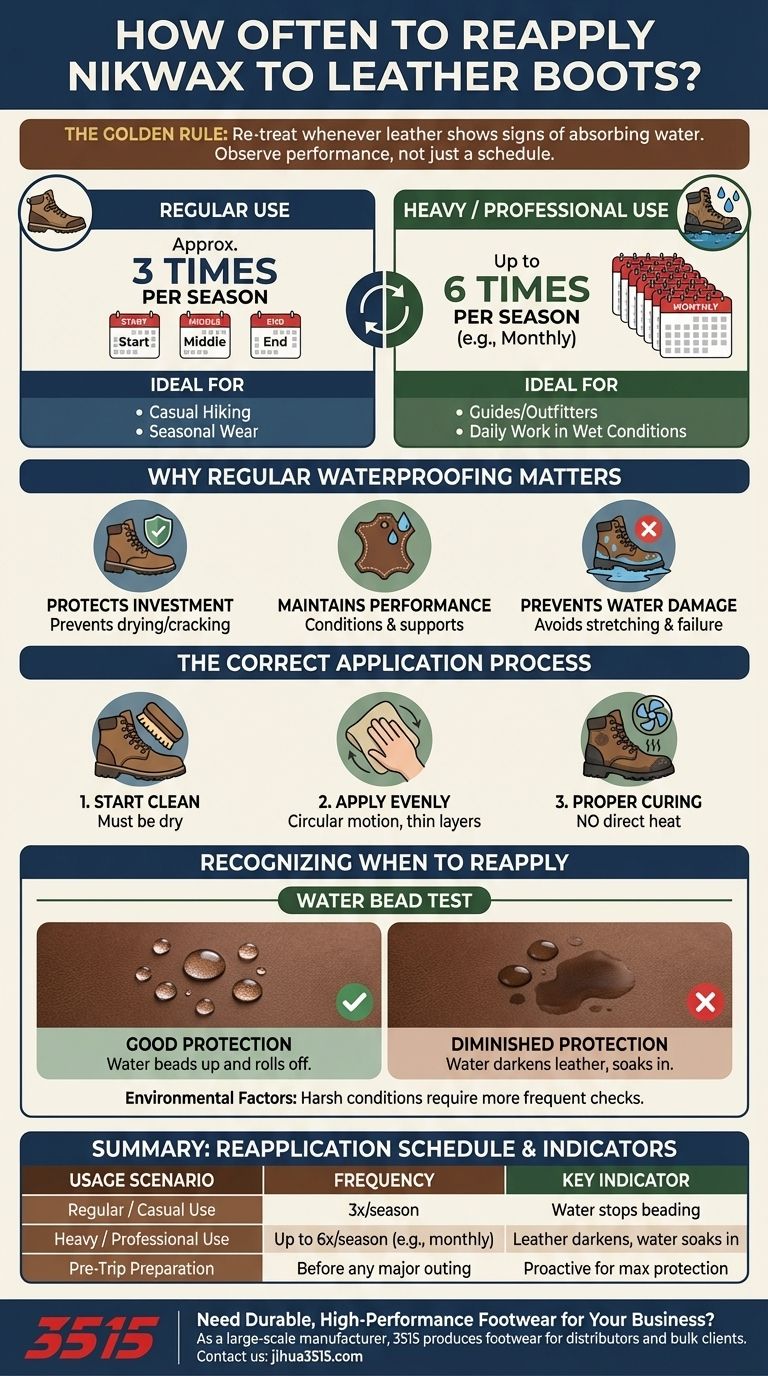
For regular use, Nikwax should be reapplied to leather boots approximately three times per season. However, if your boots see heavy, consistent use in wet conditions, like those of a guide or outfitter, you may need to apply it as often as six times per season. The key is to re-treat them whenever they show signs of absorbing water.
The optimal frequency for reapplying Nikwax isn't about a rigid schedule, but about observing your boots' performance. The goal is to proactively maintain a water-repellent barrier, which protects the leather and extends the life of your investment.
Why Regular Waterproofing is Non-Negotiable
Properly treating your leather boots is one of the most critical maintenance tasks you can perform. It goes far beyond simply keeping your feet dry.
Protecting Your Investment
Consistent waterproofing is crucial for the longevity of your boots. It shields the leather from moisture, dirt, and wear, preventing the material from drying out, cracking, and deteriorating over time.
Maintaining Performance
Leather is a natural material that needs care to perform its best. A quality waterproofing treatment like Nikwax not only blocks external water but also conditions the leather, preserving its supportive structure and integrity.
Preventing Water Damage
When leather becomes saturated, it can stretch and lose its shape. More importantly, repeated cycles of getting soaked and then drying can strip the leather of its natural oils, leading to brittleness and failure.
The Correct Application Process
How you apply the treatment is just as important as how often you do it. A poor application will not provide a durable, protective barrier.
Step 1: Start with a Clean Slate
Always begin by thoroughly cleaning your boots to remove any dirt, mud, or debris. The waterproofing product needs to bond directly with the leather, and a layer of grime will prevent proper adhesion.
Ensure the boots are completely dry before applying a wax-based product.
Step 2: Apply the Treatment Evenly
Using a clean rag or your fingers, apply the Nikwax wax in a circular motion. Massage it deep into all exterior leather surfaces, paying special attention to high-wear areas like creases, the tongue, and around the eyelets.
Ensure you create a thin, even layer across the entire boot before moving to the next section. One to two coats are typically sufficient.
Step 3: Allow for Proper Curing
Let the boots dry completely in a warm, well-ventilated area. Crucially, do not use direct heat sources like a fireplace, radiator, or hairdryer, as this can damage the leather and the boot's adhesives. A fan can help speed up the process safely.
Recognizing When to Reapply
Instead of relying solely on the calendar, learn to read the signs that your boots need attention. This is the most effective approach to boot maintenance.
The Water Bead Test
The clearest sign of effective waterproofing is when water beads up and rolls off the surface of the leather. This indicates the barrier is working perfectly.
Signs of Diminished Protection
If you notice that water is darkening the leather or starting to soak in rather than beading off, the protective barrier has worn down. This is your definitive signal that it's time to clean your boots and reapply Nikwax.
Environmental Factors
Prolonged exposure to exceptionally wet, muddy, or snowy conditions will break down the waterproofing treatment faster. After any particularly harsh outing, it's wise to inspect, clean, and potentially re-treat your boots, regardless of when you last did it.
How to Apply This to Your Goal
Your specific usage pattern is the best guide for creating a maintenance schedule.
- If your primary focus is casual hiking or seasonal wear: Plan to re-treat your boots at the beginning, middle, and end of the season, or any time you notice water is no longer beading.
- If your primary focus is daily work or guiding in wet environments: Inspect your boots weekly and expect to reapply Nikwax monthly or more, focusing on keeping the water-repellent barrier intact.
- If your primary focus is preparing for a specific trip: Always perform a full clean and re-treatment before heading out to ensure maximum protection when you need it most.
Proactive care based on observation, not just a schedule, is the key to keeping your leather boots performing for years to come.
Summary Table:
| Usage Scenario | Recommended Reapplication Frequency | Key Indicator |
|---|---|---|
| Regular / Casual Use | 3 times per season | Water stops beading on the leather |
| Heavy / Professional Use | Up to 6 times per season (e.g., monthly) | Leather darkens as water soaks in |
| Pre-Trip Preparation | Before any major outing | Proactive application for maximum protection |
Need Durable, High-Performance Footwear for Your Business?
As a large-scale manufacturer, 3515 produces a comprehensive range of footwear for distributors, brand owners, and bulk clients. Our production capabilities encompass all types of durable shoes and boots, built to withstand the toughest conditions.
Let us help you equip your customers with reliable footwear. Contact our team today to discuss your manufacturing needs and how we can add value to your product line.
Visual Guide
Related Products
- Wholesale Durable Camouflage Canvas Shoes with High-Traction Cleated Rubber Sole
- Lightweight Breathable Training Shoes for Wholesale & Custom OEM Manufacturing
- Wholesale Durable & Breathable Training Shoes for Custom Brands
People Also Ask
- Why is the selection of high-strength fabric materials necessary in the production of canvas shoes and training shoes?
- What are the properties of canvas as a shoe material? A Guide to Lightweight Comfort & Style
- Can canvas shoes be worn in rainy conditions? The Truth About Water Resistance
- What are some examples of vulcanized shoes? Discover the Flexibility and Board Feel of Classic Sneakers
- What are the characteristics of canvas as a shoe material? A Guide to Lightweight, Breathable Footwear


