
Beyond the simple steel toe, a modern work boot is a highly engineered piece of equipment with features designed to solve specific environmental and safety challenges. These specializations can include internal shanks for structural support, metatarsal guards for impact protection, gusseted tongues to keep out debris, and specific sole compounds rated for electrical hazards or slip resistance.
Choosing the right work boot is not about finding one with the most features; it's about selecting the precise combination of features that directly counters the specific hazards and demands of your job.
Foundational Support and Structure
The core of a work boot is its ability to support you for long hours on your feet. This goes far beyond simple cushioning.
The Shank: Your Boot's Backbone
A shank is a rigid piece of material—often steel, fiberglass, or TPU—placed between the insole and outsole. Its primary job is to provide arch support and distribute your weight evenly, reducing foot fatigue. It also adds crucial puncture resistance from below.
Sole Design: Heel vs. Wedge
The outsole design dramatically affects performance. A boot with a defined heel offers excellent grip on ladders and uneven terrain. A wedge sole, with its continuous flat surface, provides maximum support and comfort on hard, flat surfaces like concrete floors.
Ankle and Upper Support
Taller boot shafts provide critical ankle support, helping to prevent sprains and twists on unstable ground. Padded uppers and tongues add to this stability and enhance overall comfort during long shifts.
Protection from Specific Hazards
Safety features are non-negotiable and must be matched to the potential dangers of your workplace.
Impact and Compression
This is the most well-known category of boot safety. Toe protection (steel, composite, or alloy) guards against falling objects, while metatarsal guards extend this protection over the top of your foot.
Puncture Resistance
For environments with sharp objects like nails or metal scraps, a puncture-resistant midsole plate is a critical feature that protects the sole of your foot.
Electrical Risks (EH and ESD)
These two ratings are often confused but are fundamentally different.
- Electrical Hazard (EH) boots are designed to protect you from accidental contact with live electrical circuits.
- Electrostatic Dissipative (ESD) boots are designed to protect sensitive electronic equipment from you by safely dissipating your body's static electricity.
Slips and Traction
An oil- and slip-resistant outsole is essential for anyone working on smooth, wet, or greasy surfaces, such as mechanics or industrial workers. Lug soles, with deep, aggressive treads, are built for traction on loose dirt, mud, and outdoor terrain.
Environmental and Comfort Features
These features are designed to keep you comfortable and protected from the elements, allowing you to focus on your work.
Keeping Debris Out
A gusseted tongue is stitched to the sides of the boot upper, creating a barrier that prevents water, dirt, and debris from entering. A kiltie, the fringed leather piece seen on some logger boots, provides an additional layer of protection for the instep.
Weather and Temperature Control
Waterproofing membranes keep your feet dry in wet conditions, while insulation (measured in grams) provides warmth in cold climates. Quality linings also help mitigate perspiration by wicking moisture away from the foot.
Lacing and Fit
Hook eyelets, also known as speed hooks, allow for faster lacing and a more secure fit at the top of the boot. A proper, snug fit is a safety feature in itself, preventing blisters and improving stability.
Understanding the Trade-offs
No single boot is perfect for every situation. Choosing the right features always involves balancing competing priorities.
Safety vs. Weight
Features like steel toes, metatarsal guards, and thick rubber outsoles add significant protection, but they also add weight. This can lead to increased fatigue over the course of a long day.
Durability vs. Flexibility
The most rugged, durable boots are often stiffer. This provides excellent support and longevity but can be less comfortable for jobs that require frequent kneeling, squatting, or walking long distances.
Waterproofing vs. Breathability
A fully waterproof boot is excellent at keeping water out, but it can also trap sweat and heat inside. In hot, dry climates, a more breathable, non-waterproof boot might be the more comfortable choice.
Selecting the Right Features for Your Work
Match the boot's features directly to the primary demands and hazards of your job.
- If you are a construction worker or in heavy industry: Prioritize certified toe protection, metatarsal guards, high ankle support, and puncture resistance.
- If you are a carpenter or work on concrete floors: Focus on a supportive shank, a well-cushioned insole, and consider a wedge sole for all-day standing comfort.
- If you are an electrician or work with sensitive electronics: Your non-negotiable is a certified EH or ESD rating appropriate for your environment.
- If you work outdoors in varied conditions: Look for waterproofing, a gusseted tongue to keep out debris, and insulation appropriate for your climate.
Ultimately, viewing your work boot as a specialized piece of equipment is the first step toward ensuring your safety and performance on the job.
Summary Table:
| Feature Category | Key Specialized Features | Primary Benefit |
|---|---|---|
| Support & Structure | Shank (Steel/Fiberglass), Defined Heel/Wedge Sole, Ankle Support | Reduces fatigue, improves stability, and provides puncture resistance. |
| Safety Protection | Toe Protection (Steel/Composite), Metatarsal Guard, Puncture-Resistant Midsole, EH/ESD Soles | Protects from impacts, compression, punctures, and electrical hazards. |
| Environmental & Comfort | Gusseted Tongue, Waterproofing, Insulation, Slip/Oil-Resistant Soles | Keeps out debris and water, provides warmth, and ensures traction. |
| Trade-offs | Safety vs. Weight, Durability vs. Flexibility, Waterproofing vs. Breathability | Highlights the balance needed when selecting features for specific job demands. |
Ready to find the perfect work boot for your team's specific needs?
As a large-scale manufacturer, 3515 produces a comprehensive range of specialized footwear for distributors, brand owners, and bulk clients. Our production capabilities encompass all types of safety boots and work shoes, engineered with the precise features your workforce requires—from electrical hazard protection to superior arch support.
We help you equip your team with durable, compliant, and comfortable footwear that directly addresses their job's hazards. Let's discuss your requirements and get you a quote.
Contact our expert team today to learn more about our products and manufacturing solutions.
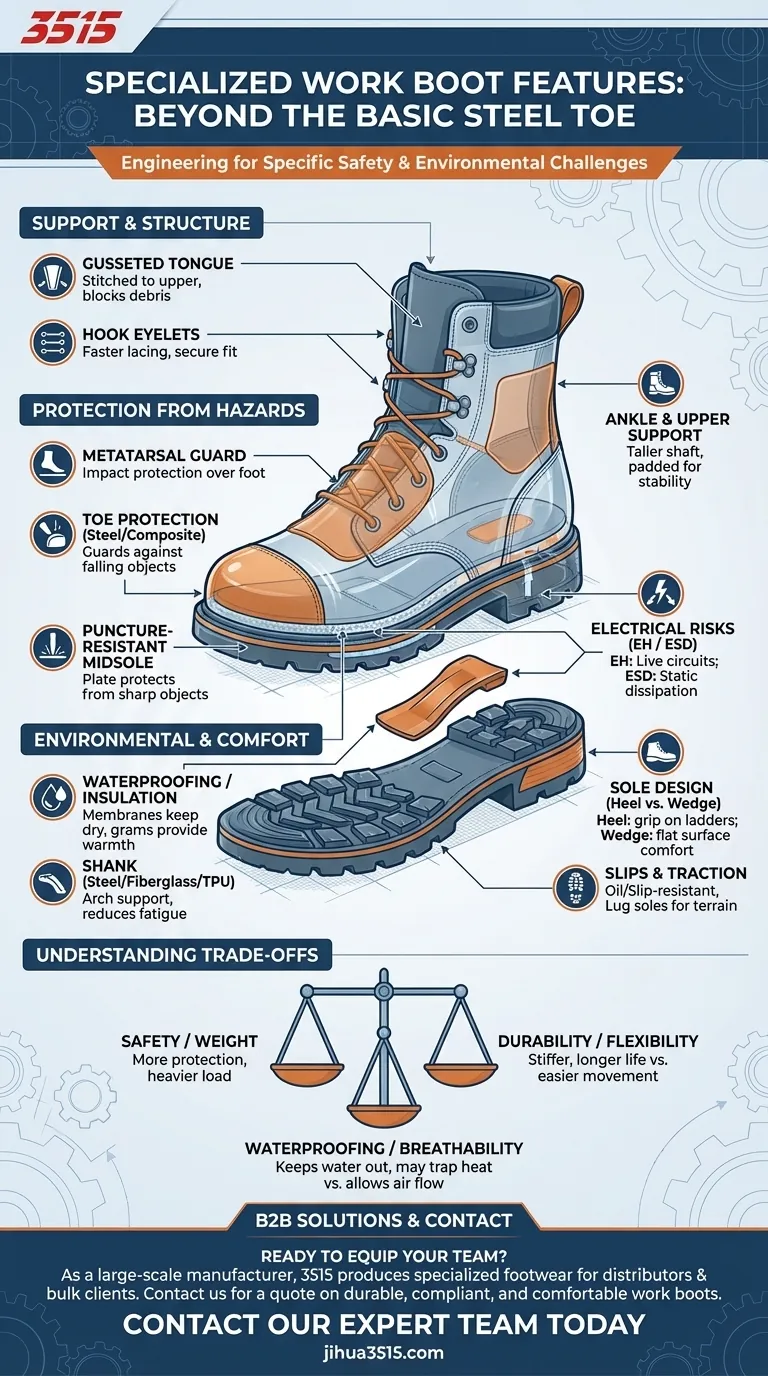
Visual Guide
Related Products
- Durable Leather Work Boots for Wholesale & Custom Manufacturing
- Durable Leather Work Boots for Wholesale & Custom OEM Manufacturing
- Durable Leather Work Boots Wholesale Manufacturer & Custom Factory
- Durable Leather Moc Toe Work Boots for Wholesale & Custom Manufacturing
- Wholesale Durable 6-Inch Work Boots | Custom & Private Label Manufacturer
People Also Ask
- What is the difference between full-grain and top-grain leather? Premium Material Guide for Boot Manufacturers
- What are the common workplace hazards that can be mitigated with the right work boots? Protect Your Workforce
- What are the common foot issues workers face due to uncomfortable work boots? Prevent Pain & Deformities
- What are the advantages of leather versus synthetic work boots? A Guide to Choosing the Right Material
- What are the key components of modern work boots? Engineered for Ultimate Durability and Comfort












