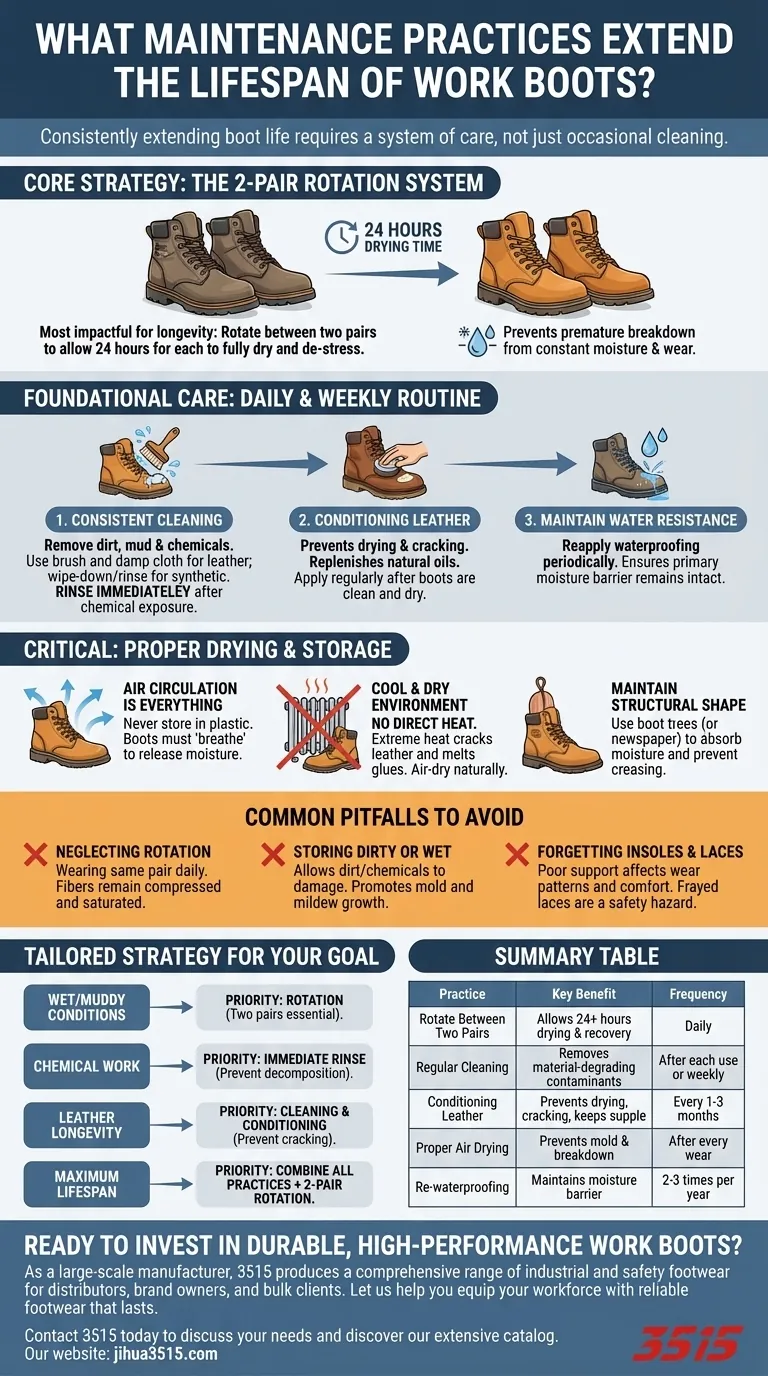
To significantly extend the lifespan of your work boots, you must move beyond occasional cleaning and adopt a consistent system of care. The core practices involve regular cleaning appropriate for the boot's material, conditioning leather to prevent cracking, and ensuring the boots can fully dry and recover between wears.
The most impactful strategy for maximizing your boots' longevity is not a single action, but a system: rotating between two pairs. This allows each pair the crucial 24 hours needed to fully dry and de-stress, preventing the premature breakdown of materials caused by constant moisture and wear.
Foundational Care: The Daily and Weekly Routine
The first line of defense against wear and tear is removing the dirt, moisture, and chemicals that degrade boot materials.
Step 1: Consistent Cleaning
Contaminants like dirt, mud, and chemicals actively break down the fibers in leather and synthetic materials.
Regular cleaning is non-negotiable. For leather, use a brush to remove dry debris, followed by a damp cloth. For synthetic or PVC boots, a simple wipe-down or rinse is often sufficient.
If your boots are exposed to harsh chemicals, rinse them immediately after use to prevent corrosion and material degradation.
Step 2: Conditioning Leather
Leather is a skin; without moisture, it will dry out, become brittle, and crack, especially at flex points.
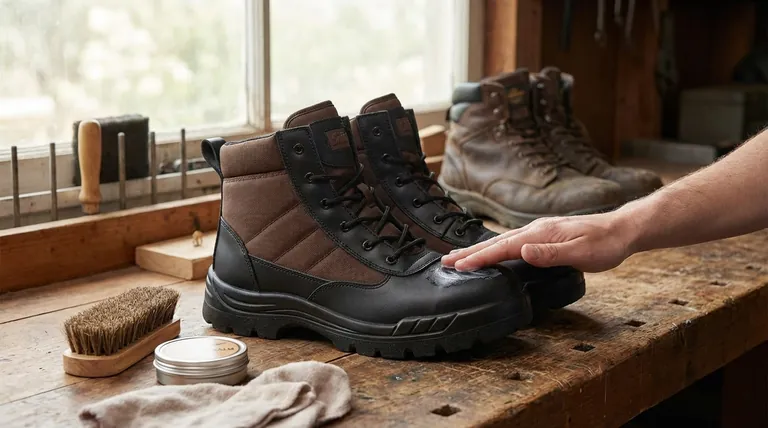
Conditioning replenishes the natural oils in the leather, keeping it supple and resilient. This should be done regularly, but not excessively, after the boots have been cleaned and are fully dry.
Step 3: Maintaining Water Resistance
The factory-applied waterproof treatment on your boots will wear off over time.
Periodically reapplying a suitable waterproofing product ensures the primary moisture barrier remains intact, protecting both your feet and the boot's internal structure.
The Critical Factor: Proper Drying and Storage
How you treat your boots when they're off your feet is just as important as how you care for them when they're on. Moisture is the primary enemy of longevity.
Why Air Circulation is Everything
Trapped moisture from sweat and external conditions softens leather, fosters bacteria growth, and accelerates the breakdown of adhesives and fabrics.
Boots need to "breathe." Never store them in a plastic bag or a sealed container. They require open, circulating air to release the moisture absorbed throughout the day.
The Right Environment: Cool and Dry
Extreme heat is catastrophic for boots. It can crack leather, melt glues, and warp synthetic components.
Never dry your boots near a direct heat source like a radiator, fire, or vent. Always let them air-dry naturally in a cool, well-ventilated area.
Maintaining Structural Shape
As boots dry, they can lose their shape, leading to poor fit and creasing that accelerates wear.
Using cedar boot trees is the ideal solution. They absorb moisture, neutralize odors, and hold the boot's natural shape. A less expensive alternative is to stuff them with newspaper.
Common Pitfalls to Avoid
Many well-intentioned boot owners inadvertently shorten the life of their footwear by making a few common mistakes.
Neglecting the Power of Rotation
The single biggest mistake is wearing the same pair of boots day after day without a break.
Materials, especially leather, need time to rest and recover. Without this recovery period, the fibers remain compressed and saturated, leading to a rapid decline in support and durability.
Storing Boots While Dirty or Wet
Storing boots without cleaning them allows dirt and chemicals to sit on the material, causing continuous damage.
Storing them while wet guarantees the growth of mold and mildew, which will destroy the boot from the inside out.
Forgetting About Insoles and Laces
The boot's support system is more than just the outsole. Worn-out insoles provide poor support, affecting both comfort and the boot's internal wear patterns.
Frayed laces can be a safety hazard and indicate a lack of overall maintenance. These components are inexpensive to replace and crucial for performance.
Making the Right Choice for Your Goal
Your maintenance strategy should be tailored to your specific work environment and goals.
- If you work in wet or muddy conditions: Your top priority is rotation. Owning two pairs is essential to ensure you always have a fully dry set to wear.
- If you work with chemicals: Immediate rinsing after every shift is the most critical action to prevent material decomposition.
- If your primary focus is on leather boot longevity: A disciplined cleaning and conditioning schedule is non-negotiable to prevent cracking.
- If you want the absolute maximum lifespan from any boot: Combine all these practices, with the two-pair rotation system as your foundational strategy.
Consistent care transforms your work boots from a disposable expense into a durable, long-term investment in your safety and comfort.
Summary Table:
| Practice | Key Benefit | Frequency |
|---|---|---|
| Rotate Between Two Pairs | Allows 24+ hours for boots to fully dry and recover | Daily |
| Regular Cleaning | Removes dirt and chemicals that degrade materials | After each use or weekly |
| Conditioning Leather | Prevents drying, cracking, and keeps leather supple | Every 1-3 months |
| Proper Air Drying | Prevents mold, mildew, and adhesive breakdown | After every wear |
| Re-waterproofing | Maintains moisture barrier and internal protection | 2-3 times per year |
Ready to Invest in Durable, High-Performance Work Boots?
As a large-scale manufacturer, 3515 produces a comprehensive range of industrial and safety footwear for distributors, brand owners, and bulk clients. Our production capabilities encompass all types of durable shoes and boots built to withstand the toughest conditions. Let us help you equip your workforce with reliable footwear that lasts.
Contact 3515 today to discuss your needs and discover our extensive catalog.
Visual Guide
Related Products
- Durable Leather Work Boots for Wholesale & Custom Manufacturing
- Durable Leather Work Boots for Wholesale & Custom OEM Manufacturing
- Durable Leather Work Boots Wholesale Manufacturer & Custom Factory
- Durable Leather Moc Toe Work Boots for Wholesale & Custom Manufacturing
- Wholesale Durable 6-Inch Work Boots | Custom & Private Label Manufacturer
People Also Ask
- What is the difference between full-grain and top-grain leather? Premium Material Guide for Boot Manufacturers
- What are the common workplace hazards that can be mitigated with the right work boots? Protect Your Workforce
- What are the common foot issues workers face due to uncomfortable work boots? Prevent Pain & Deformities
- What are the advantages of leather versus synthetic work boots? A Guide to Choosing the Right Material
- What are the key components of modern work boots? Engineered for Ultimate Durability and Comfort