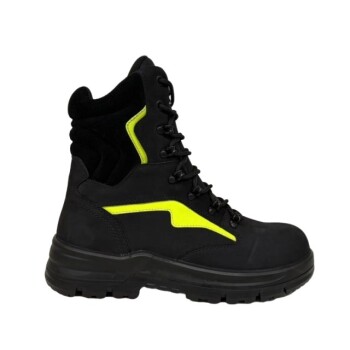
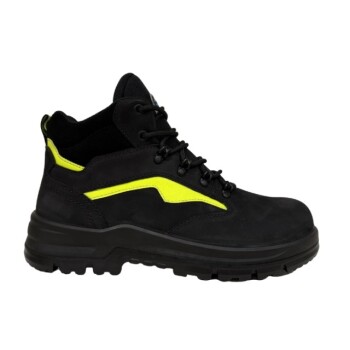
At their core, logger heel work boots are a specialized tool designed for maximum stability on treacherous, uneven ground. They are defined by a tall, hooked heel, an extremely aggressive rubber tread, and robust construction that prioritizes safety and traction above all else.
The logger boot is not an all-purpose work boot. Its unique high-heel design is engineered specifically to provide an anchor on soft or angled surfaces, a critical safety feature for loggers, linemen, and wildland firefighters.
Deconstructing the Logger Boot Design
To understand the logger boot, you must understand how each component serves a specific, critical function in a hazardous environment. It is a piece of safety equipment where form is dictated entirely by function.
The Defining Feature: The Raised Heel
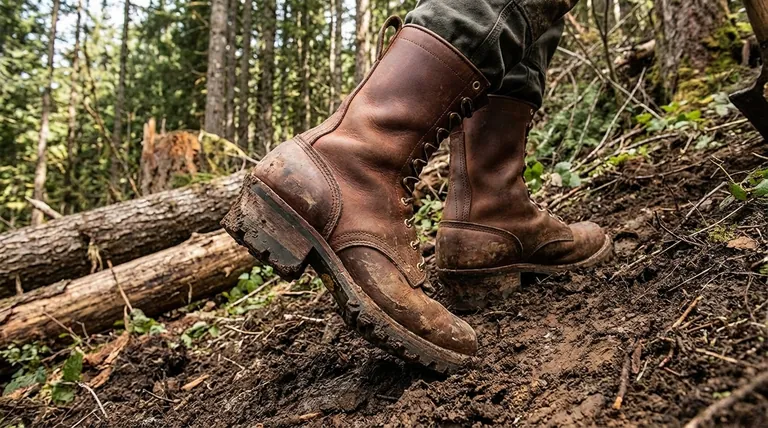
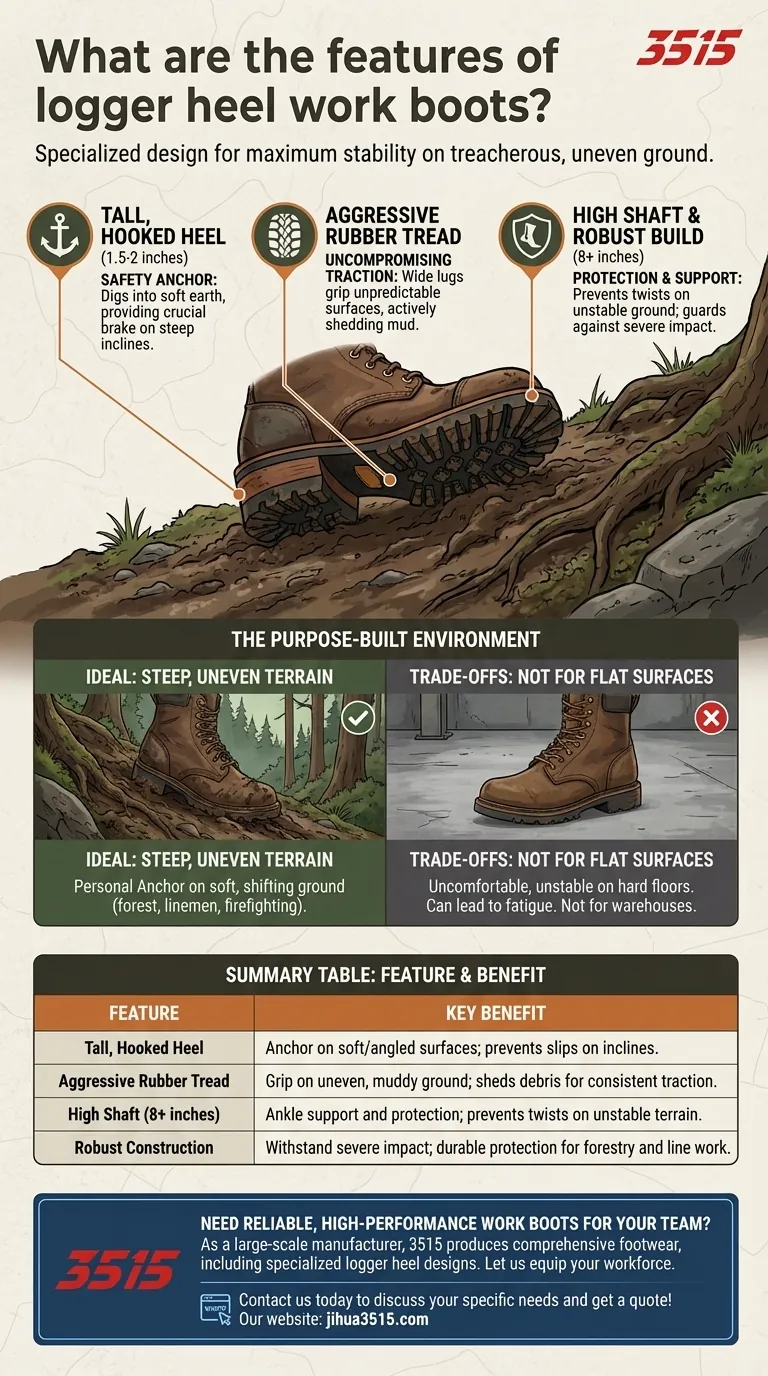
The most recognizable feature is the tall, hooked heel, typically 1.5 to 2 inches high. This isn't for style; it's a safety anchor.
This design allows the wearer to dig into soft earth, mud, and loose debris, providing a crucial brake when descending steep inclines. For linemen, the heel is designed to lock securely onto climbing spurs.
Uncompromising Traction: Aggressive Tread
Logger boots feature deep, widely spaced lugs on their outsoles. This extreme rubber tread is meant to grip unpredictable surfaces like branches, rocks, and soil.
The pattern aggressively sheds mud and debris, ensuring the sole maintains contact with the ground for consistent traction where a flatter sole would quickly become clogged and useless.
Built for Protection and Support
These boots are built to protect the foot and ankle from severe impact and torsion. They typically feature a shaft height of 8 inches or more to provide substantial ankle support, preventing twists on unstable ground.
Many also include exterior padding and safety features like steel toes to guard against the unique hazards found in forestry and line work.
The Purpose-Built Environment
A logger boot's features only make sense when viewed in the context of the environment it was created for. They excel where other boots fail.
Unstable and Uneven Terrain
These boots are at home on the forest floor, steep hillsides, and muddy work sites. The combination of the heel and tread provides a level of stability on soft, shifting ground that standard work boots cannot match.
The Need for an Anchor Point
The primary function is to act as a personal anchor. Whether you're preventing a slide down a ravine or securing your footing while climbing, the boot is designed to bite into the surface and hold fast.
Understanding the Trade-offs
The specialized nature of the logger boot introduces critical trade-offs that make it unsuitable for many other types of work.
Not for Flat Surfaces
The elevated heel alters your posture and can become uncomfortable or even unstable when walking for long periods on hard, flat surfaces like concrete or asphalt. This design can lead to foot and back fatigue in the wrong environment.
Limited Versatility
Unlike boots made for mechanics, which prioritize oil and slip resistance on flat floors, or trench boots, which balance durability with style, the logger boot is a specialist. Its features are a disadvantage in a warehouse or auto shop.
Weight and Flexibility
The robust construction required for maximum protection makes logger boots significantly heavier and stiffer than most other work boots. This is a necessary price for their durability and support but can be cumbersome for tasks requiring agility.
Making the Right Choice for Your Goal
Selecting the correct boot is a matter of matching the tool to the task.
- If your primary focus is working on steep inclines, mud, or in forestry: The logger boot's aggressive heel and deep tread are essential for your safety and stability.
- If your primary focus is working on concrete floors or flat, hard surfaces: A boot with a lower, flatter sole, like a wedge or mechanic's boot, will provide superior comfort and reduce fatigue.
- If your primary focus is a rugged appearance with general-purpose traction: Styles like Engineer or Harness boots offer a durable, classic look without the specialized heel of a logger.
Ultimately, choosing a work boot is about understanding your environment and selecting the design that offers the greatest safety and performance for your specific needs.
Summary Table:
| Feature | Purpose | Key Benefit |
|---|---|---|
| Tall, Hooked Heel | Anchor on soft/angled surfaces | Prevents slips and slides on inclines |
| Aggressive Rubber Tread | Grip on uneven, muddy ground | Sheds debris for consistent traction |
| High Shaft (8+ inches) | Ankle support and protection | Prevents twists on unstable terrain |
| Robust Construction | Withstand severe impact | Durable protection for forestry and line work |
Need reliable, high-performance work boots for your team?
As a large-scale manufacturer, 3515 produces a comprehensive range of footwear for distributors, brand owners, and bulk clients. Our production capabilities encompass all types of safety boots, including specialized logger heel designs built for maximum stability and durability on the toughest job sites.
Let us help you equip your workforce with the right tools for the job. Contact us today to discuss your specific needs and get a quote!
Visual Guide
Related Products
- Durable Leather Moc Toe Work Boots for Wholesale & Custom Manufacturing
- Wholesale Durable Safety Boots Manufacturer Customizable Steel Toe Work Boots
- Wholesale Customizable Safety Boots Durable & Protective Footwear Manufacturing
- Wholesale Heavy-Duty Waterproof Steel Toe Work Boots OEM Manufacturer
- Wholesale Durable 6-Inch Work Boots | Custom & Private Label Manufacturer
People Also Ask
- What are moc toe work boots designed for? Superior Comfort and Mobility for Tradespeople
- What are the key features to look for when purchasing moc toe boots? A Guide to Durability & Fit
- How did moc toe boots originate? A Legacy of Workwear Durability and Style
- What clothing items complement the Outdoorsman/Heritage Look with moc toe boots? Build a Timeless, Rugged Wardrobe
- What types of outfits can moc toe boots be worn with? Versatile Style Guide