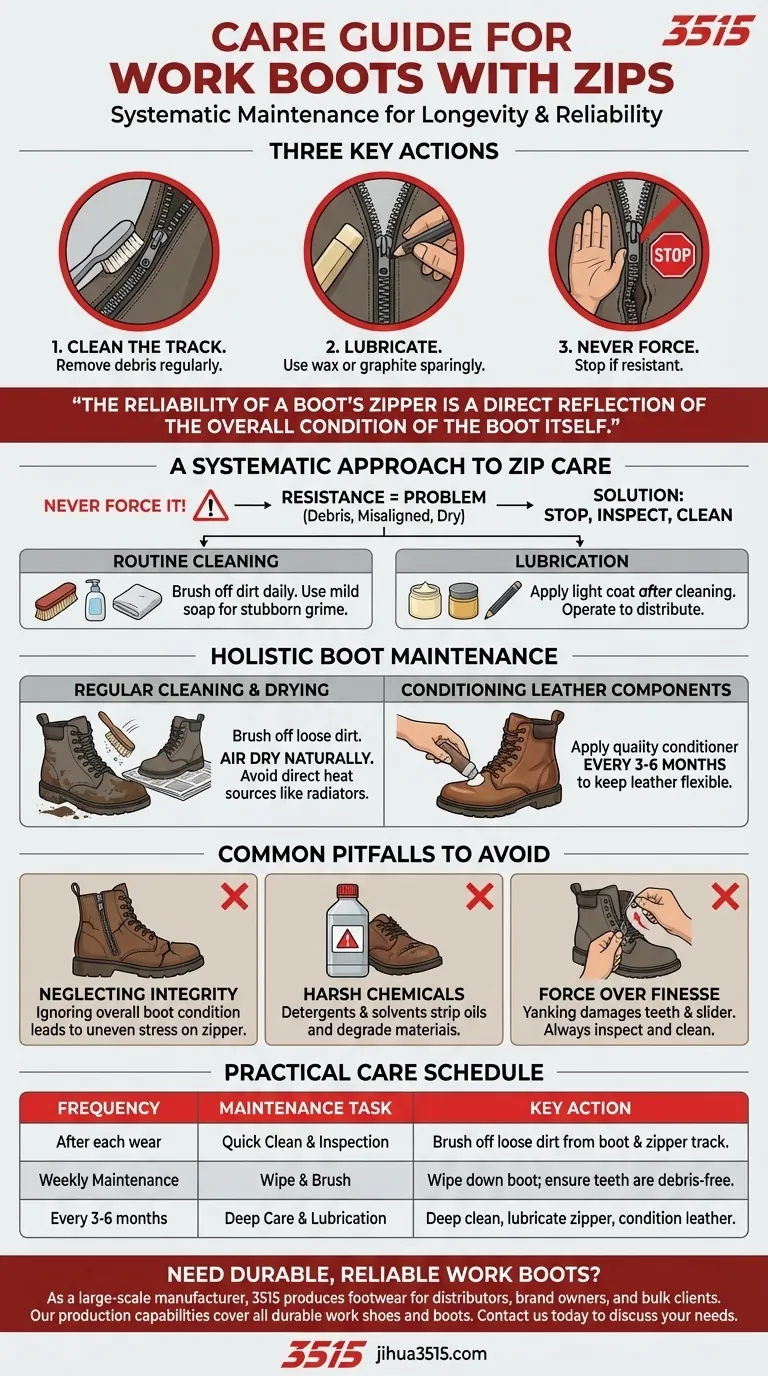
To properly care for work boots with zips, you must focus on three key actions: keeping the zipper track clean, ensuring it is properly lubricated, and never forcing it if you feel resistance. Regular cleaning with a soft brush prevents debris from jamming the teeth, while a light application of wax or graphite ensures smooth operation.
The reliability of a boot's zipper is a direct reflection of the overall condition of the boot itself. While specific zip maintenance is crucial, the ultimate goal is holistic care that reduces stress on all components and preserves your entire investment.
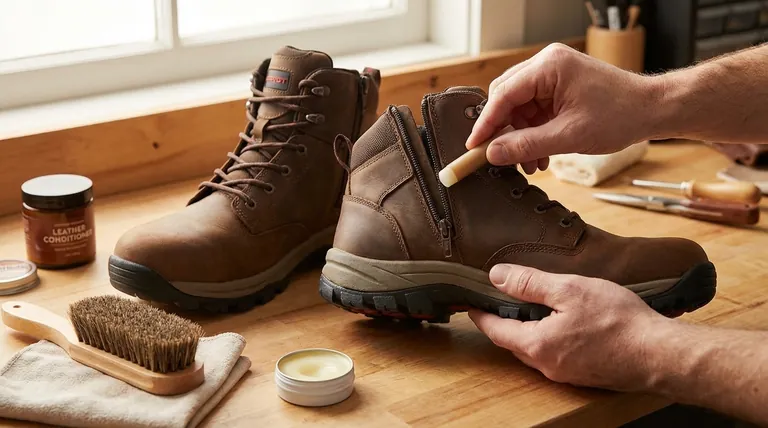
A Systematic Approach to Zip Care
A zipper is often the primary point of failure on a work boot. Treating it with mechanical sympathy is essential for longevity.
The Golden Rule: Never Force It
If a zipper resists, stop immediately. Forcing it will almost certainly damage the teeth or the slider, leading to an expensive repair or a ruined pair of boots.
Resistance is a signal that something is wrong—usually debris, a misaligned track, or a lack of lubrication.
Routine Cleaning for Reliability
Dirt, mud, and grit are the primary enemies of a functional zipper. Make a habit of cleaning the teeth regularly.
Use a soft bristle brush (an old toothbrush works perfectly) to gently scrub away any accumulated debris. For stubborn grime, use a damp cloth with a small amount of natural, mild soap, then wipe it clean.
Lubrication is Preventative Maintenance
A clean, dry zipper will benefit from occasional lubrication to reduce friction and wear. This should be done after cleaning.
Apply a very light coating of paraffin wax, beeswax, or even a graphite pencil directly onto the zipper teeth. Operate the zip a few times to distribute the lubricant evenly.
Beyond the Zip: Holistic Boot Maintenance
A boot that is stiff, misshapen, or cracked puts unnatural stress on its seams and closures, including the zipper. Proper care for the entire boot is non-negotiable.
Regular Cleaning of the Entire Boot
After each use, take a moment to brush off loose dirt and mud. This simple act prevents debris from migrating into the zipper track and breaking down the boot's materials over time.
The Importance of Proper Drying
Never dry wet boots with a direct heat source like a radiator, fire, or blow dryer. Intense heat can crack leather, shrink materials, and weaken adhesives, causing the boot to warp.
Instead, stuff them with newspaper and let them air dry naturally in a cool, well-ventilated area.
Conditioning Leather Components
Leather is a skin; it needs moisture to stay flexible. Every 3-6 months, apply a quality leather conditioner.
Well-conditioned leather remains supple, preventing it from becoming stiff and brittle. This ensures the boot flexes with your foot as intended, placing less strain on the zipper every time you take a step.
Common Pitfalls to Avoid
Simple mistakes can drastically shorten the lifespan of high-quality footwear. Awareness is the first step in prevention.
Neglecting Overall Boot Integrity
Focusing only on the zipper while ignoring cracked leather or worn soles is a losing battle. A deteriorating boot structure will inevitably lead to zipper failure due to increased and uneven stress.
Using Harsh Chemicals or Soaps
Avoid detergents, solvents, or harsh chemical cleaners. These can strip essential oils from leather and degrade synthetic materials, causing irreparable damage to the boot and its components.
Relying on Force Over Finesse
The most common mistake is trying to yank a stuck zipper free. The correct response is always to stop, inspect the track for an obstruction, and clean it before carefully trying again.
Creating a Practical Care Schedule
A consistent routine is more effective than occasional intensive care. Tailor your maintenance to how you use your boots.
- After each wear: Perform a quick visual inspection and brush off any loose dirt from the boot and zipper track.
- For weekly maintenance: Wipe down the entire boot with a damp cloth and use a brush to ensure the zipper teeth are completely clear of debris.
- Every 3-6 months: Conduct a deep clean, apply a lubricant to the zipper, and treat the leather with a suitable conditioner.
Proper maintenance transforms your boots from a disposable tool into a long-term, reliable piece of equipment.
Summary Table:
| Maintenance Task | Frequency | Key Action |
|---|---|---|
| Quick Clean & Inspection | After each wear | Brush off loose dirt from boot and zipper track. |
| Weekly Maintenance | Weekly | Wipe down boot; ensure zipper teeth are debris-free. |
| Deep Care & Lubrication | Every 3-6 months | Deep clean, lubricate zipper, condition leather. |
Need durable, reliable work boots built to last? As a large-scale manufacturer, 3515 produces a comprehensive range of footwear for distributors, brand owners, and bulk clients. Our production capabilities encompass all types of durable shoes and boots designed for demanding work environments. Contact us today to discuss your needs and discover how our quality footwear can be a long-term investment for your business.
Visual Guide
Related Products
- Wholesale Leather Work Boots with Customizable Wedge Sole for Brands
- Durable Moc-Toe Wedge Work Boots | Wholesale Manufacturing for Brands
- Durable Leather Moc Toe Work Boots for Wholesale & Custom Manufacturing
- Wholesale Durable 6-Inch Work Boots | Custom & Private Label Manufacturer
- Durable Goodyear Welt Leather Work Boots for Wholesale & Private Label
People Also Ask
- What is the difference between full-grain and top-grain leather? Premium Material Guide for Boot Manufacturers
- What are the advantages of leather as an upper material for work boots? Unmatched Durability & Custom Comfort
- How can leather work boots be protected from environmental elements? A 3-Step Guide to Lasting Durability
- What is the complete process for deep cleaning leather work boots? A Step-by-Step Guide to Preserve Your Investment
- What are the key qualities of leather for work boots? Superior Durability, Breathability & Custom Fit