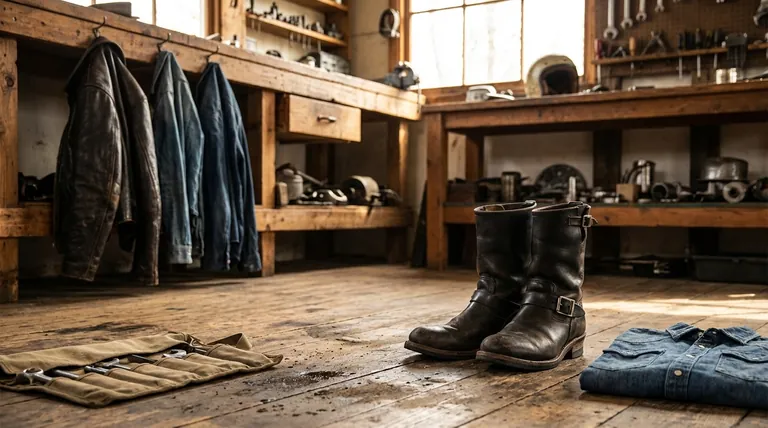
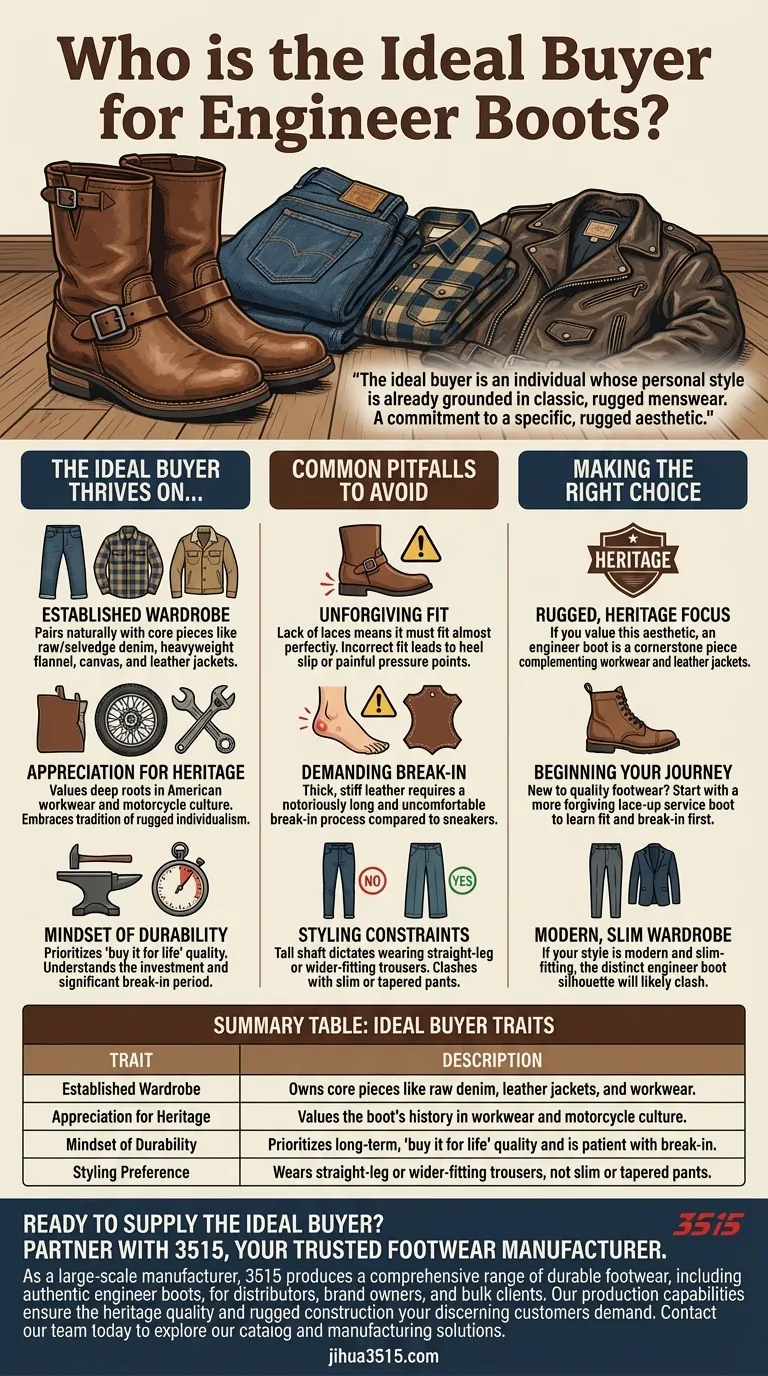
The ideal buyer for an engineer boot is an individual whose personal style is already grounded in classic, rugged menswear. These boots are not an entry-level item for someone transitioning from sneakers; they are a deliberate choice that complements an existing wardrobe of durable, timeless materials like denim, leather, wool, and canvas.
Engineer boots are best suited for the discerning individual who values heritage and durability over fleeting trends. They are a commitment to a specific, rugged aesthetic, not a versatile, all-purpose piece of footwear.
Who Thrives in Engineer Boots?
Successfully integrating engineer boots into a wardrobe requires more than just owning the right clothes; it involves a specific mindset and appreciation for the boot's history and function.
The Established Wardrobe
The boot's simple, laceless design and robust profile pair most naturally with classic, casual looks.
Think of core pieces like raw or selvedge denim, heavyweight flannel shirts, canvas work jackets, and leather motorcycle jackets. These garments share the boot's DNA of utility and durability.
The Appreciation for Heritage
Engineer boots have deep roots in American workwear and motorcycle culture. The ideal owner appreciates this history.
They aren't just buying a pair of boots; they are buying into a tradition of rugged individualism and functionality. This context is what makes the style feel authentic rather than like a costume.
The Mindset of Durability
This buyer prioritizes "buy it for life" quality over fast fashion. They understand that a quality pair of engineer boots is an investment that requires care and a significant break-in period.
This patience and long-term perspective are hallmarks of the person who will get the most out of this type of footwear.
The Reality: Common Pitfalls to Avoid
While iconic, engineer boots come with a unique set of challenges that can make them the wrong choice for many people. Understanding these trade-offs is critical.
The Unforgiving Fit
The most significant hurdle is the lack of laces. You cannot adjust the fit across the instep or around the ankle, which means the boot must fit your foot shape almost perfectly from the start.
An incorrect fit won't just be uncomfortable; it can be unwearable, leading to excessive heel slip or painful pressure points that will never improve.
The Demanding Break-in
Quality engineer boots are made from thick, stiff leather. The break-in period can be notoriously long and uncomfortable compared to other boot styles.
This is a stark contrast to the instant comfort of sneakers and can be a major deterrent for those not prepared for the process.
The Styling Constraints
The tall shaft and wide opening of an engineer boot dictate the type of pants you can wear. They are almost exclusively suited for straight-leg or wider-fitting trousers.
Attempting to wear them with slim or tapered pants often results in an awkward, unbalanced silhouette.
Making the Right Choice for Your Style
Evaluate your current wardrobe and long-term goals to determine if this iconic boot is the right investment for you.
- If your primary focus is a rugged, heritage aesthetic: An engineer boot is a cornerstone piece that will perfectly complement your existing workwear and leather jackets.
- If you are just beginning to explore quality footwear: Start with a more forgiving lace-up service boot to learn about fit, leather, and the break-in process first.
- If your wardrobe consists mainly of modern, slim-fitting clothes: The distinct silhouette of an engineer boot will likely clash with your current style.
Ultimately, the right person for an engineer boot is someone who understands and embraces its history, function, and demanding nature.
Summary Table:
| Ideal Buyer Trait | Description |
|---|---|
| Established Wardrobe | Owns core pieces like raw denim, leather jackets, and workwear. |
| Appreciation for Heritage | Values the boot's history in workwear and motorcycle culture. |
| Mindset of Durability | Prioritizes long-term, 'buy it for life' quality and is patient with break-in. |
| Styling Preference | Wears straight-leg or wider-fitting trousers, not slim or tapered pants. |
Ready to Supply the Ideal Buyer? Partner with 3515, Your Trusted Footwear Manufacturer.
As a large-scale manufacturer, 3515 produces a comprehensive range of durable footwear, including authentic engineer boots, for distributors, brand owners, and bulk clients. Our production capabilities ensure the heritage quality and rugged construction that your discerning customers demand.
Let's discuss how we can help you stock the perfect boots for your market. Contact our team today to explore our catalog and manufacturing solutions.
Visual Guide
Related Products
- Durable Leather Work Boots Wholesale Manufacturer & Custom Factory
- Durable Leather Work Boots for Wholesale & Custom OEM Manufacturing
- Durable Leather Work Boots for Wholesale & Custom Manufacturing
- Premium Waterproof High-Cut Industrial Safety Boots for Wholesale and Bulk Orders
- Wholesale Customizable Safety Boots Durable & Protective Footwear Manufacturing
People Also Ask
- What are the common workplace hazards that can be mitigated with the right work boots? Protect Your Workforce
- How do PVC, neoprene, and rubber work boots compare in weight? Choose the Right Boot for All-Day Comfort
- What features should junk removal workers look for in work boots? A Guide to Safety & Comfort
- How do subjective norms influence the marketing of work boots and tactical footwear? Leverage Social Identity for Sales
- What options are available for restoring worn-out work boots? Expert Strategies for Longevity