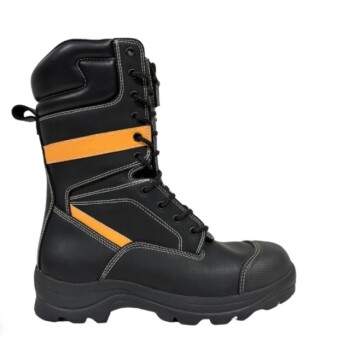
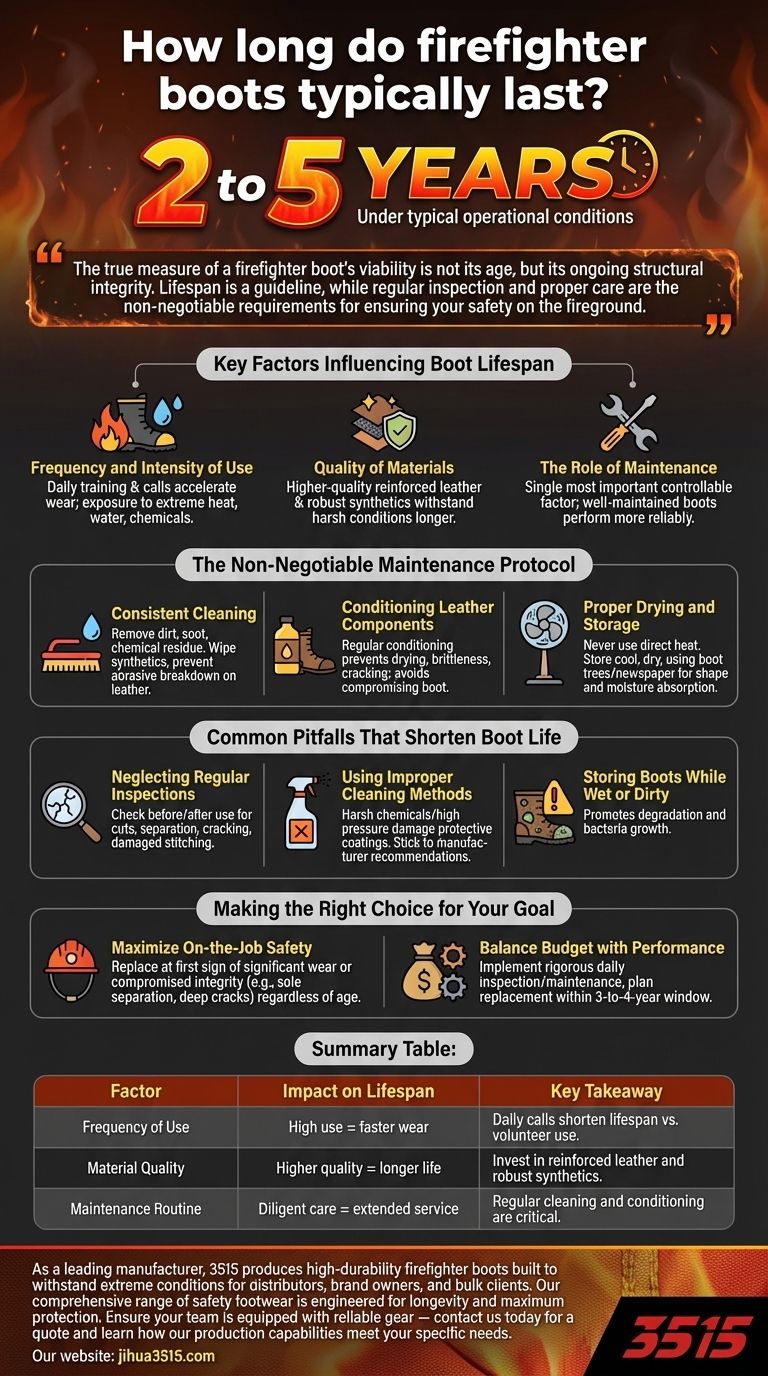
Under typical operational conditions, a pair of high-quality firefighter boots can be expected to last between 2 to 5 years. This lifespan is not a guarantee but a direct result of the intensity of use, the quality of the materials, and, most importantly, the diligence of the maintenance routine.
The true measure of a firefighter boot's viability is not its age, but its ongoing structural integrity. Lifespan is a guideline, while regular inspection and proper care are the non-negotiable requirements for ensuring your safety on the fireground.
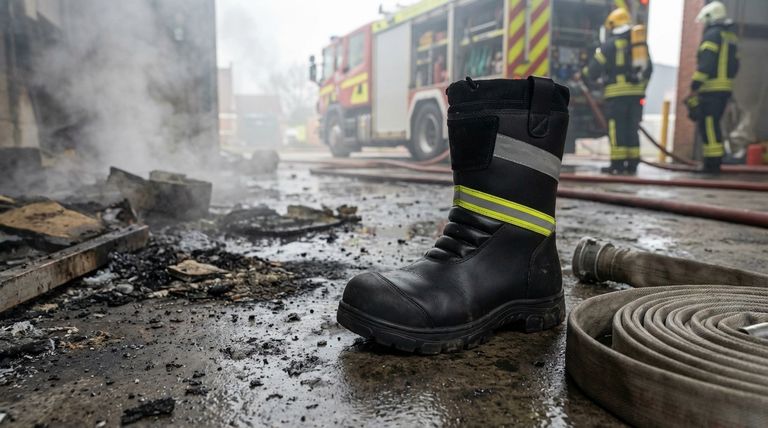
Key Factors Influencing Boot Lifespan
The 2-to-5-year range is broad because a boot's service life is determined by several critical variables. Understanding these factors is the first step toward maximizing the value and safety of your gear.
Frequency and Intensity of Use
A boot used in daily training and frequent emergency calls will naturally degrade faster than one used by a volunteer department with a lower call volume. Exposure to extreme heat, water, and chemicals accelerates this wear.
Quality of Materials
Higher-quality boots constructed with reinforced, heat-resistant leather and robust synthetic materials are built to withstand harsher conditions for longer. The initial investment often correlates with extended durability.
The Role of Maintenance
This is the single most important factor you can control. A well-maintained boot will not only last longer but will also perform more reliably, providing better support and protection.
The Non-Negotiable Maintenance Protocol
Proper care is not optional; it is a critical safety discipline. Integrating these habits into your routine is essential for preserving the protective qualities of your boots.
Consistent Cleaning
After use, remove dirt, soot, and any chemical residue. For leather, this prevents abrasive particles from breaking down fibers. For synthetic boots, a simple wipe-down with a damp cloth is sufficient.
Conditioning Leather Components
Leather requires regular conditioning to prevent it from drying out, becoming brittle, and cracking. A cracked boot is a compromised boot, offering a pathway for heat and water.
Proper Drying and Storage
Never use direct heat to dry your boots, as this can damage leather and degrade adhesives. Store them in a cool, dry place, using boot trees or newspaper to help them maintain their shape and absorb moisture.
Common Pitfalls That Shorten Boot Life
Avoiding common mistakes is just as important as performing correct maintenance. These errors can dramatically reduce the service life and safety of your footwear.
Neglecting Regular Inspections
Before and after every use, conduct a quick visual inspection. Check for deep cuts, sole separation, cracking leather, and damaged stitching. Finding these issues early prevents catastrophic failure.
Using Improper Cleaning Methods
Harsh chemical cleaners or high-pressure water can strip protective coatings and damage the boot's core materials. Stick to manufacturer-recommended cleaning procedures.
Storing Boots While Wet or Dirty
Storing boots without cleaning and drying them allows moisture and corrosive substances to sit on the materials for extended periods. This actively promotes degradation and the growth of bacteria.
Making the Right Choice for Your Goal
Base your replacement decision on the boot's physical condition, not just its age. Use this framework to guide your judgment.
- If your primary focus is maximizing on-the-job safety: Replace your boots at the first sign of significant wear or compromised integrity, such as sole separation or deep cracks, regardless of age.
- If your primary focus is balancing budget with performance: Implement a rigorous daily inspection and maintenance routine, but plan for replacement within a 3-to-4-year window to avoid pushing the gear past its reliable service life.
Ultimately, your boots are a critical piece of life-safety equipment; treat their condition with the seriousness it deserves.
Summary Table:
| Factor | Impact on Lifespan | Key Takeaway |
|---|---|---|
| Frequency of Use | High use = faster wear | Daily calls shorten lifespan vs. volunteer use. |
| Material Quality | Higher quality = longer life | Invest in reinforced leather and robust synthetics. |
| Maintenance Routine | Diligent care = extended service | Regular cleaning and conditioning are critical. |
As a leading manufacturer, 3515 produces high-durability firefighter boots built to withstand extreme conditions for distributors, brand owners, and bulk clients. Our comprehensive range of safety footwear is engineered for longevity and maximum protection. Ensure your team is equipped with reliable gear — contact us today for a quote and learn how our production capabilities meet your specific needs.
Visual Guide
Related Products
- High Performance Fire-Retardant Waterproof Safety Boots
- Premium Flame-Retardant Waterproof Safety Boots and Shoes
- Durable Military Combat Boots with Water Drainage for Wholesale & OEM
- Wholesale Lightweight Tactical Boots Custom Manufacturer for Desert & Combat Use
- High-Traction Suede Tactical Boots Wholesale & Custom Manufacturing
People Also Ask
- Why are waterproof safety boots recommended for certain work environments? Essential Protection for Wet & Hazardous Jobs
- What roles do 3D vision systems and industrial robots play in the manufacturing of fire safety boots? Smart Automation
- What's the difference between waterproof and water-resistant boots? Choose the Right Footwear for Your Environment
- What is the difference between waterproof, water-resistant, and water-repellent boots? Choose the Right Protection for Your Feet
- What are the primary benefits of incorporating waterproof technology into professional and outdoor boots? Boost Value