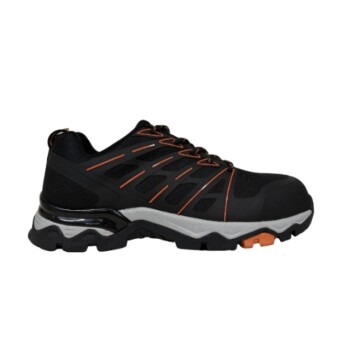
Explicit dynamic Finite Element Analysis (FEA) is necessary because safety shoe impacts are high-strain, non-linear events that standard simulation tools cannot accurately model. By effectively reproducing the complex physical fields found in experimental environments, this software allows engineers to predict exactly how a toe cap will perform under extreme stress. It provides the fidelity required to validate safety performance digitally.
The core value of explicit dynamic FEA is its ability to model high-speed collisions accurately. This enables the optimization of complex geometries—like rib layouts and wall thickness—before a single physical prototype is manufactured.
Simulating Complex Physical Interactions
Capturing High-Strain Rates
Standard simulation methods are often built for static loads, where forces are applied slowly. Safety shoe impacts, however, are high-strain-rate collision processes.
Explicit dynamic FEA is specifically designed to calculate these rapid changes in velocity and deformation. It breaks the event down into tiny time steps to accurately capture the shock of impact.
Handling Non-Linear Behavior
During a crash or impact, materials do not behave in a simple, linear fashion. They yield, buckle, or crush.
This software specializes in non-linear simulations, effectively reproducing the complex physical fields that occur when a toe cap is struck. This ensures the digital model behaves just as the physical product would in a lab test.
Optimizing Geometry and Structure
Refining Reinforcement Ribs
The arrangement of structural supports is critical for toe cap strength. The software allows designers to test various reinforcement rib layouts virtually.
By iterating through different configurations, engineers can identify the strongest design without wasting material.
Balancing Wall Thickness
Determining the correct material thickness is a balancing act between safety and weight. FEA predicts how different wall thickness combinations respond to impact loads.
This precise analysis helps eliminate over-engineering while ensuring the protective shell remains impenetrable.
The Strategic Shift from Physical to Digital
Reducing Development Costs
Traditional product development relies on "build-test-break" cycles. Manufacturing expensive physical prototypes for every design iteration drains the budget.
Explicit dynamic FEA moves this trial-and-error process into the virtual world. You only build a physical model when the digital design is already verified.
Shortening Development Cycles
Time-to-market is often the difference between success and failure. By optimizing structural plans digitally, you significantly shorten development cycles.
This efficiency allows teams to finalize designs faster, avoiding the delays associated with physical mold tooling and testing.
Making the Right Choice for Your Goal
To maximize the value of explicit dynamic FEA in your safety shoe development, consider your primary objectives:
- If your primary focus is Structural Integrity: Use the software to rigorously test reinforcement rib layouts and non-linear responses to ensure the toe cap withstands high-strain impacts.
- If your primary focus is Cost Efficiency: Leverage the simulation to validate wall thickness combinations virtually, avoiding the manufacturing of expensive intermediate prototypes.
By shifting impact testing from the physical lab to a digital environment, you transform safety compliance from a bottleneck into a design advantage.
Summary Table:
| Feature | Static/Standard FEA | Explicit Dynamic FEA |
|---|---|---|
| Load Application | Slow, constant forces | Rapid, high-speed impact |
| Strain Rate | Low/Constant | High-strain rate collisions |
| Material Behavior | Linear/Simple | Non-linear (Yielding, buckling) |
| Structural Goal | Basic load bearing | Complex geometry optimization |
| Primary Benefit | Simple stress analysis | Digital validation of safety standards |
Partner with 3515 for Advanced Safety Footwear Manufacturing
At 3515, we combine decades of manufacturing expertise with advanced technical insights to deliver high-performance footwear for global markets. As a large-scale manufacturer serving distributors and brand owners, we provide comprehensive production capabilities for all footwear types, anchored by our flagship Safety Shoes series.
Our extensive portfolio—covering work and tactical boots, outdoor shoes, training shoes, sneakers, and Dress & Formal shoes—is engineered to meet the most rigorous safety standards and diverse bulk requirements. By choosing 3515, you benefit from our commitment to structural integrity, cost-efficient development, and scalable production.
Ready to elevate your product line with precision-engineered safety footwear?
Contact 3515 today to discuss your manufacturing needs!
References
- Nuno Peixinho, João Pedro Mendonça. Experimental and Numerical Assessment of the Impact Test Performance Between Two UHSS Toe Cap Models. DOI: 10.1590/1980-5373-mr-2022-0167
This article is also based on technical information from 3515 Knowledge Base .
Related Products
- Premium Suede Sport Safety Shoes for Wholesale & Bulk Orders
- Premium Lightweight Safety Shoes for Wholesale & Bulk Orders
- Wholesale Anti-Smash & Puncture-Proof Safety Shoes Custom Manufacturing for Brands
- Premium KPU Injection Athletic Style Safety Shoes
- Premium Safety Shoes with Rotating Buckle Safety Sneakers
People Also Ask
- What industries have specific OSHA footwear requirements? Ensure Compliance & Protect Your Workforce
- What are the primary functions of professional safety shoes? Maximize Safety in Water Supply Confined Spaces
- What role do specialized safety shoes play in preventing falls? Engineering Stability in Industrial Environments
- Why are customized foot sensors or professional safety shoes incorporated into biomechanical testing? Precision Insights
- How do complex outsole tread designs in safety shoes work with coated floors? Master Slip Resistance Engineering