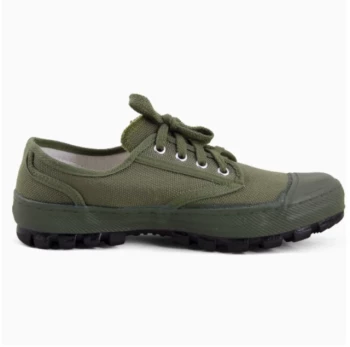
Specialized work footwear is engineered to act as a seamless foundation for full-body protection systems. Rather than functioning in isolation, these designs incorporate streamlined profiles and eliminate protruding accessories like large buckles or complex lacing. This specific engineering prevents the footwear from snagging or tearing delicate protective garments, such as isolation gowns and hazardous material suits, particularly during the critical processes of putting them on (donning) and taking them off (doffing).
The primary contribution of shoe design to PPE efficacy is the reduction of physical friction points; by minimizing snag hazards, specialized footwear preserves the integrity of protective suits and significantly lowers the risk of self-contamination during removal.
The Mechanics of Seamless Integration
Streamlined Profiles
The physical shape of a safety boot dictates how well it integrates with other equipment. Specialized boots feature smooth, contoured exteriors that allow protective suits and coveralls to drape naturally over the foot and ankle.
This design philosophy ensures that the junction between the pant leg and the boot remains sealed and unobstructed.
Elimination of Snag Points
Standard work boots often feature hooks, complex laces, or decorative buckles. In a high-risk PPE environment, these are liabilities.
Designers remove these unnecessary accessories to create a "catch-free" surface. This prevents the boot from hooking onto the fabric of a protective gown or suit, which could compromise the protective barrier.
Preserving Garment Integrity
The most vulnerable part of a HazMat suit or isolation gown is often the material itself. A single snag on a sharp eyelet can tear the material, rendering the entire suit useless.
By utilizing a smooth design, the footwear acts as a reliable base layer that actively protects the structural integrity of the secondary PPE layers above it.
Reducing Risk During Critical Transitions
The "Doffing" Danger Zone
The process of removing contaminated PPE (doffing) is often more hazardous than the work itself. This is where personnel are at the highest risk of self-contamination.
If footwear snags on the suit during removal, the wearer may struggle or use force, increasing the likelihood of touching contaminated surfaces or tearing the suit.
Facilitating Smooth Removal
Specialized footwear is designed to facilitate a fluid, low-friction removal process.
By ensuring the suit glides easily over the boot, the design minimizes physical exertion and contact, thereby enhancing the overall safety of personnel in high-pressure environments.
The Foundation of the Safety Ecosystem
Stability for Bulky Gear
Wearing full-body PPE restricts vision and movement. High-performance safety footwear compensates for this by providing superior traction.
As noted in broader safety protocols, slip-resistant soles act as a vital component of the full-body system, preventing falls that could breach a protective suit on rough or slippery surfaces.
Comprehensive Barrier Protection
While facilitating the use of suits, the boot itself must serve as the final line of defense.
These boots provide a critical physical barrier against heavy impacts, punctures, and chemical corrosion, ensuring that the foot remains protected even if the outer layer of the PPE suit is compromised at the ground level.
Understanding the Trade-offs
Fit Customization vs. Safety
To achieve a streamlined profile, manufacturers often remove lacing systems. This can compromise the ability to customize the fit.
Users with unusually wide or narrow feet may find slip-on or zipper-based safety boots less secure than traditional lace-up models, potentially affecting long-term comfort.
Breathability and Heat Stress
Boots designed to be impermeable barriers with smooth exteriors often lack ventilation.
In hot environments, this can contribute to heat stress. While the design protects against external hazards, it requires users to manage internal temperature regulation carefully.
Making the Right Choice for Your Environment
Selecting the right footwear requires analyzing your specific hazard landscape.
- If your primary focus is Biological or Chemical Containment: Prioritize boots with smooth, laceless exteriors and pull-on designs to maximize suit integrity and minimize decontamination risks.
- If your primary focus is Physical Construction Hazards: Prioritize boots with adjustable lacing and aggressive ankle support, even if they require taping to interface with protective suits.
- If your primary focus is Slippery or Uneven Terrain: Prioritize outsole technology and traction features to ensure the stability of workers wearing bulky, vision-restricting gear.
True safety is achieved when your footwear functions not just as a boot, but as an integrated component of your total protective system.
Summary Table:
| Feature | Design Benefit | PPE Integration Impact |
|---|---|---|
| Streamlined Profile | Contoured, smooth exterior | Allows suits to drape naturally and maintain seals |
| No Snag Points | Removal of hooks and buckles | Prevents tearing of delicate isolation gowns/HazMat suits |
| Slip-on/Zipper | Laceless construction | Facilitates fast, safe doffing and reduces contamination |
| Traction Soles | High-grip outsoles | Offsets restricted movement/vision in full-body gear |
| Physical Barrier | Impact & chemical resistance | Protects feet if outer PPE layers are compromised |
Optimize Your Safety Ecosystem with 3515 Footwear
As a premier large-scale manufacturer serving global distributors and brand owners, 3515 delivers footwear engineered for seamless integration with professional PPE. We provide comprehensive production capabilities across our flagship Safety Shoes series, including work and tactical boots, outdoor gear, and dress shoes designed for bulk requirements.
Our Value to You:
- Precision Manufacturing: Reducing snag points to protect garment integrity.
- Versatile Portfolio: Specialized solutions for chemical, biological, and industrial environments.
- Scalable Supply: Reliable bulk production tailored to your brand's specifications.
Ready to enhance your product line with integrated safety solutions? Contact us today to discuss your manufacturing needs.
References
- Ola Løkken Nordrum, M Callaghan. Hospital doctors’ attire during COVID-19 and beyond: time for a permanent change. DOI: 10.1007/s11845-022-02922-1
This article is also based on technical information from 3515 Knowledge Base .
Related Products
- Durable Rubber-Soled Utility Shoes for Wholesale & Custom Brand Manufacturing
- Wholesale Breathable & Cushioned Training Shoes Custom Factory Production
- Wholesale Durable & Breathable Training Shoes for Custom Brands
- Custom OEM Training Shoes Wholesale Manufacturer Durable & Breathable
- Custom Safety Shoe Manufacturer for Wholesale & OEM Brands
People Also Ask
- Why are rubber-soled shoes considered multi-weather footwear? Unlock All-Season Traction & Protection
- Why should we wear rubber soled shoes? Unlock Superior Safety and Durability
- How do rubber soles affect a shoe's appearance? Defining Your Shoe's Style and Formality
- What are the types of rubber sole shoes available? Choose the Right Sole for Durability & Comfort
- When were rubber sole shoes invented? From 1800s Concept to Modern Mainstay