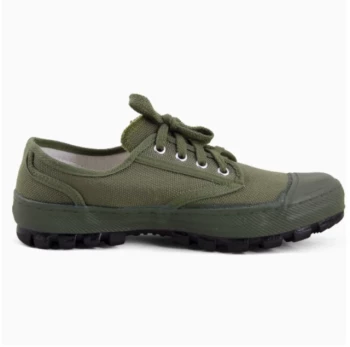
Effective fall prevention in professional safety footwear depends on compensating for specific gait deficits. The critical biomechanical factors are the management of Minimum Foot Clearance (MFC) and the accommodation of high gait variability. This requires precise engineering of the toe spring to assist with foot drop, alongside the selection of outsole materials that offer consistent wear resistance and an optimized friction coefficient.
Design for fall prevention is not just about grip; it is about trajectory control. By optimizing the toe spring and material durability, the outsole actively compensates for biomechanical failures like foot drop and low clearance to mitigate trip risks.
Addressing Gait Deficits and Trajectory
Mitigating Low Minimum Foot Clearance (MFC)
A primary risk factor in fall prevention is low Minimum Foot Clearance (MFC).
Individuals with mobility impairments often struggle to lift their feet sufficiently during the swing phase of walking.
This lack of clearance drastically increases the probability of the toe striking the ground, leading to trips and falls.
Compensating for Reduced Dorsiflexion
To counter low MFC, the outsole design must feature an optimized toe spring.
This upward curve at the front of the shoe physically compensates for reduced dorsiflexion, commonly known as "foot drop."
By artificially lifting the toe, the shoe assists in correcting foot trajectory, ensuring safer ground clearance even when the wearer's muscle control is compromised.
Material Considerations for Stability
The Necessity of Consistent Wear Resistance
The physical properties of the outsole material are as critical as the geometry.
Designers must prioritize materials that demonstrate consistent wear resistance.
If an outsole wears down unevenly or too quickly, the shoe's biomechanical profile changes, potentially reintroducing fall risks that the original design was meant to prevent.
Optimizing the Friction Coefficient
The outsole must possess an appropriate friction coefficient.
This ensures sufficient traction to prevent slips while avoiding excessive grip that could cause stumbling during the swing phase.
Maintaining this coefficient relies heavily on the material's ability to resist degradation over time.
Understanding the Trade-offs
The Challenge of High Gait Variability
A significant pitfall in safety shoe design is assuming a consistent walking pattern.
The target demographic for these protective shoes often exhibits high gait variability, meaning their step length, width, and timing change frequently.
A design that is too rigid or specific to a "standard" gait may fail to accommodate these erratic movements, rendering the safety features less effective in real-world scenarios.
Making the Right Choice for Your Goal
To select or design the most effective protective footwear, you must match the specific biomechanical intervention to the user's primary deficit.
- If your primary focus is reducing trip hazards: Prioritize an optimized toe spring design to physically compensate for low Minimum Foot Clearance and reduced dorsiflexion.
- If your primary focus is long-term reliability: Select outsole materials with verified consistent wear resistance to ensure the friction coefficient remains stable throughout the shoe's lifespan.
Success lies in viewing the shoe not merely as protection, but as a prosthetic aid that corrects foot trajectory.
Summary Table:
| Biomechanical Factor | Design Intervention | Protective Benefit |
|---|---|---|
| Low Minimum Foot Clearance | Optimized Toe Spring | Reduces trip risks by lifting the toe during swing phase |
| Reduced Dorsiflexion | Upward Curvature Geometry | Compensates for 'foot drop' to ensure ground clearance |
| Gait Variability | Adaptive Sole Profile | Accommodates inconsistent step patterns and erratic movements |
| Traction Loss | High Friction Coefficient | Provides stable grip to prevent slips without causing stumbles |
| Structural Decay | Consistent Wear Resistance | Maintains the shoe's safety profile over long-term usage |
Partner with 3515 for High-Performance Safety Footwear Solutions
As a premier large-scale manufacturer, 3515 specializes in delivering technically superior footwear for distributors and brand owners worldwide. Our deep understanding of biomechanics allows us to engineer outsoles that prioritize user safety and trajectory control.
Why Choose 3515?
- Comprehensive Range: From our flagship Safety Shoes and tactical boots to sneakers and formal dress shoes.
- Precision Engineering: Expertly designed toe springs and high-durability materials to combat gait deficits.
- Scalable Production: Robust manufacturing capabilities to meet diverse bulk requirements for any industry.
Ready to elevate your product line with industry-leading safety technology? Contact us today to discuss your manufacturing needs!
References
- Hanatsu Nagano, Rezaul Begg. Biomechanical Correlates of Falls Risk in Gait Impaired Stroke Survivors. DOI: 10.3389/fphys.2022.833417
This article is also based on technical information from 3515 Knowledge Base .
Related Products
- Premium Safety Shoes with Rotating Buckle Safety Sneakers
- Durable Rubber-Soled Utility Shoes for Wholesale & Custom Brand Manufacturing
- Advanced KPU Athletic Safety Shoe with Steel Toe Cap Anti-Slip Rotary Lacing System
- Premium Suede Sport Safety Shoes for Wholesale & Bulk Orders
- Wholesale Anti-Smash & Puncture-Proof Safety Shoes Custom Manufacturing for Brands
People Also Ask
- How do complex outsole tread designs in safety shoes work with coated floors? Master Slip Resistance Engineering
- How do the 3R principles influence green footwear design? Master Sustainable Safety Shoe Manufacturing
- How do specialized safety shoes protect against battery maintenance injuries? Prevent Impact and Chemical Burns
- What are the primary functions of professional safety shoes? Maximize Safety in Water Supply Confined Spaces
- What role do specialized safety shoes play in preventing falls? Engineering Stability in Industrial Environments