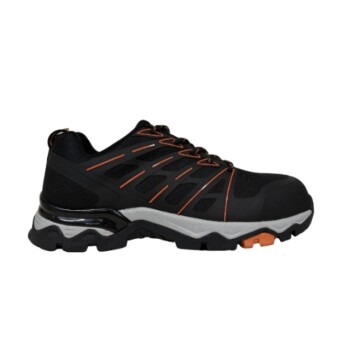
The integration of high-retroreflective materials into safety footwear improves safety by drastically increasing the visibility of pedestrians and workers in dark or low-light environments. By returning light directly to the source, these materials extend the distance at which a driver can detect a person, providing the driver with critical additional time to react and avoid a collision.
Core Takeaway Visibility is the primary defense for vulnerable road users. High-retroreflective materials function as a passive alert system, transforming safety footwear into a visual beacon that maximizes driver reaction time and significantly lowers the risk of accidents caused by poor detection.
Extending the Safety Margin
The primary mechanism by which retroreflective footwear improves safety is by manipulating the reaction gap—the time between a hazard appearing and the driver taking action.
Increasing Detection Distance
Standard footwear often blends into the background in low-light conditions.
High-retroreflective materials utilize micro-bead or micro-prism structures to bounce light back toward the emitter (the vehicle's headlights). This contrast ensures the wearer is detected at a much greater distance than they would be with standard gear.
Buying Time for Drivers
The increased detection distance translates directly into time.
By spotting a worker or pedestrian sooner, the driver gains valuable seconds to process the visual information and hit the brakes. This expanded window of time is often the deciding factor in preventing a collision.
Quantifying Visibility
Safety is not subjective; it is measurable. To ensure footwear actually improves safety, we rely on precise quantification using specific optical metrics.
The Coefficient of Retroreflection (R)
The effectiveness of safety footwear is determined by its coefficient of retroreflection (R).
This metric objectively evaluates how efficiently the material returns light. A higher "R" value indicates that the micro-structures within the tape are effectively redirecting light, resulting in a higher safety grade for the user.
Simulating Real-World Conditions
To verify performance, experts use a device called a retroreflectometer.
This instrument simulates specific viewing geometries, such as a 12' (minute) observation angle and a 5° entrance angle. This testing ensures that the material will perform correctly under the actual angles a driver would view a pedestrian's feet from the road.
Understanding the Limitations
While retroreflective materials are vital for safety, relying on them requires an understanding of their physical constraints.
Durability Factors
Retroreflective performance is not permanent.
The reflective capability of micro-beads or prisms can degrade due to wear, dirt, or chemical exposure. It is critical to measure the coefficient of retroreflection before and after treatments to ensure the material maintains its safety grade throughout its lifecycle.
Angle Sensitivity
Retroreflection is highly directional.
While these materials are designed to return light to the source, extreme angles may reduce visibility. The specific testing angles (like the 5° entrance angle) are chosen to cover the most common detection scenarios, but they cannot guarantee visibility from every possible position.
Making the Right Choice for Your Safety Gear
When selecting or designing safety footwear, the goal is to match technical specifications with the specific risks of the environment.
- If your primary focus is accident prevention: Prioritize materials with the highest possible coefficient of retroreflection (R) to maximize the detection distance for approaching drivers.
- If your primary focus is quality assurance: Rely on objective data from a retroreflectometer—specifically testing before and after wear simulations—rather than visual inspections.
Ultimately, the presence of verified high-retroreflective material on footwear is a critical, measurable factor in ensuring that a driver sees a vulnerable road user in time to stop.
Summary Table:
| Feature | Impact on Safety | Key Metric |
|---|---|---|
| Detection Distance | Extends the visual range for drivers in low-light conditions. | Meters / Feet |
| Light Return | Micro-prisms bounce light directly back to the source/vehicle. | Coefficient of Retroreflection (R) |
| Reaction Time | Provides critical additional seconds for braking and hazard avoidance. | Seconds (Time Gap) |
| Durability | Ensures long-term visibility despite wear and chemical exposure. | Post-treatment R-value |
Partner with 3515 for High-Performance Safety Solutions
As a large-scale manufacturer serving distributors and brand owners worldwide, 3515 offers comprehensive production capabilities for all footwear types. Our flagship Safety Shoes series is engineered with verified high-retroreflective materials to meet the most stringent visibility and safety standards.
Whether you need work and tactical boots, outdoor shoes, or bulk orders of sneakers and dress shoes, our expertise ensures your products deliver maximum protection and quality. Let us help you enhance your brand's safety portfolio with our advanced manufacturing technology.
Ready to elevate your product safety? Contact us today to discuss your bulk manufacturing needs!
References
- Linnea Kjeldgård, Emilie Friberg. Sickness absence and disability pension after road traffic accidents, a nationwide register-based study comparing different road user groups with matched references. DOI: 10.1016/j.heliyon.2024.e28596
This article is also based on technical information from 3515 Knowledge Base .
Related Products
- Premium Suede Sport Safety Shoes for Wholesale & Bulk Orders
- Premium Lightweight Safety Shoes for Wholesale & Bulk Orders
- Wholesale Anti-Smash & Puncture-Proof Safety Shoes Custom Manufacturing for Brands
- Premium KPU Injection Athletic Style Safety Shoes
- Premium Safety Shoes with Rotating Buckle Safety Sneakers
People Also Ask
- What are the primary functions of professional safety shoes? Maximize Safety in Water Supply Confined Spaces
- What industries have specific OSHA footwear requirements? Ensure Compliance & Protect Your Workforce
- What role do specialized safety shoes play in preventing falls? Engineering Stability in Industrial Environments
- What are the main components of safety shoes? A Guide to Protective Footwear Design
- What happens during the cutting stage of safety shoes manufacturing? Precision, Process & Quality