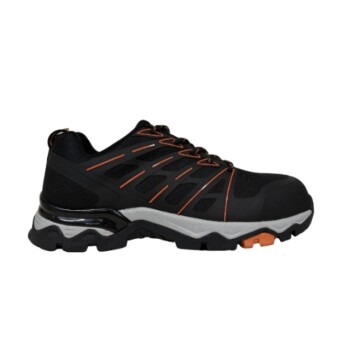
Footwear selection functions as a primary variable in the accuracy of biomechanical testing and the effectiveness of safety equipment. In reactive balance testing, the choice of footwear must be standardized to eliminate mechanical interference, ensuring data reflects the subject's physiological abilities rather than the shoe's instability. In the design of protective gear, such as tactical boots, specific structural elements like grip and containment are manipulated to optimize the body's natural recovery mechanisms during sudden disturbances.
Core Takeaway Reliable balance data requires the exclusion of unstable footwear to isolate human performance, while effective safety design relies on maximizing "foot containment" and sole grip. These features are critical because they facilitate efficient ankle strategies and minimize the energy lost when a person attempts to recover from a slip or trip.
The Role of Footwear in Reactive Balance Testing
Isolating Inherent Ability
The primary goal of reactive balance testing is to measure a subject's inherent balance-regulating ability.
To achieve this, the testing environment must ensure that the results are derived from the person's neurological and muscular responses, not external factors.
Eliminating Mechanical Interference
Footwear structure directly influences how the foot interacts with the support surface.
If this interaction is inconsistent, it introduces "noise" into the data. This makes it impossible to distinguish between a physiological deficit and a mechanical disadvantage.
The Necessity of Standardization
Researchers must exclude unstable footwear types, such as high heels, from experimental protocols.
Standardizing footwear across all subjects creates a baseline. This ensures that any observed variance in balance is due to the subject, not the shoe.
Principles for Protective Footwear Design
Benchmarking for Safety
Insights from balance testing serve as vital benchmarks for the design of mass-produced safety shoes and tactical boots.
The goal is to engineer footwear that actively assists in fall prevention rather than just covering the foot.
Optimizing Ankle Strategies
The ankle is a primary pivot point for balance recovery.
Superior footwear design optimizes the transmission of ankle strategies. This allows the body to effectively transfer force to the ground to correct posture after a perturbation.
The Criticality of Containment and Grip
Two specific features define high-performance safety footwear: superior sole grip and foot containment.
Grip secures the shoe to the ground, while containment secures the foot within the shoe.
Reducing Energy Loss
When a shoe fits loosely or lacks structure, energy is wasted as the foot slides inside it.
Proper containment reduces this energy loss during sudden perturbations. This ensures that the body's muscular effort is directed entirely toward regaining balance.
Common Pitfalls in Selection and Design
The Risk of Unstable Variables
Failing to standardize footwear in testing leads to "shoe-induced interference."
This renders experimental results invalid because the instability of the shoe masks the actual balance capacity of the subject.
The Energy Transfer Gap
In design, focusing solely on the tread (grip) without addressing containment is a common error.
Without proper containment, the "transmission" of ankle strategies is compromised. Even with a high-grip sole, a lack of internal stability will result in energy loss and a higher risk of falls.
Making the Right Choice for Your Goal
Whether you are designing a clinical protocol or engineering safety equipment, the function of the shoe dictates the outcome.
- If your primary focus is Experimental Validity: Prioritize standardization and stability, ensuring all subjects wear neutral footwear to eliminate mechanical variables from your data.
- If your primary focus is Fall Prevention Design: Prioritize energy transfer efficiency, focusing on sole grip and tight foot containment to maximize the wearer's reactive ankle strategies.
The structural integrity of footwear is the foundation upon which human balance regulation relies.
Summary Table:
| Key Feature | Impact on Testing | Impact on Safety Design |
|---|---|---|
| Standardization | Eliminates mechanical noise & ensures data validity | Provides a baseline for performance benchmarking |
| Foot Containment | Isolates inherent neurological responses | Reduces energy loss during sudden balance recovery |
| Sole Grip | Maintains consistent surface interaction | Maximizes force transfer for effective ankle strategies |
| Structure | Prevents shoe-induced interference | Enhances the body's natural posture correction |
Partner with 3515 for Precision-Engineered Footwear
As a premier large-scale manufacturer serving global distributors and brand owners, 3515 leverages biomechanical insights to produce high-performance footwear. Our flagship Safety Shoes and tactical boots are engineered with superior containment and grip to maximize energy transfer and fall prevention.
Whether you need robust work boots, specialized training sneakers, or sophisticated dress shoes for bulk requirements, our comprehensive production capabilities ensure your inventory meets the highest standards of safety and stability.
Ready to elevate your product line? Contact us today to discuss your manufacturing needs.
References
- Ringo Tang-Long Zhu, Christina Zong‐Hao. Older Fallers’ Comprehensive Neuromuscular and Kinematic Alterations in Reactive Balance Control: Indicators of Balance Decline or Compensation? A Pilot Study. DOI: 10.3390/bioengineering12010066
This article is also based on technical information from 3515 Knowledge Base .
Related Products
- Premium Suede Sport Safety Shoes for Wholesale & Bulk Orders
- Premium Lightweight Safety Shoes for Wholesale & Bulk Orders
- Wholesale Anti-Smash & Puncture-Proof Safety Shoes Custom Manufacturing for Brands
- Premium KPU Injection Athletic Style Safety Shoes
- Premium Safety Shoes with Rotating Buckle Safety Sneakers
People Also Ask
- What are the primary functions of professional safety shoes? Maximize Safety in Water Supply Confined Spaces
- What industries have specific OSHA footwear requirements? Ensure Compliance & Protect Your Workforce
- What role do specialized safety shoes play in preventing falls? Engineering Stability in Industrial Environments
- How do the 3R principles influence green footwear design? Master Sustainable Safety Shoe Manufacturing
- How do complex outsole tread designs in safety shoes work with coated floors? Master Slip Resistance Engineering