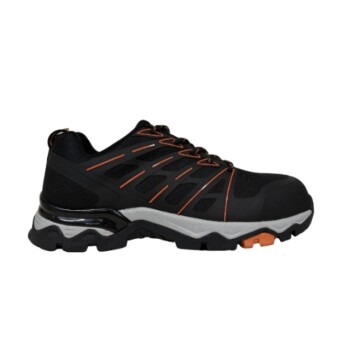
Beyond the steel toe, modern safety shoes are engineered with a sophisticated system of comfort features designed to reduce fatigue and physical strain. Key features include shock-absorbing midsoles, cushioned insoles with arch support, lightweight composite materials, and breathable, moisture-wicking linings.
The core principle of modern safety footwear is that comfort is not a luxury, but a critical component of safety. By actively reducing fatigue through ergonomic design and advanced materials, these shoes enhance a worker's focus, endurance, and overall well-being.

Deconstructing Comfort: How Each Part Contributes
A safety shoe is more than just its protective toe cap. True comfort is achieved when every component works together to support your foot and reduce the stress of a long workday.
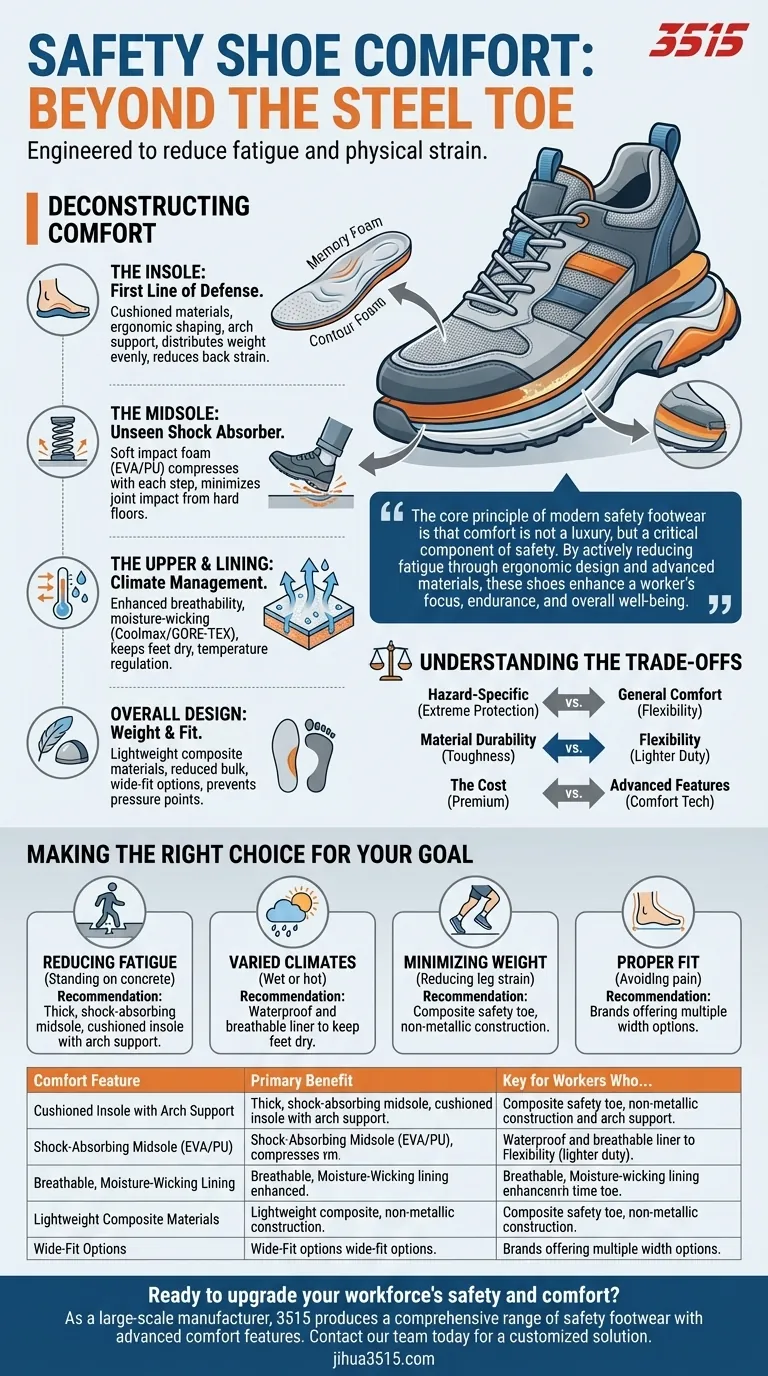
The Insole: Your First Line of Defense Against Fatigue
The insole is the part of the shoe that directly contacts the bottom of your foot. Modern designs go far beyond a simple flat liner, incorporating cushioned materials and ergonomic shaping.
Features like dedicated arch support help distribute weight evenly, alleviating strain on your feet, ankles, and even your lower back. Many use advanced foams that mold to your foot shape over time.
The Midsole: The Unseen Shock Absorber
Located between the insole and the outsole, the midsole is the shoe's primary engine for shock absorption. It is often made from materials like EVA (ethylene vinyl acetate) or PU (polyurethane).
This soft impact foam compresses with each step, absorbing the jarring impact of walking on hard surfaces like concrete. This significantly reduces the cumulative stress on your joints throughout the day.
The Upper and Lining: Managing Your Foot's Climate
The comfort of your foot is heavily dependent on temperature and moisture management. The materials used for the shoe's upper and internal lining are critical.
Features like enhanced breathability and specialized liners (such as Coolmax or GORE-TEX) work to wick sweat away from your foot, keeping it dry and preventing blisters. For specific environments, features like cold insulation or heat insulation provide critical temperature regulation.
Overall Design: The Importance of Weight and Fit
The overall construction of the shoe plays a massive role in its comfort. Two key factors are weight and fit.
Many manufacturers now use composite materials instead of steel for toe caps and midsoles. This non-metallic construction provides the necessary safety protection with less bulk and significantly less weight, reducing the energy you expend with every step.
Furthermore, the availability of wide-fit options ensures that workers can find a shoe that accommodates their foot shape, preventing the pain and pressure points caused by a narrow fit.
Understanding the Trade-offs
While technology has blurred the lines, a balance must often be struck between maximum protection and all-day comfort.
Hazard-Specific vs. General Comfort
A shoe designed for extreme hazards, such as a heat-resistant outsole for a foundry or a cut-resistant upper for glass handling, may inherently be less flexible or breathable than a general-purpose work shoe.
Material Durability and Flexibility
The toughest, most abrasion-resistant materials may not offer the same level of flexibility as lighter-duty options. The key is to match the shoe's durability level to the actual demands of your job.
The Cost of Advanced Features
Safety shoes incorporating premium comfort technologies, such as waterproof GORE-TEX membranes, specialized shock-absorption systems, or advanced insulating materials, typically come at a higher price point.
Making the Right Choice for Your Goal
Selecting the right safety shoe means matching its features to your specific work environment and physical needs.
- If your primary focus is reducing fatigue from standing on concrete: Prioritize shoes with a thick, shock-absorbing midsole and a cushioned insole that provides excellent arch support.
- If your primary focus is staying comfortable in wet or varied climates: Look for a shoe with a proven waterproof and breathable liner to keep your feet dry from both external elements and internal sweat.
- If your primary focus is minimizing weight to reduce leg strain: Seek out models that feature a composite safety toe and non-metallic construction for the lightest possible design.
- If your primary focus is finding a proper fit to avoid pain: Choose brands known for offering multiple width options to ensure your foot has enough room without being loose.
Investing in safety footwear that aligns with your specific comfort needs is a direct investment in your daily well-being and long-term health.
Summary Table:
| Comfort Feature | Primary Benefit | Key for Workers Who... |
|---|---|---|
| Cushioned Insole with Arch Support | Distributes weight evenly, reduces back strain | Stand for long periods on hard surfaces |
| Shock-Absorbing Midsole (EVA/PU) | Minimizes joint impact from hard floors | Walk extensively on concrete |
| Breathable, Moisture-Wicking Lining | Keeps feet dry, prevents blisters | Work in hot or humid conditions |
| Lightweight Composite Materials | Reduces leg fatigue and energy expenditure | Need to move quickly or frequently |
| Wide-Fit Options | Prevents pain from pressure points | Have wider feet or require specific fit |
Ready to upgrade your workforce's safety and comfort? As a large-scale manufacturer, 3515 produces a comprehensive range of safety footwear for distributors, brand owners, and bulk clients. Our production capabilities encompass all types of shoes and boots, engineered with the advanced comfort features detailed above. We can help you provide durable, ergonomic footwear that reduces fatigue and enhances productivity. Contact our team today to discuss your specific needs and receive a customized solution.
Visual Guide
Related Products
- Premium Suede Sport Safety Shoes for Wholesale & Bulk Orders
- Premium Lightweight Safety Shoes for Wholesale & Bulk Orders
- Wholesale Anti-Smash & Puncture-Proof Safety Shoes Custom Manufacturing for Brands
- Premium KPU Injection Athletic Style Safety Shoes
- Premium Safety Shoes with Rotating Buckle Safety Sneakers
People Also Ask
- What industries have specific OSHA footwear requirements? Ensure Compliance & Protect Your Workforce
- What are the primary functions of professional safety shoes? Maximize Safety in Water Supply Confined Spaces
- What role do specialized safety shoes play in preventing falls? Engineering Stability in Industrial Environments
- What are the main components of safety shoes? A Guide to Protective Footwear Design
- Why wear protective masks, gloves, and safety shoes in 5S Shine? Elevate Safety and Discipline