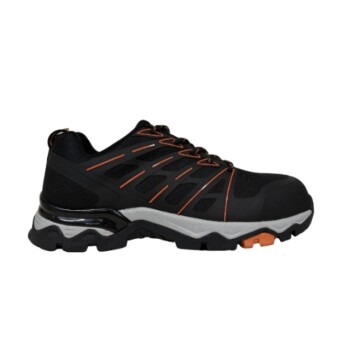
Data augmentation acts as a critical bridge between static training datasets and dynamic real-world environments. It improves the detection of safety shoes by systematically altering original images—using techniques like flipping, blurring, noise injection, and brightness adjustments—to mimic the unpredictable lighting and imaging conditions typical of manufacturing worksites.
Real-world factories contain complex backgrounds and variable lighting that often confuse standard AI models. Data augmentation solves this by artificially expanding limited datasets, forcing the model to learn the structural characteristics of safety shoes rather than memorizing specific, clean images.
Simulating Real-World Chaos
To create a robust detection system, the model must be trained on data that looks like the actual factory floor, not a studio environment.
Replicating Poor Lighting
Manufacturing plants rarely have consistent lighting; shadows shift and intensity varies throughout the day. By applying brightness adjustments to training images, data augmentation teaches the model to identify safety shoes regardless of whether the environment is dim or overexposed.
Handling Camera Distances
Cameras in a factory are fixed at various heights and angles, or they may be mobile. Augmentation techniques allow the model to learn the features of safety shoes from different distances and angles, ensuring reliable detection whether the subject is near or far.
Dealing with Image Quality Issues
Industrial cameras often suffer from graininess or focus issues due to dust and movement. Blurring and noise injection are used to degrade the high-quality training images intentionally. This forces the algorithm to recognize the essential shape of the shoe even when the visual input is imperfect.
Overcoming Data Scarcity
One of the primary challenges in industrial AI is the lack of massive, labeled datasets.
Preventing Overfitting
When a model trains on a small set of images, it tends to "memorize" them rather than learning to generalize. This is known as overfitting. By applying geometric transformations like flipping, augmentation generates new variations of existing data, effectively multiplying the sample size and preventing the model from becoming biased toward the limited original examples.
Isolating the Object
Factories have visually noisy floors, cluttered with cables, debris, and machinery. Augmentation helps the model distinguish footwear from these complex background environments. By varying the appearance of the object and the image quality, the model learns to filter out background noise and focus solely on the defining features of the safety shoe.
Understanding the Limitations
While powerful, data augmentation is not a magic solution and requires careful calibration.
The Risk of Excessive Distortion
If augmentation is applied too aggressively, it can destroy the semantic meaning of the image. For example, excessive blurring or noise might render the safety shoe unrecognizable even to a human, confusing the model during training.
Contextual Relevance
Not all augmentations make sense for every scenario. Flipping an image vertically (upside down) is rarely useful for detecting shoes on a floor, as gravity dictates they will almost always be right-side up. Irrelevant augmentations can waste training resources without adding detection value.
Optimizing Your Detection Strategy
To get the best results, tailor your augmentation strategy to your specific environmental constraints.
- If your primary focus is variable lighting: Prioritize brightness and contrast adjustments to simulate the shifting shadows of a 24-hour production cycle.
- If your primary focus is limited data availability: Lean heavily on geometric transformations like horizontal flipping and scaling to maximize the utility of every labeled image you possess.
By simulating the imperfections of the physical world, you transform a fragile model into a resilient safety tool.
Summary Table:
| Augmentation Technique | Industrial Problem Solved | Detection Benefit |
|---|---|---|
| Brightness Adjustments | Unstable factory lighting & shadows | Ensures detection in dim or overexposed areas |
| Blurring & Noise Injection | Dust, vibration, and low-res cameras | Maintains accuracy despite poor image quality |
| Geometric Flipping/Scaling | Limited labeled training datasets | Prevents overfitting and improves generalization |
| Angle & Distance Scaling | Varied camera mounting positions | Reliable identification from any height or distance |
Partner with 3515 for High-Performance Footwear Solutions
As a large-scale manufacturer serving distributors and brand owners, 3515 offers comprehensive production capabilities for all footwear types. Our flagship Safety Shoes series is engineered for excellence, backed by an extensive portfolio that includes work and tactical boots, outdoor shoes, training shoes, sneakers, and Dress & Formal footwear to meet diverse bulk requirements.
Ready to elevate your inventory with industry-leading quality and specialized manufacturing expertise? Contact us today to discuss your wholesale needs and see how our global supply chain can add value to your brand.
References
- Khania O.P.P. Nugraha, Achmad Pratama Rifai. Convolutional Neural Network for Identification of Personal Protective Equipment Usage Compliance in Manufacturing Laboratory. DOI: 10.23917/jiti.v22i1.21826
This article is also based on technical information from 3515 Knowledge Base .
Related Products
- Premium Suede Sport Safety Shoes for Wholesale & Bulk Orders
- Premium Lightweight Safety Shoes for Wholesale & Bulk Orders
- Wholesale Anti-Smash & Puncture-Proof Safety Shoes Custom Manufacturing for Brands
- Premium KPU Injection Athletic Style Safety Shoes
- Premium Safety Shoes with Rotating Buckle Safety Sneakers
People Also Ask
- What industries have specific OSHA footwear requirements? Ensure Compliance & Protect Your Workforce
- What are the primary functions of professional safety shoes? Maximize Safety in Water Supply Confined Spaces
- What role do specialized safety shoes play in preventing falls? Engineering Stability in Industrial Environments
- How do I choose the best safety shoes? Match Certified Features to Your Hazards
- Why should ergonomics and comfort be prioritized when selecting safety shoes? Boost Compliance & Worker Health