
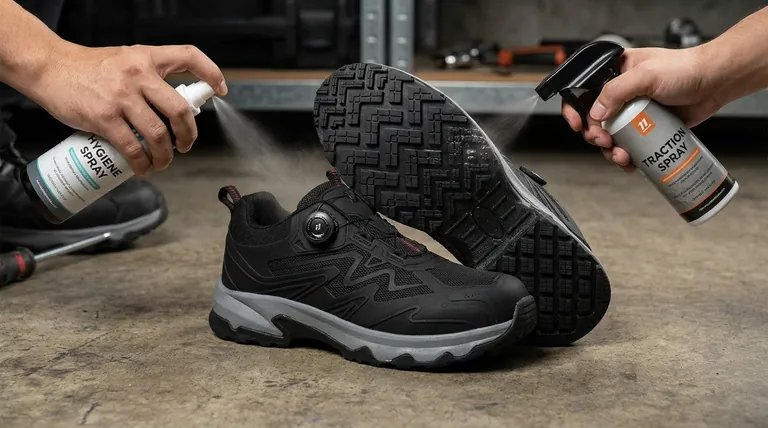
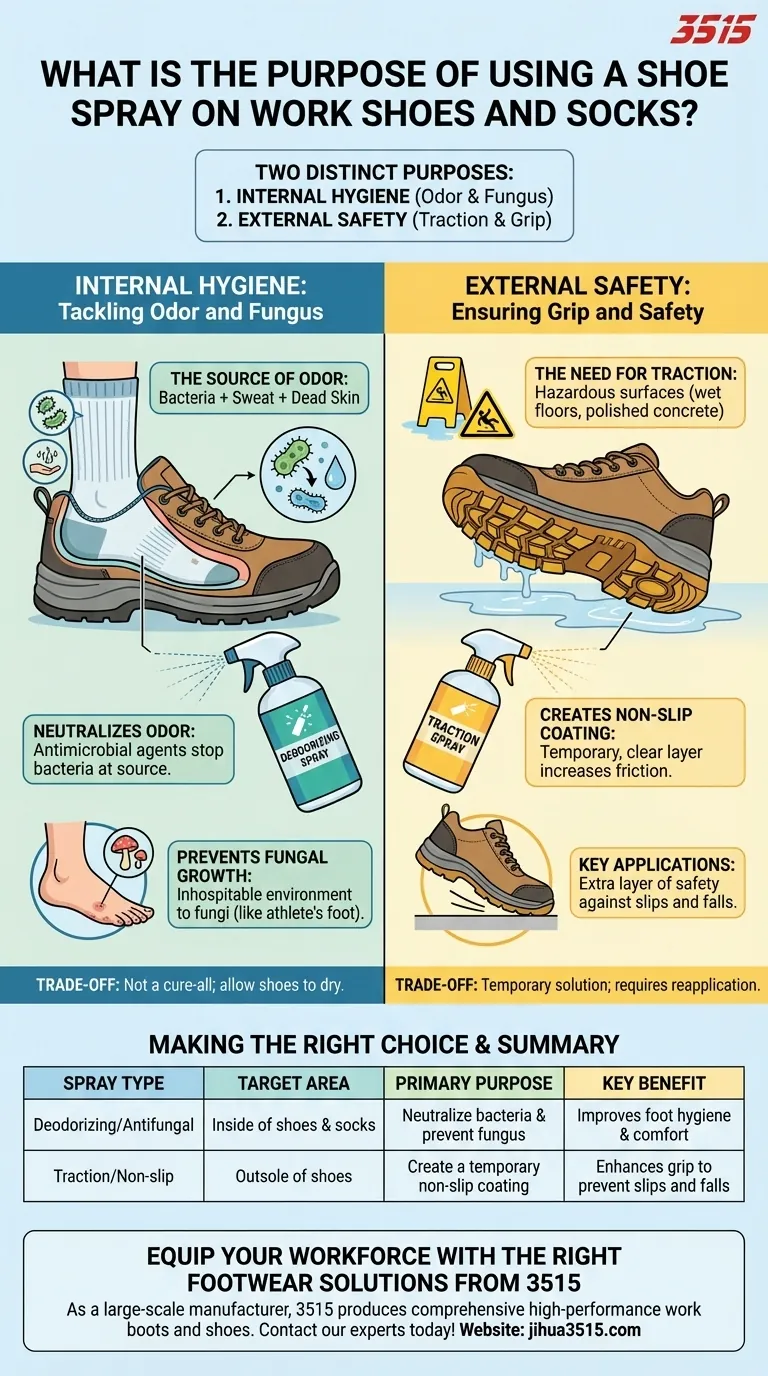
The primary purpose of using a spray on work shoes and socks is twofold, addressing two distinct needs. One type of spray is for internal hygiene, designed to neutralize sweat-related odors and prevent the growth of fungus. The other type is for external safety, creating a non-slip coating on the outsole to improve traction on slippery surfaces.
Understanding the purpose of a "shoe spray" requires distinguishing between two separate problems. You must choose between an antimicrobial spray for the inside of your shoes to manage hygiene, and a traction spray for the outside to prevent slips and falls.
The Internal Environment: Tackling Odor and Fungus
The enclosed, high-moisture environment inside a work shoe is a breeding ground for bacteria and fungi. Hygiene-focused sprays are designed to disrupt this cycle directly.
The Source of Odor
Sweat itself is largely odorless. The smell we associate with sweaty feet is caused by bacteria on our skin breaking down the sweat and dead skin cells inside the warm, damp shoe.
How Deodorizing Sprays Work
A good deodorizing spray does more than just mask the smell. It contains antimicrobial or antibacterial agents that neutralize the odor-causing bacteria at the source, preventing future odors from developing.
Preventing Fungal Growth
The same conditions that cause odor are also ideal for fungal growth, which can lead to issues like athlete's foot. Antifungal sprays make the internal environment of the shoe and sock inhospitable to these fungi, drastically improving overall foot hygiene.
The External Environment: Ensuring Grip and Safety
For many work environments, the greatest risk is not odor but a lack of traction. Specialized sprays are engineered to address this specific safety concern.
The Need for Enhanced Traction
Workplace surfaces like polished concrete, wet floors, or metal ramps can be extremely hazardous. Standard shoe soles may not always provide sufficient grip.
How Traction Sprays Work
Traction spray is applied directly to the outsole of the shoe. It creates a temporary, clear, non-slip coating that increases the coefficient of friction between the shoe and the surface without changing the shoe's appearance or fit.
Key Applications
These sprays are most effective for tasks that involve moving across predictably slippery indoor or outdoor surfaces, providing an extra layer of safety against slips and falls.
Understanding the Trade-offs
While effective, shoe sprays are specialized tools with specific limitations. It's critical to understand what they can and cannot do.
Deodorizing Sprays: Not a Cure-All
These sprays are highly effective for managing odor and fungus but are not a substitute for proper foot care. You must still allow shoes to dry out completely between wears to manage moisture.
Traction Sprays: Not a Permanent Solution
The non-slip coating provided by a traction spray is temporary and will wear off with use. It requires regular reapplication and is best seen as a safety enhancement, not a replacement for wearing appropriate, slip-resistant footwear.
Choosing the Right Formula
Always use each spray as directed. Internal hygiene sprays should never be used on the outsole, and external traction sprays should never be used inside the shoe where they could contact your skin.
Making the Right Choice for Your Needs
To get the right result, you must first identify your primary challenge.
- If your primary focus is eliminating odor and improving hygiene: Choose a dedicated deodorizing and antifungal spray designed specifically for the inside of shoes and on socks.
- If your primary focus is preventing slips on slick surfaces: Select a specialized traction spray formulated to create a non-slip coating on the shoe's outsole.
- If you face both challenges: You will need two separate products to properly manage both the internal hygiene and external safety of your work footwear.
By selecting the correct tool for the specific problem, you take active control over the comfort, hygiene, and safety of your most essential work equipment.
Summary Table:
| Spray Type | Target Area | Primary Purpose | Key Benefit |
|---|---|---|---|
| Deodorizing/Antifungal | Inside of shoes & socks | Neutralize odor-causing bacteria & prevent fungal growth | Improves foot hygiene and comfort |
| Traction/Non-slip | Outsole of shoes | Create a temporary non-slip coating | Enhances grip to prevent slips and falls |
Equip Your Workforce with the Right Footwear Solutions from 3515
As a large-scale manufacturer, 3515 produces a comprehensive range of high-performance work boots and shoes for distributors, brand owners, and bulk clients. Our production capabilities encompass all types of safety footwear designed with both hygiene and slip-resistance in mind.
Let us help you provide the right foundation for safety and comfort. Contact our experts today to discuss your footwear needs!
Visual Guide
Related Products
- Durable Rubber-Soled Utility Shoes for Wholesale & Custom Brand Manufacturing
- Premium Lightweight Safety Shoes for Wholesale & Bulk Orders
- Durable Canvas Work Shoes with Rubber Lug Sole | Wholesale Manufacturer
- Premium Suede Sport Safety Shoes for Wholesale & Bulk Orders
- Custom Safety Shoe Manufacturer for Wholesale & OEM Brands
People Also Ask
- Why are rubber-soled shoes considered multi-weather footwear? Unlock All-Season Traction & Protection
- Why should we wear rubber soled shoes? Unlock Superior Safety and Durability
- How do rubber soles affect a shoe's appearance? Defining Your Shoe's Style and Formality
- What are the types of rubber sole shoes available? Choose the Right Sole for Durability & Comfort
- When were rubber sole shoes invented? From 1800s Concept to Modern Mainstay



















