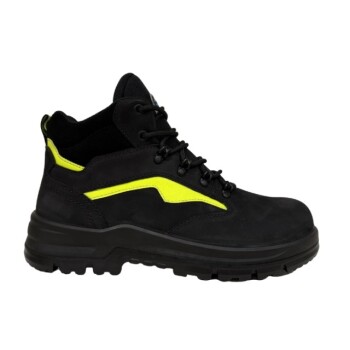
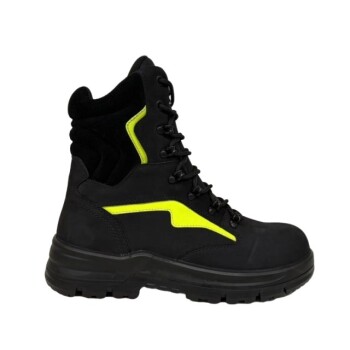
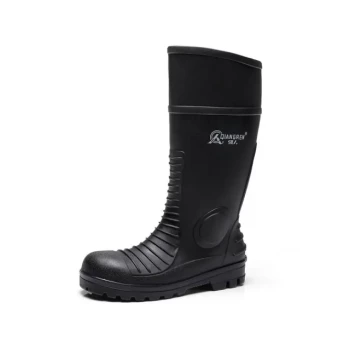
Structural stability is the primary mechanism by which high-protection footwear prevents falls in care environments. These shoes utilize reinforced heel counters and optimized upper heights to mechanically lock the ankle for lateral stability, while lightweight midsole engineering prevents the dangerous shuffling gait often associated with heavier protective gear.
By integrating rigid ankle support with lightweight materials, high-protection footwear solves two problems simultaneously: it mechanically restricts dangerous ankle rolls and physiologically maintains a natural, high-clearance gait to prevent tripping.
The Mechanics of Ankle Stabilization
Reinforced Heel Counters
The foundation of fall prevention lies in the rear of the shoe. High-protection footwear incorporates reinforced heel counters that rigidize the back of the shoe structure. This feature anchors the calcaneus (heel bone), preventing the foot from sliding sideways inside the shoe during sudden movements.
Optimized Upper Height
Working in tandem with the heel counter, the height of the shoe's upper is engineered to "lock" the ankle in place. This design provides essential lateral stability, acting as a brace that restricts excessive inversion or eversion (rolling) of the ankle, which is a primary cause of falls on uneven surfaces.
Reducing Trip Hazards Through Gait Optimization
The Danger of Heavy Soles
Traditional protective footwear often relies on thick, heavy soles for protection, but this creates a specific hazard: shuffling. When footwear is too heavy, the wearer naturally drags their feet to conserve energy, drastically increasing the likelihood of tripping over minor obstacles or floor transitions.
Lightweight Midsole Integration
Modern high-protection shoes mitigate this risk by utilizing advanced, lightweight midsole materials. By reducing the overall weight of the shoe, these designs encourage a natural walking stride where the foot is lifted fully off the ground. This simple restoration of walking efficiency significantly lowers the probability of stumble-induced falls.
Fatigue Management as a Safety Feature
Ergonomic Pressure Distribution
Beyond immediate mechanical stability, the sole structure is designed to distribute biomechanical pressure evenly. Reinforced arch support and ergonomic midsoles relieve the fascia fatigue that accumulates during long periods of standing.
Preventing Coordination Decline
There is a direct link between foot fatigue and fall risk. By reducing chronic micro-tears in the fascia and maintaining foot comfort, these structural features prevent the decline in physical coordination that occurs toward the end of a long shift. A worker with fatigued feet is less agile and more prone to losing their balance.
Understanding the Trade-offs
Interaction with Medical Shoe Covers
While the shoe itself is engineered for stability, care environments often require double-layer medical shoe covers for isolation. It is critical to note that while covers handle biological contaminants, they can reduce internal friction and create tripping hazards if the fit is poor. The structural benefits of the shoe can be compromised if the overlaying PPE is loose or slippery.
Grip vs. Chemical Resistance
Specialized outsoles are necessary to resist oil, weak acids, and alkalis found in industrial or clinical settings. However, maximizing chemical resistance requires specific material densities that can affect flexibility. The optimal shoe balances this hardness to ensure consistent grip on floors wet with disinfectants without making the sole so rigid that it impairs walking mechanics.
Making the Right Choice for Your Environment
Selecting the correct footwear requires balancing immediate stability with long-term fatigue management.
- If your primary focus is Lateral Stability: Prioritize shoes with reinforced heel counters and higher upper designs to mechanically lock the ankle against rolling.
- If your primary focus is Trip Prevention: Select footwear with lightweight midsole materials to ensure staff maintain a high-clearance gait rather than shuffling.
- If your primary focus is Endurance and Fatigue: Look for ergonomic sole structures and arch support to maintain coordination and balance over long shifts.
Effective fall prevention is not just about grip; it is about engineering a shoe that supports the ankle while preserving the wearer's energy.
Summary Table:
| Feature | Design Element | Safety Benefit |
|---|---|---|
| Ankle Stability | Reinforced Heel Counter & Higher Uppers | Prevents lateral rolling and locks the heel bone in place. |
| Trip Prevention | Lightweight Midsole Materials | Encourages natural high-clearance gait and prevents shuffling. |
| Fatigue Reduction | Ergonomic Pressure Distribution | Maintains coordination and balance during long shifts. |
| Chemical Grip | Slip-Resistant Outsoles | Ensures consistent traction on floors wet with disinfectants. |
Secure Your Workforce with 3515 High-Protection Footwear
As a large-scale manufacturer serving global distributors and brand owners, 3515 offers comprehensive production capabilities for all footwear types. Our flagship Safety Shoes series is engineered specifically to address the stability and fatigue management needs of high-stakes environments.
From work and tactical boots to training shoes and sneakers, we provide the bulk manufacturing expertise required to keep your staff safe and agile. Whether you need specialized dress shoes or high-performance protective gear, our designs ensure maximum stability and durability.
Ready to upgrade your inventory with professional-grade safety footwear?
Contact our team today to discuss your bulk requirements!
References
- Susana Dias, Laura Viegas. RISK FACTORS FOR FALLS IN THE ELDERLY IN A DAY CARE CENTER. DOI: 10.22533/at.ed.1592622213109
This article is also based on technical information from 3515 Knowledge Base .
Related Products
- Wholesale Customizable Safety Boots Durable & Protective Footwear Manufacturing
- Premium Lightweight Safety Shoes for Wholesale & Bulk Orders
- Premium Suede Sport Safety Shoes for Wholesale & Bulk Orders
- Safety Footwear Wholesale Manufacturer for Custom OEM/ODM Production
- Durable Steel Toe Safety Boots Wholesale & Custom Manufacturing
People Also Ask
- Why are industrial safety boots with steel toes necessary for machine operators? Essential Foot Protection for Safety
- What is the history of steel toe work boots? From German Invention to Modern Safety Standard
- What are the different types of steel toe work boots? Choose the Right Boot for Your Job
- What are the pros and cons of steel toe work boots? A Guide to Maximum Protection vs. Comfort
- What styles can safety toe work boots come in? From Classic to Casual, Find Your Perfect Fit