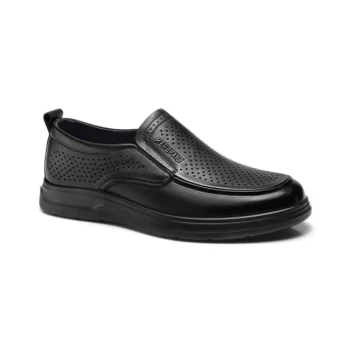
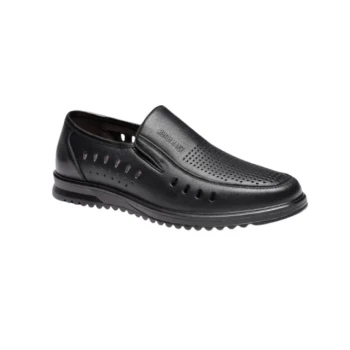
To determine if a shoe is slip-resistant online, you must go beyond simple marketing claims. Scrutinize the product description for official certifications like ASTM F3445, and closely examine product photos for an outsole made of soft EVA rubber with a dense, intricate tread pattern designed to channel liquids away.
True slip resistance isn't just a feature—it's an engineered system. Relying on specific material, tread design, and official safety ratings is the only reliable way to verify a shoe's performance without physically testing it.
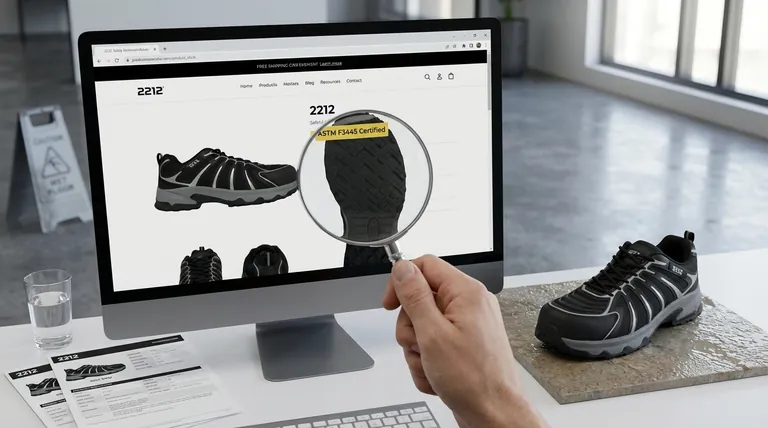
How to Analyze the Product Description
The text on a product page contains the most direct clues to a shoe's intended function. You must learn to read between the lines and identify specific, verifiable details.
Look for Explicit Claims
First, perform a simple keyword search. Look for phrases like "slip-resistant," "non-slip," or brand-specific terms like "sure-grip." While these are a good starting point, they are not a guarantee of performance on their own.
Search for Certifications
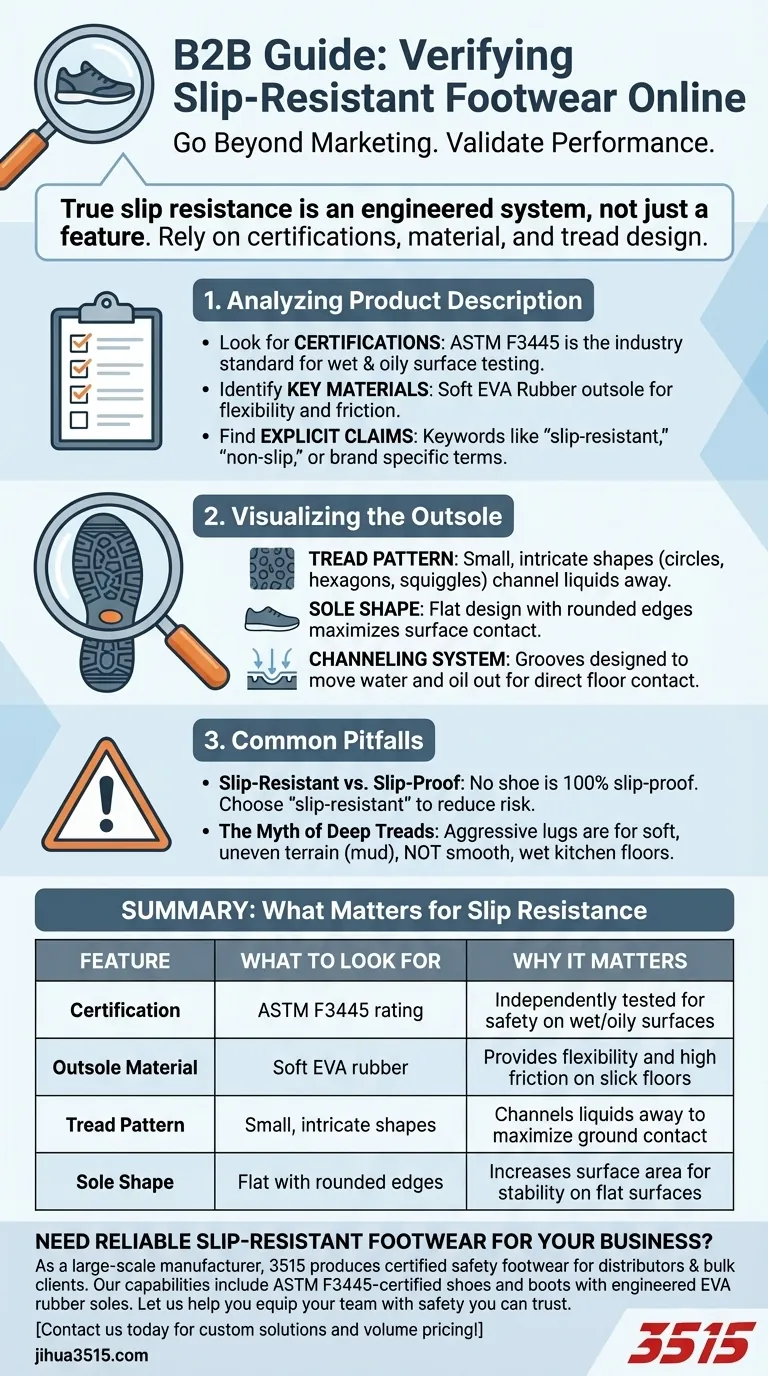
This is the single most reliable indicator of performance. Look for mentions of ASTM F3445, the current industry standard for slip-resistant footwear safety. This certification means the shoe has been independently tested on wet and oily surfaces to meet specific safety thresholds.
Identify Key Materials
The product details should specify the outsole material. Look for EVA (ethylene vinyl acetate) rubber, which is known for being soft, flexible, and effective at creating friction on slick floors.
What to Look for in Product Photos
Since you can't touch the shoe, high-resolution images of the sole are your best tool for visual inspection. The design of the outsole is critical for grip.
The Importance of Tread Pattern
The primary function of the tread is to channel water, oil, and other liquids out from under the shoe. This allows the sole to make direct contact with the floor, maximizing grip.
Ideal Pattern Characteristics
Effective slip-resistant patterns consist of small, intricate shapes like tiny circles, hexagons, or squiggly lines. These create numerous edges that bite into the surface and increase friction.
The Shape of the Sole
A relatively flat sole design with slightly rounded edges helps to maximize the surface area in contact with the ground. This provides a more stable and secure footing on flat, slippery surfaces.
Understanding the Common Pitfalls
Not all outsoles are created equal, and some designs that seem safe can be misleading. Understanding these distinctions is crucial for avoiding a bad purchase.
"Slip-Resistant" vs. "Slip-Proof"
No shoe can be 100% "slip-proof" in all conditions. The term "slip-resistant" means the shoe is designed to significantly reduce the risk of slips and falls, not eliminate it entirely.
The Myth of "Deep Treads"
Many people assume that deep, aggressive lugs—like those on a hiking boot—are ideal for grip. However, these are designed for soft, uneven terrain like mud or dirt. On a smooth, wet kitchen floor, they actually reduce surface contact and can be less effective than a proper slip-resistant sole.
Making the Right Choice for Your Environment
Your specific needs should guide your final decision. Use the information you've gathered to select a shoe that is optimized for your most common environment.
- If your primary focus is a professional environment (kitchen, hospital, factory): Prioritize shoes that are explicitly certified with an ASTM rating.
- If your primary focus is all-weather casual wear: Look for shoes with a soft EVA rubber outsole and a dense, multi-directional tread pattern.
- If your primary focus is style with an added layer of safety: Seek out fashion-forward brands that specifically mention slip-resistant technology in their product descriptions.
By combining a critical reading of the description with a careful analysis of the outsole design, you can confidently purchase footwear that provides genuine safety.
Summary Table:
| Key Feature | What to Look For | Why It Matters |
|---|---|---|
| Certification | ASTM F3445 rating | Independently tested for safety on wet/oily surfaces |
| Outsole Material | Soft EVA rubber | Provides flexibility and high friction on slick floors |
| Tread Pattern | Small, intricate shapes (circles, hexagons) | Channels liquids away to maximize ground contact |
| Sole Shape | Flat with rounded edges | Increases surface area for stability on flat surfaces |
Need Reliable Slip-Resistant Footwear for Your Business?
As a large-scale manufacturer, 3515 produces a comprehensive range of certified safety footwear for distributors, brand owners, and bulk clients. Our production capabilities include ASTM F3445-certified shoes and boots with engineered EVA rubber soles and advanced tread patterns—ensuring durability, comfort, and proven slip resistance for demanding environments.
Let us help you equip your team with safety you can trust. Contact us today for custom solutions and volume pricing!
Visual Guide
Related Products
- Premium Suede Sport Safety Shoes for Wholesale & Bulk Orders
- Heavy-Duty Waterproof Nubuck Safety Boots Safety Shoes for Bulk Supply
- Advanced KPU Athletic Safety Shoe with Steel Toe Cap Anti-Slip Rotary Lacing System
- Durable High-Traction Canvas Sneakers Wholesale & Custom Manufacturing
- Durable Leather Moc Toe Work Boots for Wholesale & Custom Manufacturing
People Also Ask
- What are the primary functions of professional safety shoes? Maximize Safety in Water Supply Confined Spaces
- What industries have specific OSHA footwear requirements? Ensure Compliance & Protect Your Workforce
- What role do specialized safety shoes play in preventing falls? Engineering Stability in Industrial Environments
- Why are customized foot sensors or professional safety shoes incorporated into biomechanical testing? Precision Insights
- How do gait analysis algorithms ensure accuracy in footwear? Master Step Length Precision for Boots & Sneakers