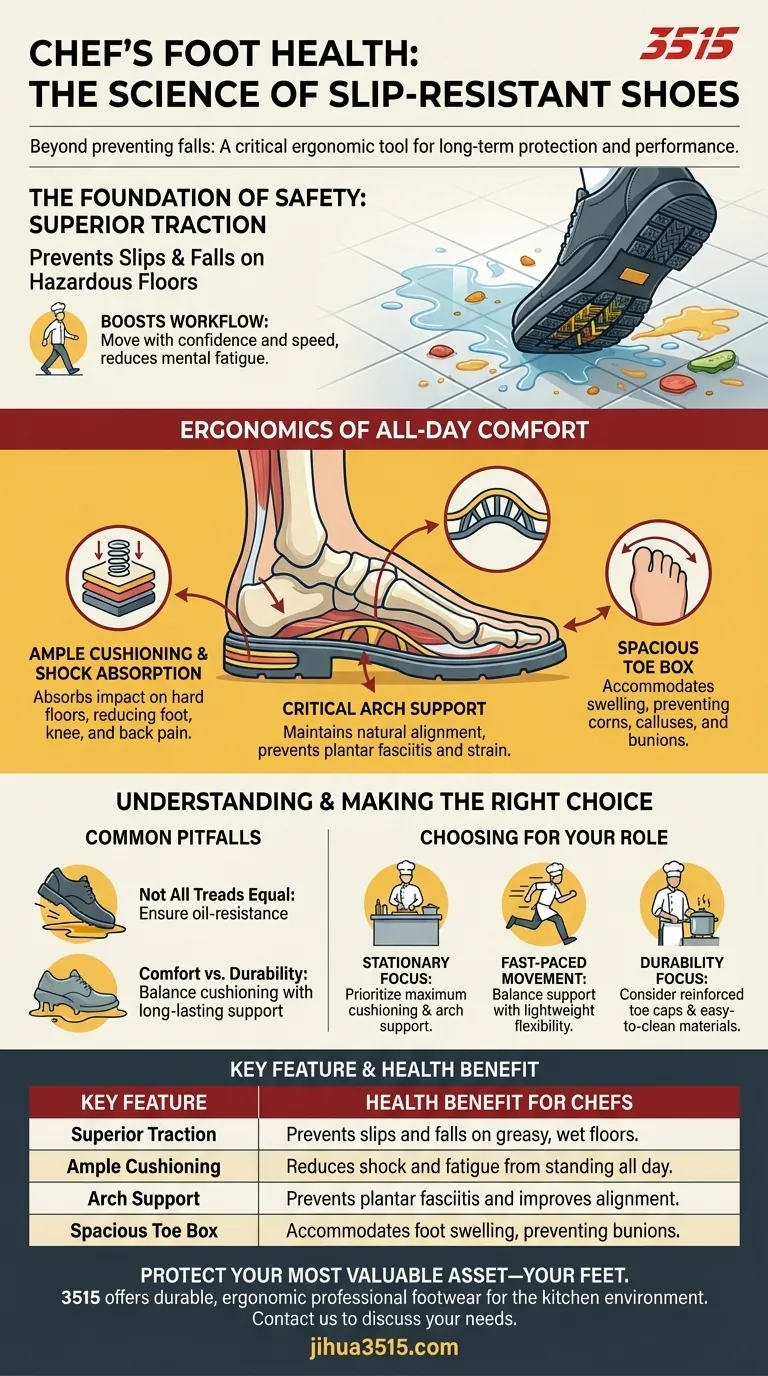
Beyond just preventing falls, proper slip-resistant shoes are a critical ergonomic tool designed to protect a chef's long-term foot health. They achieve this by combining superior traction with essential features like ample cushioning, structural arch support, and shock absorption, which work together to reduce the immense physical stress placed on the feet during long hours of standing and rapid movement in a demanding kitchen environment.
While the primary function of slip-resistant shoes is safety, their greatest contribution to a chef's health is in mitigating the cumulative damage of standing for hours on hard surfaces. The right footwear is not a luxury; it is a foundational piece of professional equipment.
The Foundation of Kitchen Safety: Superior Traction
The most immediate benefit of specialized kitchen footwear is its ability to prevent catastrophic accidents. This is the baseline requirement from which all other health benefits are built.
Preventing Slips and Falls
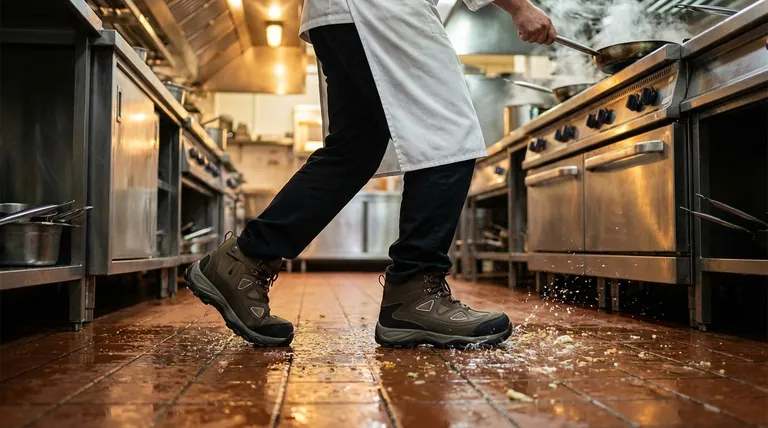
Kitchen floors are predictably hazardous, often slick with water, grease, or food debris. Slip-resistant shoes feature specialized tread patterns and sole compounds engineered to grip these surfaces, significantly reducing the risk of slips and falls that can lead to severe injuries.
The Impact on Workflow
This reliable traction allows a chef to move with confidence and speed. By removing the need to consciously worry about every step, it reduces mental fatigue and enables a sharper focus on culinary tasks, ensuring a more consistent and efficient workflow.
More Than Safety: The Ergonomics of All-Day Comfort
While safety is non-negotiable, the true value for long-term health lies in the shoe's ergonomic design. These features address the chronic physical strain inherent in a culinary career.
Ample Cushioning and Shock Absorption
Standing for 10-12 hours on hard tile or concrete floors sends constant impact shocks through the feet, knees, and lower back. Quality kitchen shoes use materials that absorb this shock and provide cushioning, directly reducing foot fatigue and the pain that accumulates throughout a shift.
Critical Arch Support
A lack of proper arch support can lead to conditions like plantar fasciitis and flat feet. Good slip-resistant footwear incorporates a supportive foundation that helps maintain the natural alignment of the foot, distributing weight evenly and preventing strain on ligaments and muscles.
The Importance of a Spacious Toe Box
Feet naturally swell over the course of a long shift. A shoe with a spacious toe box accommodates this swelling, preventing painful compression that can lead to corns, calluses, and bunions, thereby ensuring both immediate comfort and long-term podiatric health.
Understanding the Trade-offs and Common Pitfalls
Choosing the right shoe involves more than just picking a "slip-resistant" label. Understanding the nuances is key to getting the protection you actually need.
Not All Treads are Created Equal
A shoe designed for a wet factory floor may not have the same oil-resistant properties needed in a kitchen. Always look for footwear specifically rated for greasy and oily conditions, as this is the most common hazard chefs face.
Comfort vs. Durability
The softest, most cushioned shoe may feel great initially but can break down quickly under the harsh conditions of a professional kitchen. It is often better to choose a shoe with a firmer, more durable foundation that will offer consistent support over hundreds of hours of wear.
Ignoring the Fit
Even the best shoe will fail if it doesn't fit correctly. Buying shoes at the end of the day when your feet are slightly swollen can provide a more accurate fit. There should be enough room to wiggle your toes, and your heel should not slip during movement.
Making the Right Choice for Your Role
The ideal shoe depends on the specific demands of your job. Prioritize features based on your daily tasks to maximize both safety and long-term health.
- If your primary focus is standing in one station: Prioritize maximum cushioning and arch support to combat the static load on your feet and joints.
- If your primary focus is fast-paced movement: Look for a shoe that balances support with a lighter weight and flexibility to reduce fatigue during dynamic activity.
- If your primary focus is durability and protection: Consider options with reinforced toe caps and materials that are easy to clean and resistant to hot liquids or chemicals.
Investing in proper footwear is a direct investment in your career longevity and daily well-being.
Summary Table:
| Key Feature | Health Benefit for Chefs |
|---|---|
| Superior Traction | Prevents slips and falls on greasy, wet floors. |
| Ample Cushioning | Reduces shock and fatigue from standing all day. |
| Arch Support | Prevents plantar fasciitis and improves alignment. |
| Spacious Toe Box | Accommodates foot swelling, preventing bunions. |
Protect your most valuable asset—your feet. As a large-scale manufacturer, 3515 produces a comprehensive range of professional footwear designed specifically for the demanding kitchen environment. We offer durable, ergonomic slip-resistant shoes and boots with the superior traction, cushioning, and support that chefs and kitchen staff need for all-day comfort and injury prevention. Whether you are a distributor, brand owner, or bulk client, we can provide the reliable footwear your team depends on. Contact 3515 today to discuss your footwear needs and ensure the health and safety of your culinary professionals.
Visual Guide
Related Products
- Premium Suede Sport Safety Shoes for Wholesale & Bulk Orders
- Durable High-Traction Canvas Sneakers Wholesale & Custom Manufacturing
- Heavy-Duty Waterproof Nubuck Safety Boots Safety Shoes for Bulk Supply
- Durable Leather Moc Toe Work Boots for Wholesale & Custom Manufacturing
- Durable Goodyear Welt Leather Work Boots for Wholesale & Private Label
People Also Ask
- What industries have specific OSHA footwear requirements? Ensure Compliance & Protect Your Workforce
- What are the primary functions of professional safety shoes? Maximize Safety in Water Supply Confined Spaces
- What role do specialized safety shoes play in preventing falls? Engineering Stability in Industrial Environments
- Why should ergonomics and comfort be prioritized when selecting safety shoes? Boost Compliance & Worker Health
- Why is barefoot walking used as a baseline in gait safety research? Unlocking Natural Biomechanics for Shoe Design