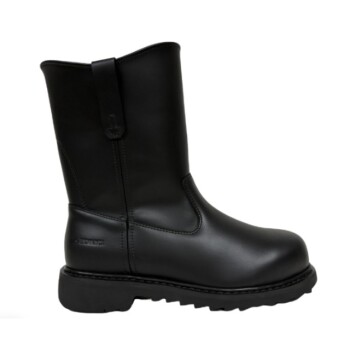
No, zippers are not a traditional feature of cowboy boots. Authentic cowboy boots are defined by their pull-on design, which lacks any laces or zippers. However, you will find zippers on many modern or fashion-oriented Western boots, where they are added for convenience, especially for those with high insteps or wider feet.
The core design principle of a traditional cowboy boot is its seamless, lace-free, pull-on construction. While zippers offer modern convenience, they represent a significant departure from the boot's original, functional design intended for horseback riding.
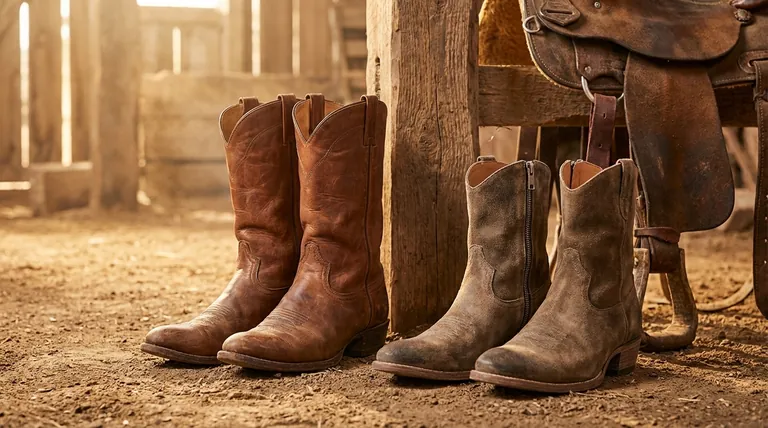
The Anatomy of a Traditional Cowboy Boot
A classic cowboy boot is a masterclass in functional design, with every element serving a specific purpose rooted in its equestrian origins. Understanding these components clarifies why zippers are not part of the traditional formula.
The Pull-On Shaft
The tall, stiff leather shaft is a hallmark feature. It was designed to protect the rider's legs from brush, thorns, and snake bites. Its seamless construction ensures there are no elements, like laces or zippers, that could snag on a saddle or undergrowth.
The Lack of Lacing (and Zippers)
The absence of any fastening mechanism is intentional. In the event of a fall where the rider's foot gets caught in the stirrup, a smooth, laceless boot is designed to slip off the foot more easily, preventing the rider from being dragged. Zippers would interfere with this critical safety feature.
The Distinctive Heel and Sole
Traditional cowboy boots have a smooth, often leather, sole and a tall, angled heel (known as a "Cuban" or "riding" heel). The smooth sole allows the foot to slide easily into and out of the stirrup, while the angled heel is designed to lock into the stirrup, preventing the foot from slipping through.
The Rise of the Zippered Western Boot
While not traditional, boots with zippers have found a place in the modern Western wear market. This shift is driven by a focus on comfort and accessibility over historical accuracy.
Solving a Fit Problem
The primary reason for adding a zipper is to make the boot easier to put on and take off. This is especially helpful for individuals with a high instep (the upper arch of the foot) or wider calves, who might struggle to get their foot past the tight ankle bend of a traditional pull-on boot.
The Fashion Influence
Many modern "Western-style" or "fashion" boots incorporate a zipper purely as a style element or to accommodate a more form-fitting, narrow shaft design. These boots prioritize aesthetics and urban wearability over the functional requirements of a true riding boot.
Understanding the Trade-offs
Choosing between a traditional pull-on and a modern zippered boot involves balancing authenticity with convenience. There is no right or wrong answer, only what's right for your needs.
Authenticity vs. Accessibility
A traditional pull-on boot is the authentic choice, embodying the history and function of Western footwear. However, a zippered boot makes the style accessible to a wider range of foot shapes and sizes, removing a common barrier to entry.
Durability Concerns
A zipper introduces a mechanical point of failure that doesn't exist on a traditional boot. While high-quality zippers are reliable, they can break, jam with dirt, or wear out over time, whereas a solid leather shaft is exceptionally durable.
The Safety Factor
For actual horseback riding, a traditional pull-on boot remains the safer option due to its ability to slip off in an emergency. A zippered boot, especially if zipped tightly, may not release as easily.
Making the Right Choice for Your Goal
Your decision should be guided by how you intend to use the boot.
- If your primary focus is authenticity and horseback riding: Choose a traditional, laceless, zipper-free pull-on boot for its historical accuracy and safety features.
- If your primary focus is fashion and casual wear: A zippered Western boot is an excellent choice, offering the iconic style with modern convenience and an easier fit.
- If your primary focus is overcoming a difficult fit: A zipper can be the practical solution that allows you to comfortably wear a tall-shafted boot you might otherwise struggle with.
Ultimately, understanding the purpose behind the design allows you to choose the boot that best serves you.
Summary Table:
| Feature | Traditional Cowboy Boot | Zippered Western Boot |
|---|---|---|
| Fastening | Pull-on, no zippers/laces | Side zipper for easy access |
| Authenticity | High (original design) | Low (modern adaptation) |
| Primary Use | Horseback riding, authenticity | Fashion, casual wear, easier fit |
| Key Benefit | Safety, durability, tradition | Convenience, accessibility for wider feet/high insteps |
| Consideration | Can be difficult to put on | Zipper is a potential point of failure |
Need a reliable supplier for authentic or modern Western boots?
As a large-scale manufacturer, 3515 produces a comprehensive range of footwear for distributors, brand owners, and bulk clients. Our production capabilities encompass all types of traditional and zippered cowboy boots, ensuring quality, durability, and style for your market.
Contact us today to discuss your production needs and get a quote!
Visual Guide

Related Products
- Wholesale Lightweight Tactical Boots with Dial Closure OEM & Bulk Orders
- Premium Wholesale Tactical Style Safety Shoes Boots with Quick Lacing
- Wholesale High-Traction Camo Boots - Custom Manufacturer for Brands
- Heavy-Duty Goodyear Welted Pull-On Safety Rigger Boot
- Durable Leather Tactical Boots Wholesale & Custom Manufacturing for Brands
People Also Ask
- How do combat boots and tactical boots differ in design and purpose? Choose the Right Boot for Your Mission
- What factors should be considered when choosing tactical boots for different terrains? Match Your Boot to the Mission.
- How does creative short video content support functional footwear sales? Boost Trust and Traffic with Visual Proof
- What are some key features of top-tier tactical boots for 2023? Find the Perfect Boot for Your Mission
- Who commonly uses tactical boots? From Military to Outdoor Enthusiasts