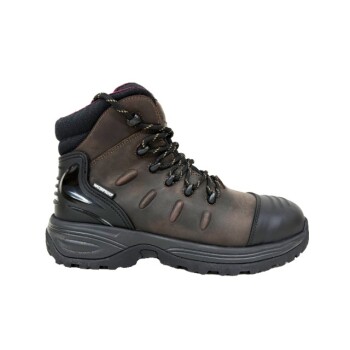
Choosing between work boots and dress boots is a decision between purpose-built protection and refined style. The right choice depends entirely on your environment and activity. Work boots are engineered for durability and safety in demanding conditions, while dress boots are crafted for aesthetic appeal in social or professional settings.
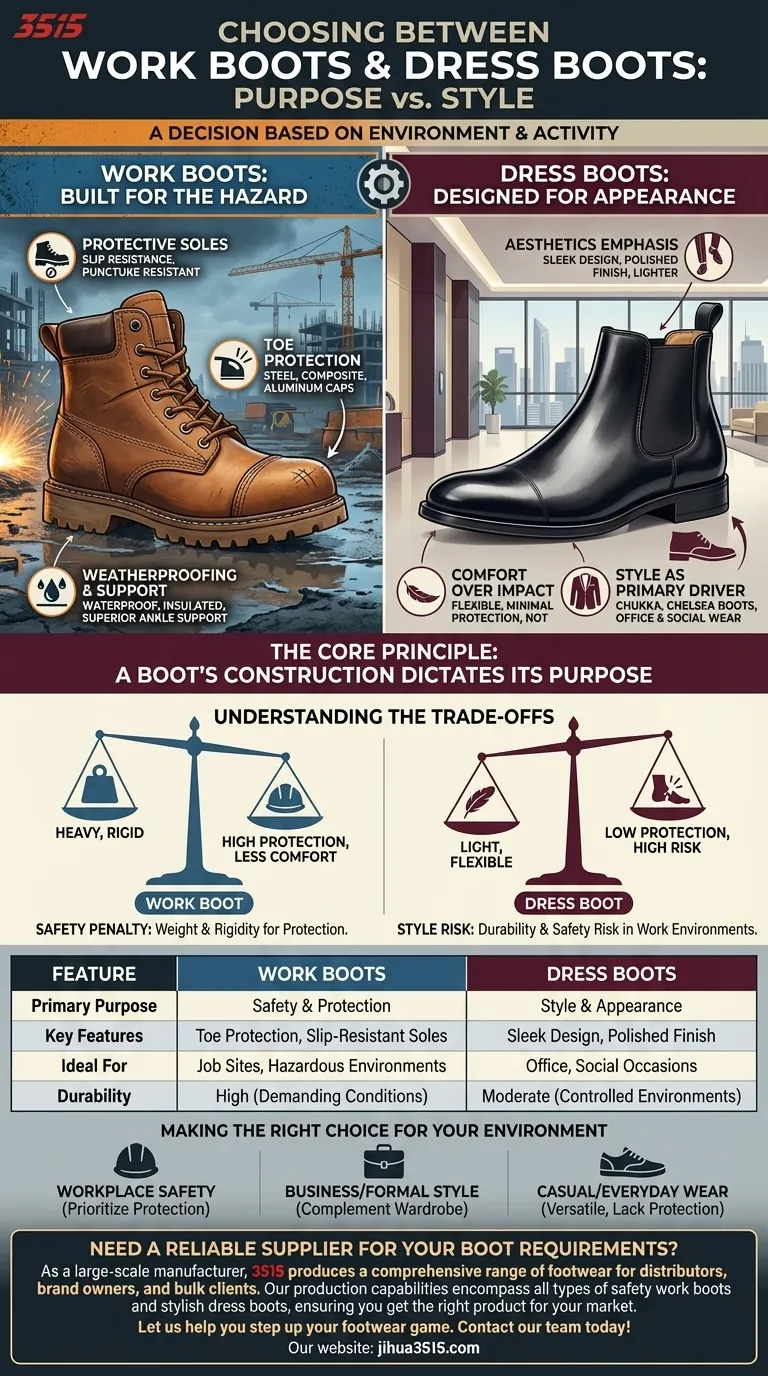
The core principle is simple: a boot's construction dictates its purpose. Work boots are a form of personal protective equipment designed to mitigate job site hazards, whereas dress boots are a fashion accessory designed to complement an outfit.
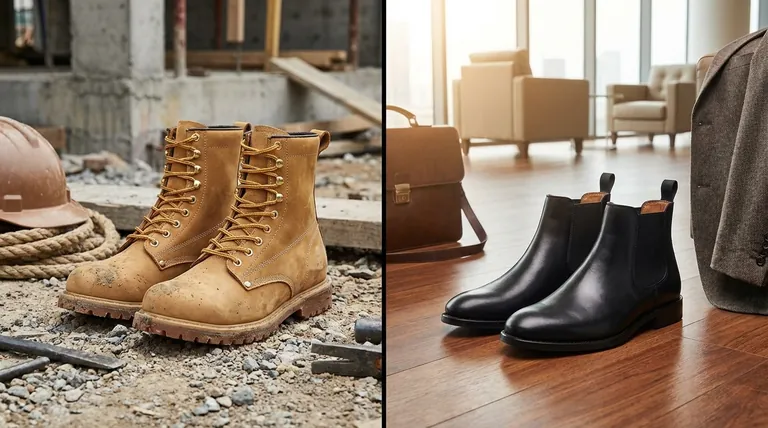
The Anatomy of a Work Boot: Built for the Hazard
Work boots are defined by their protective features. Each component is engineered to shield the wearer from specific environmental and physical risks found on a job site.
The Foundation: Protective Soles and Construction
A true work boot starts with a robust foundation. The soles are significantly thicker to resist punctures and are made from compounds designed for slip resistance on wet, oily, or uneven surfaces. The boot's upper is joined to the sole with strong stitching, built to withstand constant stress.
The Shield: Toe Protection
One of the most critical safety features is toe protection. This comes in several forms, including steel, composite, or aluminum caps, each designed to protect your feet from crushing impacts or compression. The type required is often dictated by workplace safety standards.
The Environment: Weatherproofing and Support
Work boots are built to handle adverse conditions. Features like waterproofing are essential for wet environments, while insulation provides warmth in cold temperatures. Crucially, they also provide superior ankle and arch support for those who spend long hours standing on hard surfaces like concrete.
The Anatomy of a Dress Boot: Designed for Appearance
Dress boots prioritize aesthetics, using sleeker designs and lighter materials to create a polished look suitable for the office or social occasions.
The Emphasis on Aesthetics
Unlike the rugged look of a work boot, a dress boot features a clean, often polished finish. They are lighter and less bulky, creating a more refined silhouette that pairs well with formal or business-casual attire.
Construction for Comfort, Not Impact
The construction of a dress boot is focused on flexibility and walking comfort in a controlled environment. The soles are thinner and offer minimal protection from job site hazards. They are not built to withstand the abrasion, impacts, or chemical exposures common in manual labor.
Style as the Primary Driver
The choice of a dress boot is guided by personal style and the desired level of formality. Popular styles like the Chukka or Chelsea boot offer versatility for everyday wear, but their primary function remains fashion, not protection.
Understanding the Trade-offs
Attempting to make one type of boot perform the function of the other introduces significant compromises in either safety or comfort.
The Weight and Flexibility Penalty of Safety
Work boots are inherently heavier and more rigid due to their protective components. This construction, while essential for safety, makes them less comfortable and more cumbersome for casual, all-day wear in a non-hazardous setting.
The Durability and Safety Risk of Style
Wearing a dress boot in a work environment is a serious safety risk. The thin soles, soft materials, and lack of toe protection offer no defense against common workplace hazards, leading to a high potential for injury. They will also wear out extremely quickly under such conditions.
Making the Right Choice for Your Environment
Your decision should be based on a clear assessment of your daily activities and the environment you will be in.
- If your primary focus is workplace safety: Prioritize a certified work boot with features that directly address your job's specific hazards, such as toe protection, slip resistance, and waterproofing.
- If your primary focus is business or formal style: Select a classic dress boot made from quality materials that complements your wardrobe and is appropriate for an office or social setting.
- If your primary focus is casual, everyday wear: Consider versatile styles like Chukkas or trench boots, but always recognize they lack the protective qualities of a true work boot.
Select the boot designed for your destination, and you'll always be on solid footing.
Summary Table:
| Feature | Work Boots | Dress Boots |
|---|---|---|
| Primary Purpose | Safety & Protection | Style & Appearance |
| Key Features | Toe Protection, Slip-Resistant Soles | Sleek Design, Polished Finish |
| Ideal For | Job Sites, Hazardous Environments | Office, Social Occasions |
| Durability | High (Built for demanding conditions) | Moderate (For controlled environments) |
Need a Reliable Supplier for Your Boot Requirements?
As a large-scale manufacturer, 3515 produces a comprehensive range of footwear for distributors, brand owners, and bulk clients. Our production capabilities encompass all types of safety work boots and stylish dress boots, ensuring you get the right product for your market.
Let us help you step up your footwear game. Contact our team today to discuss your needs!
Visual Guide
Related Products
- Durable Leather Work Boots for Wholesale & Custom Manufacturing
- Durable Leather Work Boots for Wholesale & Custom OEM Manufacturing
- Wholesale Leather Work Boots with Customizable Wedge Sole for Brands
- Durable Leather Work Boots Wholesale Manufacturer & Custom Factory
- Durable Moc-Toe Wedge Work Boots | Wholesale Manufacturing for Brands
People Also Ask
- What is the difference between full-grain and top-grain leather? Premium Material Guide for Boot Manufacturers
- What are the common workplace hazards that can be mitigated with the right work boots? Protect Your Workforce
- What are the common foot issues workers face due to uncomfortable work boots? Prevent Pain & Deformities
- What are the advantages of leather versus synthetic work boots? A Guide to Choosing the Right Material
- What are the key components of modern work boots? Engineered for Ultimate Durability and Comfort