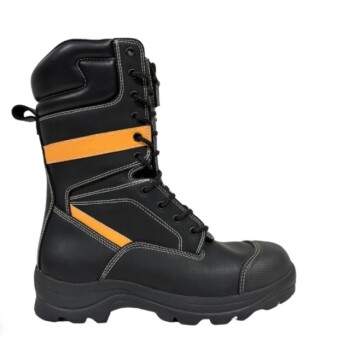
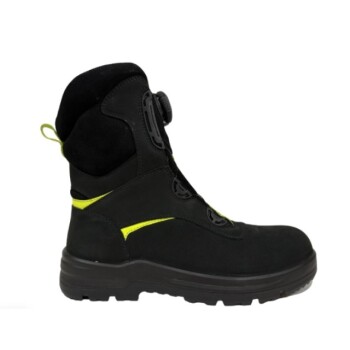
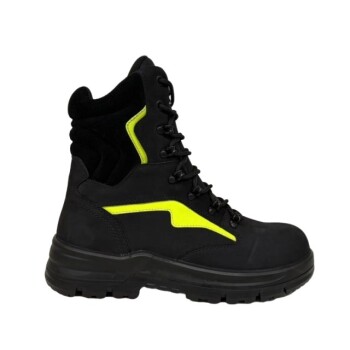
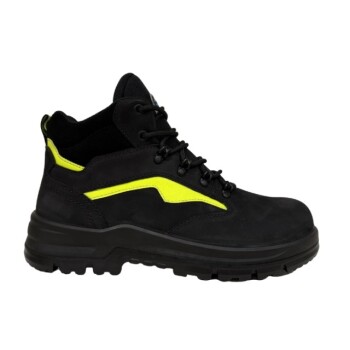
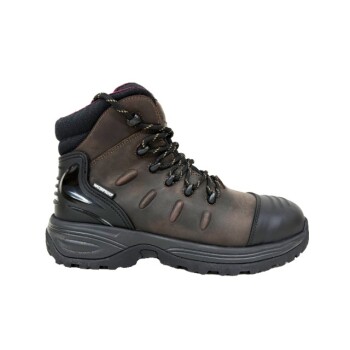
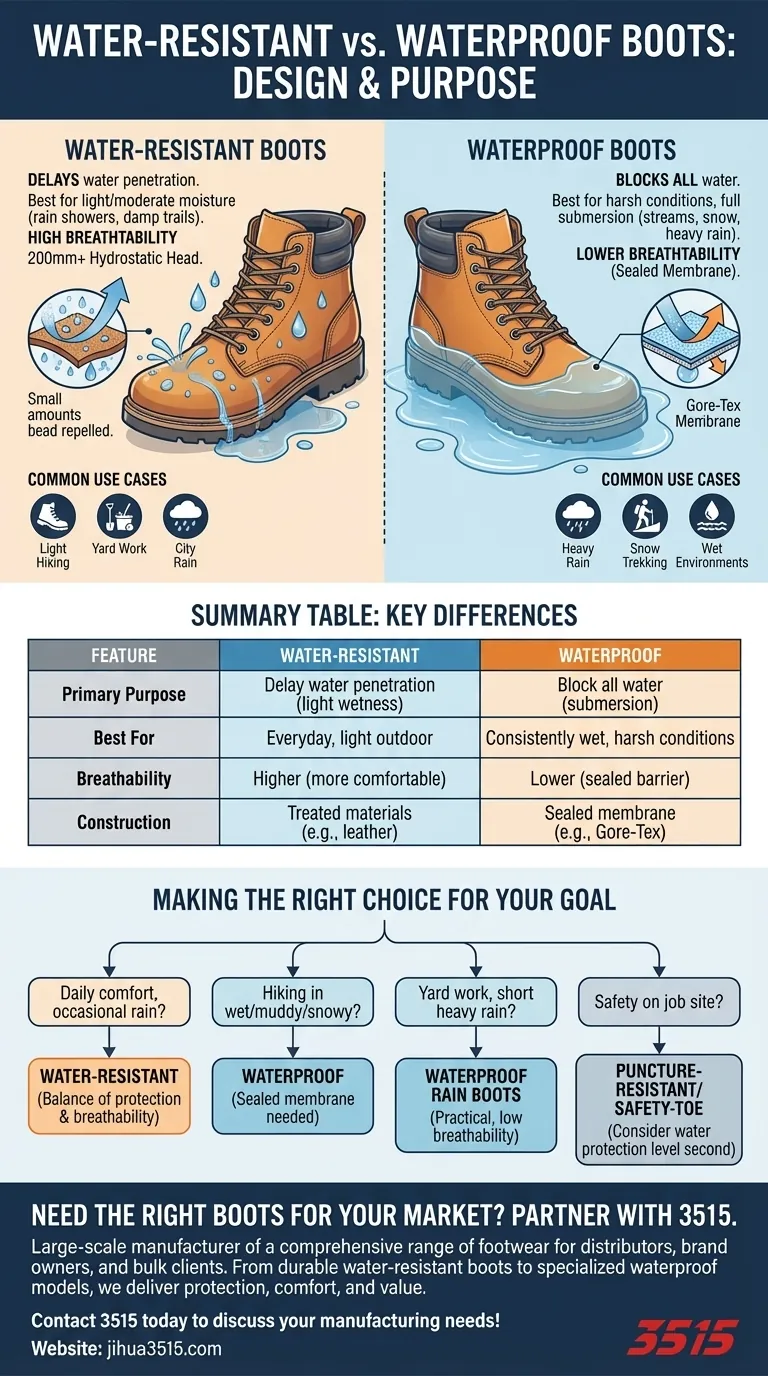
At their core, water-resistant boots are designed to keep your feet dry in light to moderate moisture, such as rain showers or damp trails. They are typically made from materials like treated leather or canvas that repel water, but they are not completely impenetrable. This design strikes a balance between moisture protection and breathability for everyday or occasional outdoor use.
The critical distinction to understand is that "water-resistant" means the boot will delay water penetration, while "waterproof" means it is designed to completely block it. Choosing the right one depends entirely on the conditions you expect to face.
The Role of Water-Resistant Boots
Water-resistant boots are your reliable choice for a wide range of common scenarios where you might encounter some wetness but are not planning on full immersion.
How Water Resistance is Achieved
The protection comes from the boot's material and construction. Uppers made of leather or canvas are treated with a special coating that causes water to bead up and roll off the surface.
This level of protection is officially measured. To qualify as water-resistant, a boot must pass a hydrostatic head test, meaning it can withstand at least 200 mm of water pressure before any leakage occurs.
The Breathability Advantage
Because they aren't sealed with an impenetrable membrane, water-resistant boots are generally more breathable than their waterproof counterparts. This allows sweat and vapor from inside the boot to escape, which is crucial for comfort during extended wear.
Common Use Cases
These boots are ideal for everyday outdoor activities where conditions are unpredictable. Think of activities like light hiking, yard work, or simply navigating a city on a rainy day.
Understanding the Trade-offs: Resistant vs. Waterproof
Making the wrong choice between these two categories can lead to either uncomfortable, sweaty feet or completely soaked socks. The distinction is not just marketing; it's a fundamental difference in construction and purpose.
Waterproof: A Sealed Barrier
Waterproof footwear is engineered to prevent any water penetration, even when submerged. This is achieved by incorporating a waterproof membrane, such as Gore-Tex, which acts as a barrier.
These boots are essential for harsh conditions like wading through streams, trekking through deep snow, or working in consistently wet environments. The trade-off for this complete protection is often reduced breathability.
Rain Boots: A Specific Type of Waterproof
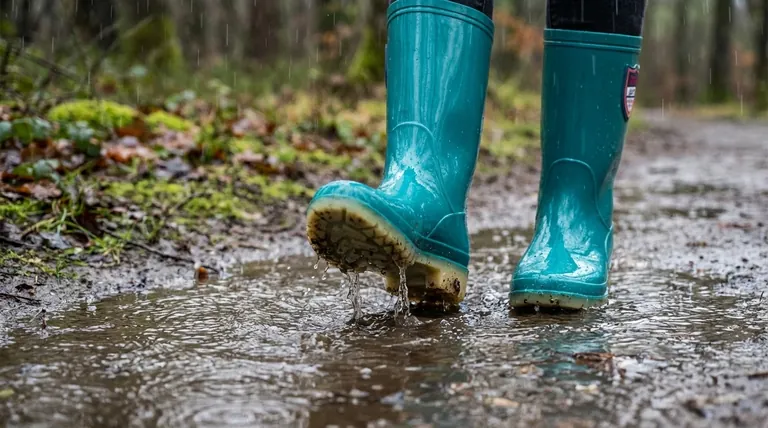
Rain boots (or wellingtons) are a classic example of waterproof footwear. Made from rubber or plastic, they create a seamless, high-ankled shield against mud and rain, but they offer very little breathability.
Other Protective Features
It's also important not to confuse water resistance with other safety features. Puncture-resistant boots, for example, have a protective plate in the sole to guard against sharp objects like nails and are designed for construction or demolition sites. While they might also be water-resistant, their primary purpose is different.
Making the Right Choice for Your Goal
Selecting the correct boot is about matching the level of protection to the environment you'll be in.
- If your primary focus is daily comfort in occasional rain: A water-resistant boot offers the best balance of moisture protection and breathability.
- If your primary focus is hiking in wet, muddy, or snowy conditions: You need a truly waterproof boot with a membrane to ensure your feet stay dry.
- If your primary focus is yard work or short-term exposure to heavy rain: A simple pair of waterproof rain boots is the most practical and effective solution.
- If your primary focus is safety on a job site: Look for puncture-resistant or safety-toe features first, then consider the level of water protection needed for the work environment.
Ultimately, understanding the difference between resisting and blocking water empowers you to choose footwear that truly serves its purpose.
Summary Table:
| Feature | Water-Resistant Boots | Waterproof Boots |
|---|---|---|
| Primary Purpose | Delay water penetration in light/moderate wetness | Block all water, even during submersion |
| Best For | Everyday use, light hiking, city rain | Heavy rain, snow, streams, consistently wet environments |
| Breathability | Higher (more comfortable for extended wear) | Lower (due to sealed membrane) |
| Construction | Treated materials (e.g., leather, canvas) | Includes a waterproof membrane (e.g., Gore-Tex) |
Need the Right Boots for Your Market? Partner with 3515.
As a large-scale manufacturer, we produce a comprehensive range of footwear for distributors, brand owners, and bulk clients. Whether you need durable water-resistant boots for everyday wear or specialized waterproof models for harsh conditions, our production capabilities encompass all types of shoes and boots.
Let us help you deliver the perfect balance of protection, comfort, and value to your customers.
Contact 3515 today to discuss your manufacturing needs!
Visual Guide
Related Products
- Premium Flame-Retardant Waterproof Safety Boots and Shoes
- Heavy-Duty Waterproof Nubuck Safety Boots Safety Shoes for Bulk Supply
- Premium High-Cut Waterproof Safety Boots Manufacturing & Wholesale Solutions
- Durable Waterproof Rain Boots | Custom Manufacturer for Wholesale & Brands
- Premium Wholesale Waterproof Safety Boots High Performance Protection for Industrial Markets
People Also Ask
- Why are waterproof safety boots recommended for certain work environments? Essential Protection for Wet & Hazardous Jobs
- What materials are commonly used in waterproof boots? The Complete Guide to Durable, Breathable Protection
- How does boot construction affect waterproofing? The Science Behind Truly Dry Feet
- What should you look for to ensure boots are fully waterproof? The Essential 2-Part System
- What is the advantage of one-piece construction in waterproof boots? Unbeatable Seamless Protection