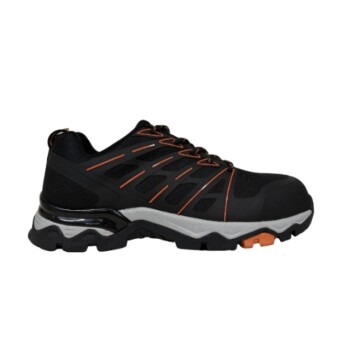
Optimal protection requires a dual approach. Safety training and physical equipment are not standalone solutions; they are interdependent components of a single safety strategy. While safety shoes offer the necessary physical barrier against hazards, training ensures the wearer possesses the operational skills and risk awareness to utilize that barrier effectively.
Synchronization is critical because physical gear provides material protection while training provides the behavioral competence to use it. Without both functioning in tandem, the safety "shield" is incomplete, leaving workers vulnerable to either physical penetration or operational error.
The Mechanics of Synchronized Safety
To understand why synchronization is mandatory, one must recognize the distinct but complementary roles of hardware (shoes) and software (knowledge).
The Limitations of Awareness Alone
Knowledge is intangible and cannot act as a physical shield. No amount of situational awareness can physically stop a sharp object, a falling weight, or a puncture hazard from injuring a worker's foot.
In this context, the physical safety shoe provides the necessary material protection. It is the absolute last line of defense when hazard avoidance fails.
The Dependency of Gear on Competence
Conversely, even the highest-rated protective gear is compromised by human error. The primary reference notes that protective gear is significantly less effective if the wearer does not understand its correct usage.
Without training, a worker may wear the shoes loosely, modify them for comfort, or use them in environments for which they are not rated.
Criticality of Maintenance
Training bridges the gap between having equipment and keeping it functional. A major component of safety training involves understanding maintenance protocols.
If a worker is not trained to spot signs of wear or structural compromise in their shoes, the equipment may fail catastrophically during an incident.
The Risks of Asynchronous Implementation
Providing equipment without training (or vice versa) creates specific vulnerabilities that undermine the entire safety program.
The "False Security" Trap
Issuing safety shoes without synchronized training often creates a false sense of security. Workers may believe that wearing PPE makes them invulnerable, leading to riskier behavior or negligence regarding their surroundings.
The Incomplete Shield
Relying solely on training leaves workers physically exposed. A worker may have perfect operational skills and hazard recognition, but without the physical shoe, they remain defenseless against accidents that are beyond their control.
Establishing a Robust Safety Protocol
To achieve the "comprehensive safety environment" mentioned in the primary reference, you must view training and equipment as a single unit of issue.
- If your primary focus is Immediate Risk Reduction: Ensure that every pair of safety shoes issued is accompanied by a mandatory briefing on their specific protective capabilities and limitations.
- If your primary focus is Equipment Longevity: Synchronize distribution with training modules focused on maintenance to prevent premature degradation of the material protection.
By treating training and equipment as inseparable, you transform safety from a passive requirement into an active, protective culture.
Summary Table:
| Component | Role in Safety | Impact of Absence |
|---|---|---|
| Physical Safety Shoes | Material barrier against punctures, weights, and sharp objects. | Leaves workers defenseless against unavoidable physical hazards. |
| Safety Training | Operational skills, risk awareness, and proper maintenance protocols. | Leads to incorrect gear usage, false security, and equipment failure. |
| Synchronization | Integrates hardware and software for a complete safety shield. | Creates an incomplete safety strategy vulnerable to human error. |
Partner with 3515 for Total Footwear Safety Solutions
At 3515, we understand that true protection goes beyond the product. As a large-scale manufacturer serving global distributors and brand owners, we provide the high-performance hardware your safety program demands. Our comprehensive production capabilities cover all footwear types, from our flagship Safety Shoes series and tactical boots to outdoor, training, and formal dress shoes.
By choosing 3515, you gain a partner dedicated to your bulk requirements and the long-term safety of your workforce. Let us help you bridge the gap between material protection and operational excellence.
Contact us today to explore our bulk manufacturing capabilities and secure your supply chain!
References
- Mohamed Abdinur Mohamed, Yasin Ahmed Addow. Study on Labour Safety for Construction Companies in Mogadishu, Somalia. DOI: 10.47363/jcert/2022(4)138
This article is also based on technical information from 3515 Knowledge Base .
Related Products
- Premium Suede Sport Safety Shoes for Wholesale & Bulk Orders
- Premium Lightweight Safety Shoes for Wholesale & Bulk Orders
- Premium KPU Injection Athletic Style Safety Shoes
- Advanced KPU Athletic Safety Shoe with Steel Toe Cap Anti-Slip Rotary Lacing System
- Premium KPU Athletic Safety Shoes for Wholesale
People Also Ask
- What industries have specific OSHA footwear requirements? Ensure Compliance & Protect Your Workforce
- What are the primary functions of professional safety shoes? Maximize Safety in Water Supply Confined Spaces
- What role do specialized safety shoes play in preventing falls? Engineering Stability in Industrial Environments
- How do specialized safety shoes protect against battery maintenance injuries? Prevent Impact and Chemical Burns
- What are the main components of safety shoes? A Guide to Protective Footwear Design