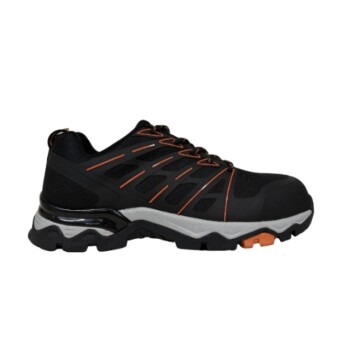
Finite Element Analysis (FEA) fundamentally transforms safety shoe development from a costly cycle of physical trial-and-error to a precise digital science. By simulating critical impact and compression tests on components like toe caps, manufacturers can verify compliance with strict standards such as ISO 20345 without relying on expensive physical prototypes or destructive testing.
Core Insight FEA enables the virtual validation of safety compliance and the optimization of material properties before a single physical prototype is manufactured. This digital approach drastically reduces R&D expenditures and accelerates the time-to-market by identifying design flaws early in the conceptual phase.
Replacing Destructive Testing with Digital Verification
Virtual Compliance Checks
Traditionally, verifying safety standards required building a shoe and physically destroying it. FEA allows engineers to run high-precision digital simulations on specific components, such as toe caps.
Meeting Industry Standards
Through these simulations, designers can verify if a shoe model meets legal safety classifications, specifically ISO 20345. This ensures the design is compliant with impact and compression requirements before physical production begins.
Drastic Reduction in R&D Costs
Physical prototyping is resource-intensive. By shifting to digital models, manufacturers eliminate the material and labor costs associated with iterative physical builds.
Optimizing Structure and Materials
Geometric and Material Tuning
Beyond basic compliance, FEA software is used to optimize the shoe's geometric structure and material properties. This ensures the footwear can handle specific load ratings without over-engineering the product.
Simulating Complex Load Scenarios
Engineering teams conduct 2D and 3D static simulations to model complex movements, such as dorsiflexion and plantarflexion. This is critical for ensuring elastic components maintain structural strength and meet target rotation angles.
Minimizing Trial-and-Error
By predicting how materials will behave under stress (referencing standards like ISO 10328), teams can refine designs digitally. This significantly shortens the design cycle by removing the guesswork from structural integrity testing.
Understanding the Trade-offs
The Requirement for High-Precision Models
FEA is not a magic button; its accuracy depends entirely on the quality of the inputs. To replace physical testing effectively, you must utilize high-precision physical models that accurately reflect the properties of the raw materials being used.
Complexity of Setup
While FEA reduces physical waste, it shifts the workload to the digital front-end. Engineers must accurately define boundary conditions and loads to avoid "false positives" where a simulation passes but the real-world product fails due to unforeseen variables.
Making the Right Choice for Your Goal
- If your primary focus is Cost Reduction: Implement FEA to replace early-stage physical prototyping and destructive testing, specifically for verifying ISO 20345 compliance.
- If your primary focus is Product Performance: Use 2D and 3D static simulations to optimize geometric structures and elastic components for complex load handling and rotation angles.
By integrating FEA, you move from reacting to test failures to proactively designing for success.
Summary Table:
| Advantage Category | Specific Benefit | Impact on R&D |
|---|---|---|
| Compliance Verification | Virtual ISO 20345 impact/compression testing | Reduces reliance on destructive testing |
| Cost Efficiency | Elimination of multiple physical prototypes | Drastically lowers material and labor expenses |
| Performance Tuning | 2D/3D static simulation of load and rotation | Optimizes geometric structure and material use |
| Time-to-Market | Early identification of design flaws | Shortens the development cycle by removing guesswork |
Partner with a Tech-Forward Manufacturer for Your Safety Footwear Needs
As a large-scale manufacturer serving global distributors and brand owners, 3515 leverages advanced engineering insights to deliver high-performance footwear. Our comprehensive production capabilities cover all footwear types, anchored by our flagship Safety Shoes series. Whether you require work and tactical boots, outdoor shoes, training sneakers, or Dress & Formal shoes, we provide the technical expertise to meet your bulk requirements with precision.
Ready to elevate your product line? Contact us today to discuss how our manufacturing excellence can drive value for your brand.
References
- D. J. Janson, Vimal Dhokia. A Product-Service System for Safety Footwear. DOI: 10.1017/pds.2022.105
This article is also based on technical information from 3515 Knowledge Base .
Related Products
- Premium Suede Sport Safety Shoes for Wholesale & Bulk Orders
- Premium Lightweight Safety Shoes for Wholesale & Bulk Orders
- Wholesale Anti-Smash & Puncture-Proof Safety Shoes Custom Manufacturing for Brands
- Premium KPU Injection Athletic Style Safety Shoes
- Premium Safety Shoes with Rotating Buckle Safety Sneakers
People Also Ask
- What industries have specific OSHA footwear requirements? Ensure Compliance & Protect Your Workforce
- What are the primary functions of professional safety shoes? Maximize Safety in Water Supply Confined Spaces
- What role do specialized safety shoes play in preventing falls? Engineering Stability in Industrial Environments
- What are the main components of safety shoes? A Guide to Protective Footwear Design
- How do gait analysis algorithms ensure accuracy in footwear? Master Step Length Precision for Boots & Sneakers