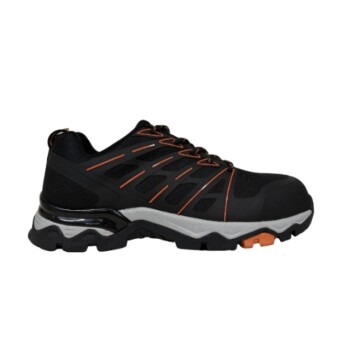
Automated detection of foot protection equipment fundamentally shifts the role of distributors and brand owners from simple suppliers to strategic safety partners. This technology provides the precise, quantified data necessary to verify actual wear rates, identify specific compliance barriers, and drive the development of safer, more marketable products.
Core Takeaway Automated systems bridge the gap between selling safety gear and ensuring it works. By generating objective data on usage patterns and compliance obstacles, these tools empower brands to iterate products based on real-world needs while helping distributors reduce industrial accident risks for their clients.
Transforming Compliance into Business Intelligence
Moving Beyond Visual Inspections
Traditional safety checks are often sporadic and subjective. Automated detection systems provide quantified compliance reports, offering an undeniable record of safety adherence.
This allows distributors to present clients with hard data regarding their safety standing. It transforms a conversation about purchasing equipment into a conversation about verified risk reduction.
Identifying Real-World Wear Rates
Brand owners often lack visibility into how their products perform after the sale. Automated systems track actual wear rates in active environments.
This data reveals exactly when and where workers are utilizing the equipment. It validates whether the investment in high-quality safety shoes translates to consistent on-the-floor usage.
Pinpointing Compliance Pain Points
When workers fail to wear safety shoes, there is usually a reason, such as discomfort or workflow incompatibility.
Detection systems help identify specific compliance pain points within specific work scenarios. This helps distributors understand why a product might be failing in the field, moving beyond simple non-compliance to root-cause analysis.
Driving Innovation and Market Strategy
Data-Driven Product Iteration
For brand owners, the most valuable asset is feedback. Automated detection creates a loop of data-driven insights derived from real-world application scenarios.
Instead of relying on focus groups, R&D teams can use field data to inform product iterations. If a specific shoe model shows low compliance in a specific environment, the design can be adjusted to better fit the user's reality.
Securing Market Access
Regulatory standards are becoming increasingly stringent. Automated verification ensures that products meet the necessary requirements for market access compliance.
By proving that their footwear is not only certified but also effectively detectable and trackable, brands gain a competitive advantage in markets that prioritize digital safety integration.
Understanding the Trade-offs
The Burden of Actionable Data
Implementing automated detection exposes "uncomfortable truths" about safety culture.
Once compliance pain points are quantified, they cannot be ignored. Distributors and brands must be prepared to address these gaps proactively. The data may reveal that a popular product is unsuitable for a specific task, necessitating a pivot in sales strategy or product design.
Integration vs. Application
While the technology encourages the use of high-quality equipment, it requires successful integration into the client's workflow.
The value is only realized if the data is analyzed correctly. Merely collecting wear-rate data without using it to adjust work scenarios or training protocols renders the system a passive monitor rather than an active safety tool.
Making the Right Choice for Your Goal
To maximize the value of automated detection, align your strategy with your primary business objective:
- If your primary focus is Product Development: Use the data on compliance pain points to drive R&D, creating shoes that solve specific comfort or workflow friction points.
- If your primary focus is Distributor Sales: Leverage quantified compliance reports to prove to clients that your high-quality footwear reduces their accident liability and insurance risk.
Automated detection turns safety footwear from a commodity into a measurable, optimizable safety solution.
Summary Table:
| Benefit Category | Key Advantage | Impact on Business |
|---|---|---|
| Compliance | Quantified Wear-Rate Reports | Verifiable risk reduction for clients |
| Product R&D | Data-Driven Iteration | Design adjustments based on real-world usage |
| Market Strategy | Market Access Compliance | Competitive edge in digitally-integrated sectors |
| Operational | Pinpointing Pain Points | Identifies root causes of non-compliance (e.g., discomfort) |
Elevate Your Footwear Brand with 3515’s Advanced Manufacturing Solutions
As a large-scale manufacturer serving distributors and brand owners, 3515 offers comprehensive production capabilities for all footwear types, anchored by our flagship Safety Shoes series. Whether you are looking to integrate automated detection technologies or require high-performance work and tactical boots, outdoor shoes, training shoes, sneakers, or Dress & Formal shoes, we deliver the quality and scale needed to meet diverse bulk requirements.
Partner with us to turn safety footwear into a measurable, high-value solution for your clients. Contact us today to discuss your production needs!
References
- Seunghyeon Wang. Automated non-PPE detection on construction sites using YOLOv10 and transformer architectures for surveillance and body worn cameras with benchmark datasets. DOI: 10.1038/s41598-025-12468-8
This article is also based on technical information from 3515 Knowledge Base .
Related Products
- Premium Suede Sport Safety Shoes for Wholesale & Bulk Orders
- Premium Lightweight Safety Shoes for Wholesale & Bulk Orders
- Wholesale Anti-Smash & Puncture-Proof Safety Shoes Custom Manufacturing for Brands
- Premium KPU Injection Athletic Style Safety Shoes
- Premium Safety Shoes with Rotating Buckle Safety Sneakers
People Also Ask
- What industries have specific OSHA footwear requirements? Ensure Compliance & Protect Your Workforce
- What are the primary functions of professional safety shoes? Maximize Safety in Water Supply Confined Spaces
- What role do specialized safety shoes play in preventing falls? Engineering Stability in Industrial Environments
- How do specialized safety shoes protect against battery maintenance injuries? Prevent Impact and Chemical Burns
- How Specialized Footwear Impacts Side-Cutting Performance and Injury Risk Assessment