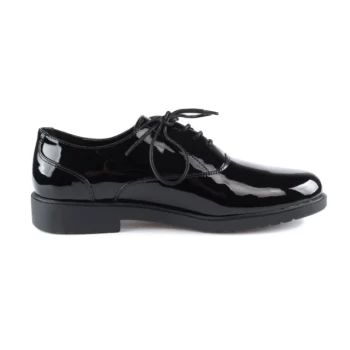
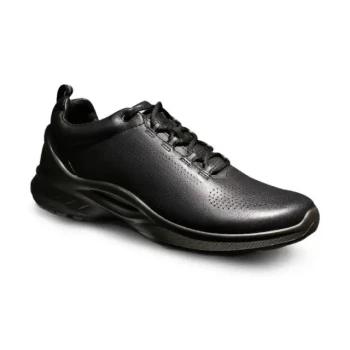
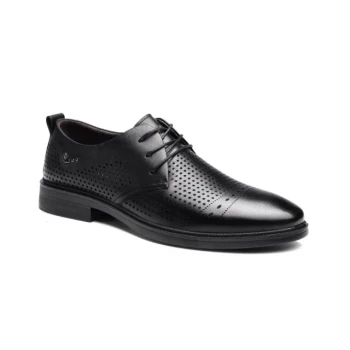
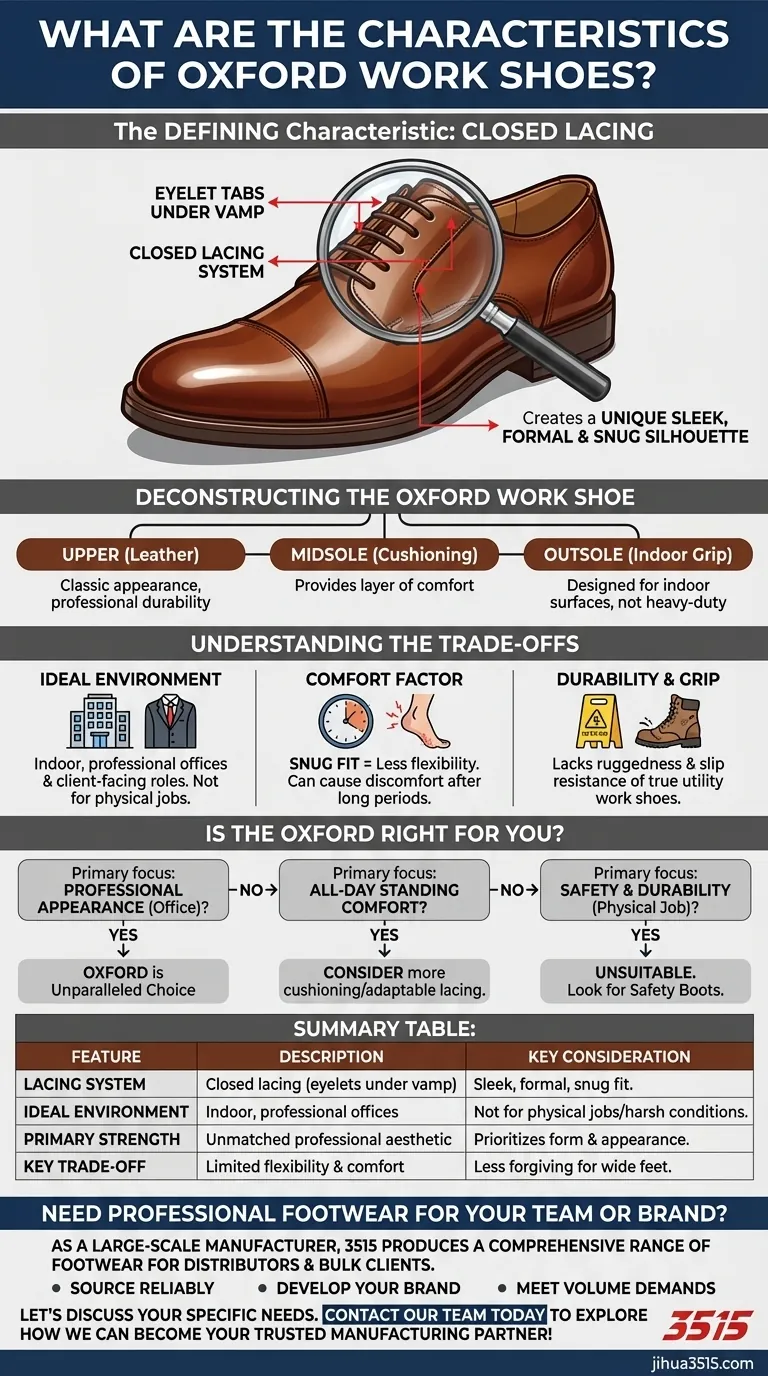
The defining characteristic of an Oxford work shoe is its "closed lacing" system, where the eyelet tabs are stitched underneath the front part of the shoe, known as the vamp. This construction creates a uniquely sleek, formal, and snug silhouette that distinguishes it from all other types of dress or work footwear.
While the Oxford's elegant design makes it a staple for professional, indoor work environments, its snug fit and formal construction present important trade-offs in all-day comfort and durability for physically demanding roles.
Deconstructing the Oxford Work Shoe
To understand if an Oxford is right for your work needs, you must first appreciate its specific anatomy and the aesthetic it creates. Its design has been refined for a very specific purpose.
The Defining "Closed Lacing" System
The most critical feature is the closed lacing. Unlike shoes where the eyelet flaps are stitched on top of the vamp (known as an open lacing system, like on a Derby shoe), the Oxford's eyelets are concealed beneath it.
This design pulls the two sides of the shoe tightly together over the tongue, resulting in a smooth, uninterrupted profile. It offers a very snug and secure fit.
Construction and Materials
Like most quality footwear, the Oxford work shoe has three main parts. The Upper is typically made of leather for its classic appearance and durability.
The Midsole provides a layer of cushioning, while the Outsole is the part that contacts the ground, designed more for indoor surfaces than for heavy-duty grip.
Aesthetic and Professional Appeal
The combination of closed lacing, a low heel, and a slim silhouette gives the Oxford an unmatched level of polish. It is the quintessential dress shoe for a reason.
This makes it the standard for business suits and formal office attire. Black is often reserved for the most formal events, while brown offers more versatility for business-casual settings.
Understanding the Trade-offs
The Oxford's greatest strength—its sleek, formal structure—is also the source of its primary limitations as a "work" shoe in the broader sense.
The Ideal Environment
Oxford work shoes are designed almost exclusively for indoor, professional environments like corporate offices or client-facing roles. Their value lies in projecting a polished and authoritative image.
They are not suitable for workshops, construction sites, or any job that requires significant physical activity or exposure to the elements.
The Comfort Factor
The snug fit from the closed lacing system can be a double-edged sword. While secure, it offers very little flexibility in adjustment.
This can lead to discomfort over long periods of walking or standing, particularly for individuals with wider feet or a high instep. The rigid structure prioritizes form over forgiving comfort.
Durability and Grip
While a well-made leather Oxford is durable for office life, it lacks the ruggedness of a true utility work shoe. The outsole is generally not designed for slip resistance on varied or wet surfaces, and the fine leather upper is susceptible to scuffs and damage in harsh environments.
Is the Oxford the Right Work Shoe for You?
Choosing the right footwear requires aligning the shoe's characteristics with your daily professional demands.
- If your primary focus is a professional appearance in an office: The Oxford is an unparalleled choice for its formal, clean, and authoritative look.
- If your primary focus is all-day standing comfort: You should carefully consider the fit or explore shoes with more cushioning and a more adaptable lacing system.
- If your primary focus is safety and durability in a physical job: The Oxford is entirely unsuitable, and you must look for a dedicated safety boot or rugged work shoe.
Ultimately, selecting the Oxford work shoe is a choice to prioritize a timeless, professional aesthetic for the correct corporate environment.
Summary Table:
| Feature | Description | Key Consideration |
|---|---|---|
| Lacing System | Closed lacing (eyelet tabs under the vamp) | Creates a sleek, formal, and snug fit |
| Ideal Environment | Indoor, professional offices and client-facing roles | Not suitable for physical jobs or harsh conditions |
| Primary Strength | Unmatched professional and polished aesthetic | Prioritizes form and a formal appearance |
| Key Trade-off | Limited flexibility and all-day comfort for standing/walking | Less forgiving for wide feet or high insteps |
Need Professional Footwear for Your Team or Brand?
As a large-scale manufacturer, 3515 produces a comprehensive range of footwear for distributors, brand owners, and bulk clients. Whether you need the classic polish of Oxfords for corporate uniforms or require durable safety boots for industrial roles, our production capabilities encompass all types of shoes and boots.
We can help you:
- Source Reliably: Ensure consistent quality and timely delivery for your business.
- Develop Your Brand: Create custom footwear solutions tailored to your market.
- Meet Volume Demands: Fulfill large orders with expert manufacturing precision.
Let's discuss your specific needs. Contact our team today to explore how we can become your trusted footwear manufacturing partner!
Visual Guide
Related Products
- Wholesale Patent Oxford Dress Shoes | Custom & Bulk Manufacturing
- Wholesale Leather Derby Shoes Manufacturer | Customizable Business & Dress Footwear
- Custom Manufactured Air Cushion Leather Business Shoes for Wholesale
- Classic Leather Derby Dress Shoes Wholesale & Custom Manufacturing
- Premium Lightweight Safety Shoes for Wholesale & Bulk Orders
People Also Ask
- What are the key characteristics of Oxford dress shoes? A Guide to Timeless Formal Footwear
- How do Oxfords and Derbies differ in terms of lacing and formality? A Guide to Choosing the Right Shoe
- What is the origin of the Oxford shoe? From 1800s University Boots to Modern Elegance
- How do Oxford Shoes differ from other casual shoes? The Ultimate Guide to Lacing & Formality
- What makes Oxford shoes suitable for business casual settings? Master the Art of Professional Style