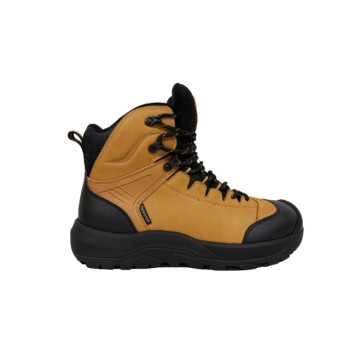
To ensure safety in high-temperature rotary kiln maintenance, personnel require footwear equipped with high-temperature resistant outsoles, reinforced steel toes, and aggressive slip-resistant grip designs. These specific features are mandatory to counteract the unique trifecta of hazards present in this environment: direct contact with scorching materials, the risk of heavy mechanical components falling, and walking surfaces compromised by lubricant leaks.
In the volatile environment of a rotary kiln, standard industrial footwear is insufficient. Your safety strategy must prioritize shoes that provide a simultaneous defense against thermal degradation, crushing impact, and loss of footing on oil-slicked surfaces.
Defending Against Thermal Hazards
High-Temperature Resistant Outsoles
The most distinct requirement for this environment is the ability to withstand extreme heat. The maintenance area frequently exposes workers to direct contact with high-temperature materials.
Standard rubber soles may soften, melt, or degrade rapidly in these conditions. Specialized heat-resistant outsoles are engineered to maintain structural integrity and protect the wearer from severe thermal burns and heat transfer.
Managing Mechanical and Stability Risks
Reinforced Steel Toe Protection
Rotary kiln maintenance involves the disassembly and assembly of massive machinery, such as ring frame gears. The risk of heavy metal components dropping during these complex procedures is significant.
Footwear must feature protective steel toes or equivalent composite reinforcement. This barrier is essential to prevent crushing injuries or mechanical impact damage to the feet if heavy gears or tools are mishandled.
Specialized Slip-Resistant Grip
The maintenance environment is rarely clean; floors are often contaminated with lubricant leaks, oil, or fiber debris. These contaminants create dangerously slippery surfaces that threaten stability.
To prevent falls during critical inspections, shoes must feature slip-resistant grip designs. These professional-grade soles use specific tread patterns and materials to cut through fluids and ensure traction on compromised flooring.
Understanding the Trade-offs
Weight vs. Fatigue
While steel toes provide maximum protection against heavy gears, they add significant weight to the shoe. This can increase worker fatigue during long maintenance shifts, requiring a balance between maximum crushing protection and ergonomic comfort.
Sole Hardness vs. Traction
High-temperature resistant materials are often denser and harder than standard rubber. While this protects against heat, it can sometimes offer less friction on cold, clean surfaces compared to softer rubber, making the tread design critical for maintaining grip across different floor conditions.
Making the Right Choice for Your Maintenance Team
Selecting the correct footwear depends on the specific phase of maintenance being performed.
- If your primary focus is working near the kiln shell: Prioritize thermal resistance ratings to prevent outsole degradation from conductive heat.
- If your primary focus is gear assembly/disassembly: Prioritize impact resistance and steel toe ratings to protect against falling heavy metal components.
- If your primary focus is general inspection and fluid handling: Prioritize slip-resistance ratings to ensure stability on floors slick with oil or lubricants.
Equipping your team with the right protective features is not just about compliance; it is the foundation of operational continuity and accident prevention.
Summary Table:
| Feature | Protection Goal | Hazard Addressed |
|---|---|---|
| Heat-Resistant Outsole | Thermal Integrity | Scorching kiln materials and hot surfaces |
| Reinforced Steel Toe | Impact Resistance | Falling ring frame gears and heavy tools |
| Aggressive Slip Grip | Traction & Stability | Floors slick with lubricants and oil leaks |
| Ergonomic Design | Fatigue Management | Long shifts and heavy equipment handling |
Partner with 3515 for High-Performance Safety Solutions
As a large-scale manufacturer serving global distributors and brand owners, 3515 offers comprehensive production capabilities for all footwear types, anchored by our flagship Safety Shoes series. Whether your clients operate in extreme high-temperature kilns or heavy industrial maintenance zones, our extensive portfolio—including tactical boots, outdoor shoes, and professional safety footwear—is engineered to meet the highest durability standards.
Ready to elevate your inventory with footwear that withstands the toughest environments? Contact us today to discuss bulk requirements and custom manufacturing solutions tailored to your brand’s needs.
References
- Firmansyah Muhamad nur, Rio Candra Pratama. Analisis Kesehatan dan keselamatan kerja (K3) dengan metode Hazard Identification, Risk Assesment and Risk Control (HIRARC) pada unit Kiln PT. Semen Indonesia (Persero) Tbk. Pabrik Tuban. DOI: 10.56071/jtmsi.v1i2.430
This article is also based on technical information from 3515 Knowledge Base .
Related Products
- Premium Insulated Safety Boots and Shoes for Wholesale & Bulk Orders
- Premium Suede Sport Safety Shoes for Wholesale & Bulk Orders
- Heavy-Duty Waterproof Nubuck Safety Boots Safety Shoes for Bulk Supply
- Wholesale Durable Camo Canvas Shoes with High-Traction Rubber Soles
- Advanced KPU Athletic Safety Shoe with Steel Toe Cap Anti-Slip Rotary Lacing System
People Also Ask
- What are the recommended insulation ratings for mild winter conditions? A Guide for Active & Stationary Workers
- How does insulation thickness correlate with temperature ranges? A Guide to Choosing the Right Warmth
- What insulation level is needed for severe cold and stationary work? 1200g or Higher is Essential
- What safety advantages do insulated boots offer beyond warmth? Dielectric Protection & Superior Grip
- How does fleece lining contribute to the warmth of insulated boots? Trapping Air for Superior Cold Protection