Prioritizing the fit of your work shoes is the single most important decision for your daily comfort and long-term health. A proper fit ensures you can withstand long hours on your feet without pain, prevents chronic foot issues, and allows the shoe's safety features to function as intended. An ill-fitting shoe, regardless of its quality, will quickly become a source of distraction and injury.
While safety features protect you from external hazards, a proper fit protects you from the shoe itself. An ill-fitting safety shoe does not "break in" and can cause more harm than the dangers it's designed to prevent.
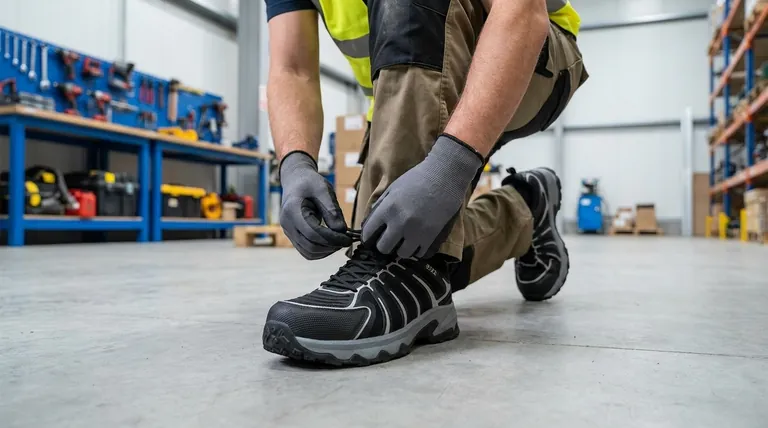
The Immediate Consequences of a Poor Fit
Choosing the wrong size or shape of work shoe has consequences that go far beyond minor discomfort. These issues affect your focus, performance, and overall well-being on the job.
Discomfort Creates Distraction
Constant pain from shoes that are too tight, too loose, or rub in the wrong places is a significant distraction. This lack of focus can reduce your productivity and, more importantly, your awareness of potential workplace hazards.
The Myth of "Breaking In"
Unlike casual leather shoes, safety footwear is built with rigid, protective materials like steel toecaps and puncture-resistant soles. These structural components will not stretch or conform to your foot over time. The fit you feel in the store is the fit you will have for the life of the shoe.
How Fit Underpins Safety and Performance
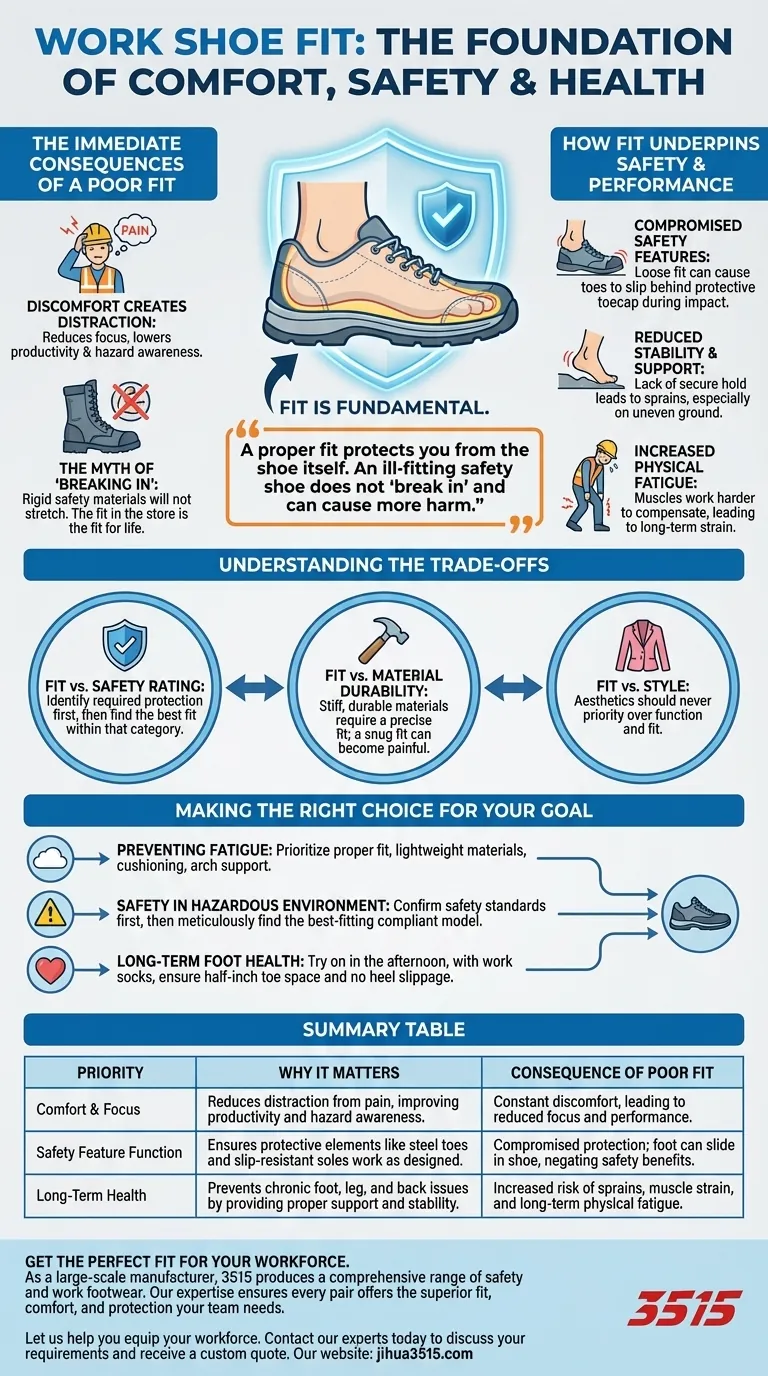
A proper fit is not just about comfort; it is the foundation that makes the shoe's other features work correctly. An improperly sized shoe can actively undermine its own safety technology.
Compromised Safety Features
If a shoe is too large, your foot can slide, potentially causing your toes to slip behind the protective toecap during an impact. Similarly, a loose fit can reduce the effectiveness of a slip-resistant sole by preventing even pressure distribution as you walk.
Reduced Stability and Support
A well-fitting shoe holds your foot securely, providing the necessary stability and arch support to prevent sprains and twists. Shoes that are too wide or have heel slippage fail to offer this crucial support, especially on uneven surfaces.
Increased Physical Fatigue
When your shoes don't fit correctly, the muscles in your feet, legs, and even your back must work harder to compensate and maintain balance. This subtle, constant strain leads directly to increased fatigue over a long shift.
Understanding the Trade-offs
Selecting the right work shoe involves balancing multiple critical factors. Ignoring these trade-offs is a common pitfall that leads to dissatisfaction and wasted money.
Fit vs. Safety Rating
Never sacrifice a required safety standard for a more comfortable shoe. Your first step should always be to identify the protection class required for your job (e.g., steel toe, puncture resistance). From there, find the best-fitting and most comfortable option within that specific category.
Fit vs. Material Durability
Heavy-duty, durable materials are often stiffer and less flexible than lighter options. Ensure the fit accommodates this rigidity from the start. A snug fit in a stiff boot can quickly become painful, as the material will not yield easily.
Fit vs. Style
Modern work shoes come in many styles, but aesthetics should never take priority over function and fit. A shoe that looks great but doesn't match your foot shape or job requirements is a poor investment in your health and safety.
Making the Right Choice for Your Goal
To select the ideal work shoe, begin by identifying your most critical need and use that as your starting point.
- If your primary focus is preventing daily fatigue: Prioritize a proper fit combined with lightweight materials, excellent cushioning, and specific arch support for your foot type.
- If your primary focus is safety in a hazardous environment: First, confirm the shoe meets every required safety standard for your workplace, and then meticulously find the best-fitting model within that compliant category.
- If your primary focus is long-term foot health: Always try on shoes in the afternoon with your typical work socks, ensuring there is about a half-inch of space for your toes and no slippage at the heel.
Ultimately, the right work shoe doesn't just protect you from your environment; it supports you through every hour of your workday.
Summary Table:
| Priority | Why It Matters | Consequence of Poor Fit |
|---|---|---|
| Comfort & Focus | Reduces distraction from pain, improving productivity and hazard awareness. | Constant discomfort, leading to reduced focus and performance. |
| Safety Feature Function | Ensures protective elements like steel toes and slip-resistant soles work as designed. | Compromised protection; foot can slide in shoe, negating safety benefits. |
| Long-Term Health | Prevents chronic foot, leg, and back issues by providing proper support and stability. | Increased risk of sprains, muscle strain, and long-term physical fatigue. |
Get the Perfect Fit for Your Workforce
As a large-scale manufacturer, 3515 produces a comprehensive range of safety and work footwear for distributors, brand owners, and bulk clients. Our expertise ensures every pair offers the superior fit, comfort, and protection your team needs to stay safe and productive.
Let us help you equip your workforce with the right shoes. Contact our experts today to discuss your requirements and receive a custom quote.
Visual Guide
Related Products
- Durable Canvas Work Shoes with Rubber Lug Sole | Wholesale Manufacturer
- Durable Goodyear Welt Leather Work Boots for Wholesale & Private Label
- Durable Leather Work Boots for Wholesale & Custom OEM Manufacturing
- Durable Leather Work Boots for Wholesale & Custom Manufacturing
- Durable Leather Safety Boots for Wholesale & Custom OEM Manufacturing
People Also Ask
- What are the properties of canvas as a shoe material? A Guide to Lightweight Comfort & Style
- Why is the selection of high-strength fabric materials necessary in the production of canvas shoes and training shoes?
- What types of jobs are canvas work boots suitable for? Ideal for Light-Duty, High-Mobility Roles
- Can canvas shoes be worn in rainy conditions? The Truth About Water Resistance
- What are the functional advantages of choosing rubber soles over leather soles for work boots? Superior Safety & Durability