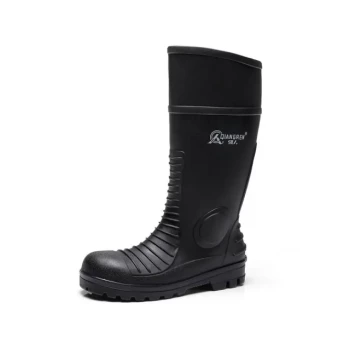
Professional foot protection is indispensable because regular footwear lacks the structural engineering required to survive the extreme hazards of power station construction. Unlike standard shoes, industrial safety footwear integrates specific defense mechanisms—such as crush-resistant steel toes and puncture-proof soles—to prevent catastrophic injuries from heavy falling objects, sharp debris, and chemical exposure.
While regular footwear provides basic covering, professional safety shoes function as personal engineering controls. They are purpose-built to mitigate specific high-risk variables like impact, slippage, and corrosion, acting as the final barrier between a worker and a debilitating industrial accident.
The Mechanics of Protection
Impact and Crush Resistance
Regular footwear offers virtually no protection against gravity. In power station construction, where heavy equipment and materials are constantly in motion, the foot is highly vulnerable.
Professional safety shoes utilize reinforced steel toes or composite caps. These are engineered to withstand significant compression, ensuring that a dropped object results in a deflection rather than a crushing injury.
Stability on Complex Surfaces
Construction sites are rarely flat or clean; they are often slick with oil, water, or loose debris. Standard shoe treads are not designed for these low-traction environments.
Industrial footwear features high-friction outsoles specifically designed for slip resistance. This traction is critical for maintaining worker stability and preventing falls on the complex, uneven surfaces common in power plants.
Environmental and Puncture Shielding
A regular sneaker is easily penetrated by nails, scrap metal, or sharp aggregate. Furthermore, they degrade quickly when exposed to harsh substances.
Professional boots offer puncture protection through reinforced midsoles. They are also treated to resist chemical corrosion and extreme temperatures, ensuring the material does not melt or disintegrate during hazardous tasks.
Fatigue Management
Beyond immediate trauma, long shifts on hard surfaces lead to physical exhaustion.
As noted in supplementary data, professional footwear includes a comfortable inner lining designed to alleviate strain. Reducing fatigue is a key factor in maintaining alertness and reducing industrial injury rates over time.
Critical Maintenance and Limitations
The Hidden Danger of Wear
Safety shoes are not permanent solutions. Over time, the very features that protect you can degrade silently.
Outsole wear can reduce the tread depth below safe levels, rendering the slip-resistant properties useless. Similarly, material aging can weaken the toughness of the upper shoe.
The Necessity of Inspection
You cannot rely on a pair of boots indefinitely. The compression resistance of a steel toe can be compromised even if the shoe looks fine on the outside.
Implementing standardized inspection and replacement mechanisms is vital. Failing to replace gear with worn treads or aged materials can lead to accidents caused by equipment failure rather than human error.
Making the Right Choice for Your Project
Ensuring safety requires matching the specific footwear technology to the hazards present on your site.
- If your primary focus is immediate physical safety: Prioritize footwear with certified crush resistance and puncture protection to handle heavy falling objects and sharp debris.
- If your primary focus is accident prevention on complex terrain: Select models with verified high-friction outsoles to ensure stability on slippery or uneven surfaces.
- If your primary focus is long-term compliance: Establish a strict protocol for checking anti-slip tread depth and material toughness to determine when gear must be retired.
True safety is not just about wearing the gear; it is about maintaining its functional integrity to ensure it performs when it matters most.
Summary Table:
| Feature | Regular Footwear | Professional Safety Shoes |
|---|---|---|
| Toe Protection | Minimal / None | Reinforced Steel or Composite Caps (Crush-resistant) |
| Sole Integrity | Easily pierced by nails/debris | Puncture-proof midsoles |
| Traction | Standard treads (low-friction) | High-friction outsoles (Slip-resistant) |
| Durability | Rapid degradation from chemicals | Chemical & extreme temperature resistance |
| Ergonomics | Basic comfort | Specialized inner lining for fatigue management |
Partner with 3515 for Uncompromising Industrial Safety
As a large-scale manufacturer serving distributors and brand owners, 3515 offers comprehensive production capabilities for all footwear types, anchored by our flagship Safety Shoes series. We understand that in high-stakes environments like power station construction, your footwear is the final line of defense. Our extensive portfolio covers work and tactical boots, outdoor shoes, training shoes, and sneakers, as well as Dress & Formal shoes to meet diverse bulk requirements.
Why choose 3515?
- Certified Protection: Engineered crush and puncture resistance to international standards.
- Scalable Manufacturing: Reliable bulk supply for large-scale infrastructure projects.
- Diverse Range: From high-performance tactical boots to formal dress shoes.
Ready to secure your project with professional-grade foot protection? Contact us today to discuss your bulk requirements!
References
- Syalomita Kapoh, Betsi Rooroh. PATUHI KESEHATAN DAN KESELAMATAN KERJA PADA INSTALASI PEMBANGKIT LISTRIK TENAGA SURYA. DOI: 10.60145/jcp.v1i4.78
This article is also based on technical information from 3515 Knowledge Base .
Related Products
- Wholesale Mesh Steel Toe Safety Shoes with Dial Closure Factory Production
- Wholesale Anti-Smash & Puncture-Proof Safety Shoes Custom Manufacturing for Brands
- Premium Wheat Nubuck Safety Shoes for Bulk Distribution
- Durable Steel Toe Safety Boots Wholesale & Custom Manufacturing
- Premium Waterproof High-Cut Industrial Safety Boots for Wholesale and Bulk Orders
People Also Ask
- What type of safety shoe is recommended for workers exposed to heavy machinery? Steel Toe Boots for Ultimate Protection
- Why is it mandatory to wear safety shoes with steel toe protection during metal loading? Prevent Crushing Injuries
- What are the main materials used in steel toe safety shoes? A Guide to Protective Footwear Construction
- Why are steel toes popular in safety footwear? The Ultimate Guide to Heavy-Duty Protection
- Is the myth about steel toe shoes cutting off toes true? Debunking the Safety Footwear Myth