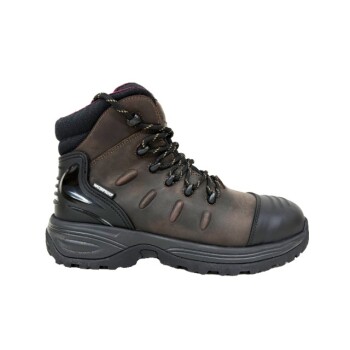
Penetration Resistant Inserts are the primary defense against underfoot puncture injuries in high-risk environments. In construction and manufacturing, sharp debris like discarded nails, metal shards, and glass are constant hazards that can easily pierce standard footwear. These inserts provide a continuous physical barrier integrated into the sole, preventing sharp objects from reaching the foot and causing severe trauma or infection.
Puncture protection is a non-negotiable safety standard because foot injuries from sharp objects are frequent and potentially life-altering in industrial settings. By incorporating metallic or composite shields, safety shoes transform the sole from a vulnerable point of entry into a fortified barrier against ground-level hazards.
The Mechanics of Puncture Protection
Blocking Sharp Debris
The core function of these inserts is to stop sharp objects such as nails and metal fragments from piercing the shoe sole. Without this layer, the weight of a worker stepping down provides enough force for a sharp object to penetrate the outsole and enter the soft tissue of the foot.
Material Composition
These protective layers are typically engineered from either high-strength metal or advanced composite materials. Both materials are tested to withstand specific levels of force, ensuring that the integrity of the barrier remains intact even under the pressure of a full-grown adult's step.
Integrity of the Sole Unit
The insert is embedded within the midsole construction, meaning it provides protection across the entire surface area of the foot. This integration ensures that the protection is permanent and cannot be shifted or removed during the daily rigors of industrial work.
Why Construction and Manufacturing Require This Shield
Navigating Unpredictable Ground
Construction sites and mechanical plants often feature complex ground conditions where debris is hidden under dust or mud. Penetration Resistant Inserts allow workers to move confidently through these environments without the constant fear of stepping on hazardous waste.
Mitigating Occupational Risk
The absence of appropriate personal protective equipment (PPE) is a leading cause of occupational harm in industrial sectors. Standardizing foot protection that includes puncture resistance significantly reduces injury rates and the associated costs of medical leave and site downtime.
Comprehensive Foot Defense
While toe caps protect against falling objects, the insert protects against upward penetration, creating a 360-degree safety cell for the foot. This dual-layered approach is essential for meeting the safety protocols required in high-risk industrial environments.
Understanding the Trade-offs and Limitations
Flexibility vs. Protection
Metal inserts provide exceptional protection but can make the sole stiff, which may lead to foot fatigue during long shifts. Composite inserts are generally more flexible and lighter, though they may be thicker to achieve the same safety rating as their steel counterparts.
Thermal and Electrical Conductivity
Steel inserts are highly durable but can conduct heat and cold, making them less ideal for extreme temperature environments. Additionally, in environments with electrical hazards, non-metallic composite inserts are often preferred to avoid conductivity risks.
The Impact of Wear and Tear
While the insert itself is durable, the outer sole of the shoe will eventually wear down through friction. It is critical to monitor the overall condition of the footwear, as a heavily degraded outsole can expose the insert to moisture, potentially leading to corrosion in metallic versions.
How to Select the Right Protection for Your Environment
Choosing the correct penetration-resistant footwear depends on the specific hazards of your workspace and the physical demands of your role.
- If your primary focus is extreme durability in heavy demolition: Steel inserts are the gold standard for maximum resistance against the sharpest heavy-duty industrial fragments.
- If your primary focus is comfort during long shifts with high mobility: Composite inserts offer a lightweight, flexible alternative that reduces fatigue without sacrificing essential safety standards.
- If your primary focus is working in extreme temperatures or security-sensitive areas: Non-metallic composite inserts are ideal because they do not conduct thermal energy and will not trigger metal detectors.
Investing in high-quality penetration-resistant footwear is the most effective way to ensure that a single misstep does not result in a catastrophic industrial injury.
Summary Table:
| Feature | Steel Inserts | Composite (Non-Metallic) Inserts |
|---|---|---|
| Material | High-strength metal | Advanced synthetic fibers |
| Weight | Heavier | Lighter and more flexible |
| Thermal Conductivity | Conducts heat/cold | Insulative (Ideal for extreme temps) |
| Electrical Risk | Conductive | Non-conductive |
| Primary Benefit | Maximum puncture resistance | Enhanced comfort and mobility |
| Best Use Case | Heavy demolition sites | Security zones and high-mobility roles |
As a large-scale manufacturer serving distributors and brand owners, 3515 offers comprehensive production capabilities for all footwear types. Our flagship Safety Shoes series features advanced penetration-resistant technology to protect workers in the most demanding construction and manufacturing environments. Beyond safety boots, our extensive portfolio covers work and tactical boots, outdoor shoes, training shoes, and sneakers, as well as Dress & Formal shoes to meet your diverse bulk requirements. Contact us today to discuss your bulk production needs and leverage our manufacturing expertise for your brand.
References
- Shruti A. Dumbhare, Parag Sancheti. Prevalence of foot problems associated with wearing safety footwear in factory employees. DOI: 10.18203/2394-6040.ijcmph20222013
This article is also based on technical information from 3515 Knowledge Base .
Related Products
- Puncture-Resistant Velcro Safety Boots for Wholesale & Custom Manufacturing
- Wholesale Durable Safety Boots | Custom Steel Toe & Puncture-Resistant Manufacturing
- Athletic Safety Shoes with Dial Closure & Steel Toe for Wholesale & Custom Manufacturing
- Wholesale Durable Breathable Safety Boots Custom OEM Manufacturer
- Wholesale Anti-Smash & Puncture-Proof Safety Shoes Custom Manufacturing for Brands
People Also Ask
- Why are industrial safety boots with steel toes necessary for machine operators? Essential Foot Protection for Safety
- What are the characteristics of steel toe safety boots? Maximum Protection, Key Trade-offs
- Is it true that steel toes can cause toes to get cut off? Debunking the Dangerous Myth
- What are the primary safety functions of safety boots with steel-toe designs? Essential Protection for Industry
- What are the different types of safety toe boots available? Choose the Right Protection for Your Job