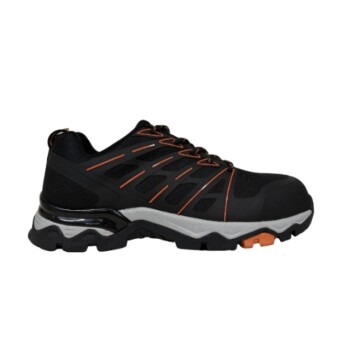
Placing retro-reflective markers on the limbs creates a distinct visual signature known as "biological motion." While a marker on the torso appears as a static object to an approaching driver, the swinging movement of the legs or feet creates a dynamic pattern. This movement allows observers to immediately identify the reflection as a walking human rather than a stationary road sign or post.
Core Insight: Leveraging the natural swing of your limbs increases nighttime recognition distances by approximately 60-80% compared to torso placement, providing drivers with critical extra time to identify you as a person and react.
The Mechanics of Biological Motion
Why Movement Matters
The human brain is hardwired to recognize patterns of movement. When a driver sees a static reflection on a torso, they see an object that might be a person, a mailbox, or a sign.
However, when markers are placed on moving joints—specifically the ankles, knees, or feet—the oscillation creates a "human" signature.
The Swinging Effect
The lower limbs undergo the most significant range of motion while walking or running. This exaggerated swinging action creates a dynamic visual signal.
This signal is far easier for a driver to process than a relatively stationary point of light on the chest or back.
The Impact on Safety Margins
Increased Recognition Distance
The primary advantage of limb placement is the distance at which a driver understands what they are seeing.
According to research, placing markers on the extremities can increase this recognition distance by approximately 60-80%.
Avoiding the "Looming" Effect
Drivers often struggle to judge the closing speed of static objects.
By identifying the object as a person earlier, the driver can initiate avoidance maneuvers much sooner, rather than waiting until the object is fully illuminated by headlights.
Understanding the Trade-offs
The Requirement of Motion
The benefits described above rely entirely on movement. If you are standing perfectly still at a crosswalk, markers on your shoes lose their "biological motion" advantage.
In a stationary position, a low-placed marker may simply look like road debris to a driver.
Potential for Obstruction
Limb markers, particularly on shoes, are located close to the ground.
This makes them more susceptible to being obscured by tall grass, snow banks, or low roadside barriers that would not hide a torso-mounted vest.
Optimizing Your Nighttime Safety
To maximize your safety, you should view limb markers as a critical enhancement to, not necessarily a replacement for, standard visibility gear.
- If your primary focus is maximum identification distance: Place retro-reflective material on your moving parts, specifically safety shoes, ankles, or pant legs.
- If your primary focus is stationary visibility: Ensure you maintain reflective gear on your torso to remain visible when you stop moving.
The ideal configuration combines the movement of limb markers with the surface area of a torso vest for total coverage.
Summary Table:
| Placement Category | Visual Effect | Recognition Distance | Best For |
|---|---|---|---|
| Limbs (Shoes/Ankles) | Dynamic Biological Motion | Highest (60-80% Increase) | Active walking/running identification |
| Torso (Vest) | Static Point of Light | Moderate | Stationary visibility and large surface area |
| Combined | Comprehensive Coverage | Optimal | Professional safety in all environments |
Maximize Workplace Safety with High-Visibility Solutions from 3515
Enhance your workforce's safety with footwear designed for maximum visibility. As a large-scale manufacturer serving distributors and brand owners, 3515 offers comprehensive production capabilities for all footwear types. Our flagship Safety Shoes series integrates advanced retro-reflective technology to leverage biological motion, ensuring your team is recognized from greater distances.
From tactical boots and outdoor shoes to sneakers and formal dress shoes, we provide the bulk manufacturing expertise you need to protect your customers and employees. Contact us today to discuss your custom manufacturing requirements and see how our footwear solutions can elevate your brand's safety standards.
References
- Katarzyna Sicińska, Anna Zielińska. PEDESTRIANS’ SAFETY IN POLAND AND USE OF REFLECTIVE MATERIALS. DOI: 10.20858/tp.2022.17.1.11
This article is also based on technical information from 3515 Knowledge Base .
Related Products
- Premium Suede Sport Safety Shoes for Wholesale & Bulk Orders
- Premium Lightweight Safety Shoes for Wholesale & Bulk Orders
- Wholesale Anti-Smash & Puncture-Proof Safety Shoes Custom Manufacturing for Brands
- Premium KPU Injection Athletic Style Safety Shoes
- Premium Safety Shoes with Rotating Buckle Safety Sneakers
People Also Ask
- What are the primary functions of professional safety shoes? Maximize Safety in Water Supply Confined Spaces
- What industries have specific OSHA footwear requirements? Ensure Compliance & Protect Your Workforce
- What role do specialized safety shoes play in preventing falls? Engineering Stability in Industrial Environments
- What are the main safety features of S1-S5 shoes? The 3 Essential Protections Explained
- What are the technical advantages of integrating sensors into safety shoes? Achieve Superior Motion Capture Precision