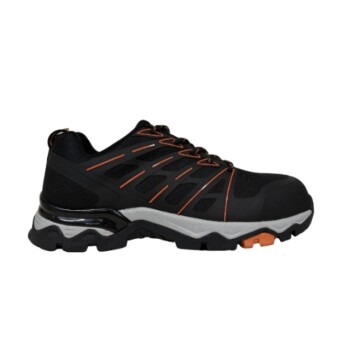
Standardized footwear acts as a critical control variable in safety performance testing for ramp walking. By utilizing a uniform shoe specification, researchers effectively eliminate external "noise" caused by varying outsole materials, tread patterns, or shoe weights. This ensures that any observed changes in a subject's walking pattern are strictly the result of the ramp's slope or the subject's physiological fatigue, rather than the mechanical properties of their shoes.
The Core Insight: Accurate safety testing relies on the isolation of variables. Standardized footwear eliminates the unpredictable influence of diverse shoe constructions, providing developers with a clean, reliable baseline to measure exactly how the human body compensates for slip hazards and inclined terrain.
The Science of Variable Isolation
Removing Material Inconsistencies
Every shoe manufacturer uses a different proprietary blend of rubber or synthetic materials for their outsoles. These materials possess varying degrees of hardness and stickiness.
Using a standardized control shoe neutralizes this variance. It ensures that the coefficient of friction remains constant across all test subjects, preventing data skewing caused by a particularly "sticky" or "slick" pair of non-standard shoes.
Controlling Tread Patterns
The geometry of a shoe's tread significantly alters how it interacts with a surface, especially on a ramp. Deep lugs behave differently than flat, tennis-style soles.
Standardization forces a uniform contact patch between the foot and the ramp. This guarantees that traction mechanics are identical for every trial, allowing the test to focus on the ramp's characteristics rather than the shoe's grip geometry.
Addressing Weight and Balance
Footwear weight varies drastically, from lightweight running shoes to heavy steel-toed boots. Heavier footwear alters the swing phase of a gait cycle, requiring more energy to move.
By mandating a standard shoe weight, researchers ensure that physiological fatigue is measured accurately. Any tiredness observed in the subject can be attributed to the physical exertion of the test, not the burden of heavy equipment.
Isolating Human Biomechanics
Detecting True Gait Adjustments
When humans walk on unstable or inclined surfaces, they naturally adjust their gait. Common adjustments include stride shortening or widening their stance to maintain balance.
If subjects wear different shoes, it is impossible to know if they shortened their stride because of the ramp angle or because their specific shoes felt slippery. Standardized footwear confirms that these biomechanical shifts are genuine reactions to the environment.
Monitoring Center of Gravity
Walking on a ramp forces a shift in the body's center of gravity to prevent falling.
Standardized footwear provides a stable, known platform. This allows researchers to attribute shifts in the center of gravity strictly to the slope of the ramp. It rules out the possibility that the subject is leaning excessively to compensate for a wobbly or unstable shoe structure.
Understanding the Limitations
The "Real World" Gap
While standardization is scientifically necessary for baselines, it does not always perfectly mimic the real world. Workers in the field may wear boots that differ significantly from the control shoe.
This means that while the test is valid for comparing surfaces or fatigue, it may not predict exactly how a specific commercial boot will perform unless that boot is also tested separately.
Baseline vs. Product Reality
Standardization provides a perfect benchmark, but it is an artificial constant.
Developers must understand the distinction: The standard shoe measures the ramp and the human; it does not measure the performance of a new outsole design until that specific design is swapped in for comparison against the baseline.
Making the Right Choice for Your Testing Goals
When designing your safety protocols, your choice of footwear determines the validity of your data.
- If your primary focus is Scientific Accuracy: Stick strictly to standardized footwear to isolate human physiological responses and ramp characteristics from equipment variables.
- If your primary focus is Product Development: Use the standardized footwear first to establish a control baseline, then test your prototype outsole to quantify its specific improvements in slip resistance.
Ultimately, standardization transforms safety testing from a subjective observation into a repeatable, data-driven scientific process.
Summary Table:
| Factor Controlled | Impact on Testing Accuracy | Why It Matters |
|---|---|---|
| Material/Friction | Neutralizes Coefficient of Friction (COF) | Prevents data skewing from varying rubber hardness. |
| Tread Pattern | Uniform contact patch geometry | Ensures traction mechanics are identical for every trial. |
| Shoe Weight | Controls swing phase energy expenditure | Attributes fatigue to physical exertion, not heavy gear. |
| Biomechanics | Isolates gait adjustments (stride/stance) | Confirms reactions are due to slope, not shoe instability. |
Partner with 3515 for Professional-Grade Safety Footwear Solutions
As a leading large-scale manufacturer, 3515 serves distributors and brand owners with high-precision production across all footwear categories. Our flagship Safety Shoes series is engineered to meet the most rigorous performance standards, providing the reliable baseline needed for safety testing and real-world protection.
From tactical boots and training sneakers to formal dress shoes, we offer comprehensive manufacturing capabilities tailored to your bulk requirements. Let us bring our technical expertise to your brand.
Ready to elevate your product line?
Contact us today to discuss your manufacturing needs
References
- Amitava Halder, Chuansi Gao. Gait Biomechanics While Walking Down an Incline After Exhaustion. DOI: 10.1007/s10694-023-01402-x
This article is also based on technical information from 3515 Knowledge Base .
Related Products
- Premium Suede Sport Safety Shoes for Wholesale & Bulk Orders
- Premium Lightweight Safety Shoes for Wholesale & Bulk Orders
- Wholesale Anti-Smash & Puncture-Proof Safety Shoes Custom Manufacturing for Brands
- Premium KPU Injection Athletic Style Safety Shoes
- Premium Safety Shoes with Rotating Buckle Safety Sneakers
People Also Ask
- What industries have specific OSHA footwear requirements? Ensure Compliance & Protect Your Workforce
- What are the primary functions of professional safety shoes? Maximize Safety in Water Supply Confined Spaces
- What role do specialized safety shoes play in preventing falls? Engineering Stability in Industrial Environments
- What are the main components of safety shoes? A Guide to Protective Footwear Design
- How do I choose the best safety shoes? Match Certified Features to Your Hazards